
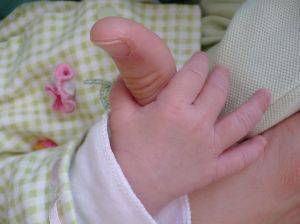
 Stem cell treatment from cord blood is fast becoming an alternative form of medical therapy around the world. This is because stem cells gathered from the umbilical cord are the type of cells that have the potential to create new and healthy cells in the body. These kinds of stem cells are similar to the ones found in the bone marrow; however, these cells are collected not from an adult donor but from your newborn’s umbilical cord after it has been cut. What used to be treated as medical waste has been found to be made of miraculous stuff.
Today, Pinoy parents have a choice between two cord blood banks that collect these types of stem cells: StemCord Philippines, which opened its offices in the Philippines in 2002, offering its unique multiple-storage option and storage facilities located in Singapore; and CordLife Medical Philippines, which arrived in the Philippines in 2005 and has opened the Philippines’ first cord blood processing and cryopreservation facility in Manila last March 2010.
The first question on most parents’ minds when it comes to cord blood banking might be: Is it worth it? Cord blood banking is not cheap. It requires a one-time upfront payment for collection and processing as well as an annual storage fee each year of as much as $250.
Is it worth it?
Bert Lubin. M.D., of the American Association of Pediatrics (AAP) has been quoted to say, “I would advise parents to spend the money on a stroller or car seat,” in response to cord blood banking. “Well, that may be the case today,” says Phoebe Tsai Te, chief operating officer of StemCord Philippines, “but maybe not tomorrow. Today, most people die of stroke, heart attack, or cancer. However, stem cell research has made advances in medicine in just a few years. Treatment of heart disease through stem cells is already underway. The one-in-thousands chance of your family needing cord blood will narrow down in the future.”
Arvin C. Faundo, M.D., medical consultant for CordLife Medical Philippines, agrees, “A family that invests in cord blood banking looks into the future in the same way that another family would get accident insurance. No one wishes for the time to come to use that insurance. But, in case it happens, then the costs incurred will be much lower.” According to Dr. Faundo, a unit of cord blood purchases for use in transplantation may cost up to $35,000. Apart from this, the cord blood of a baby is a 100 percent match for him should he need cord blood transplantation in the future. The baby’s cord blood could have a 75 percent match with a sibling (versus a 25 percent bone marrow match with a sibling) and a 50 percent match with a parent.
[previous|page|next]
Stem cells can treat 80 diseases
Today, there are 80 diseases that are treatable by banked cord blood. These diseases fall into the following categories: certain cancers and bone marrow failure syndromes, inborn errors of metabolism, blood disorders, and immunodeficiences. Dr. Faundo explains that most cancers are diseases due to the uncontrolled growth of particular cells or tissues, either in the blood or solid organs. Cord blood transplantation (CBT) has been used in leukemia, lymphoma, neuroblastoma, and retinoblastoma. Not all cancers, however, are currently treatable with CBT.
Bone marrow failure occurs when the bone marrow is not producing some or all of the needed blood cells. CBT is necessary to replace the diseased marrow. Inborn errors of metabolism, also called inherited metabolic disorders, are a group of disorders due to a defect in the production, storage, or release of certain substances in the body, affecting normal organ functions. CBT prevents complications or minimizes the progress of the disease. Blood disorders (different from cancers) are conditions affecting blood cell production, maturation, survival, or function. Usually, these are treated with bone marrow transplants but can now be treated with CBT. Immunodeficiencies have to do with the body’s ability to fight infections. A baby is particularly susceptible to this and may even die due to repeated bouts of infection. CBT, done early, will prevent this.
Emerging treatments
Apart from these diseases, there are emerging treatments using stem cells for diabetes, cerebral palsy, brain injury, cardiovascular diseases, and other neurological diseases. “We have not exhausted the potential of stem cell therapy,” Tsai Te confirms. “Stem cells can become any kind of cell type. There have been clinical studies where the stem cells were introduced into the body and they found a way to heal the damaged tissue on their own. These are all being studied today.”
Dr. Faundo explains the process of these potential treatments. “Before the adoption of a medical therapy, it goes through a lot of experimental therapy and clinical trials (Phase I, II, and III). Only after it has been proven to be effective and safe in humans would such therapy be considered as a standard mode of treatment.” Clinical trials are done when therapies are shown to minimize the progression of a disease. Even in some cases when a cure is achieved, the dosage and schedule of the transplant is further studied. Experimental therapy, on the other hand, means that the therapy has not been categorically proven to be effective until further research proves otherwise. “There are promising results from clinical trials and experimental studies that show that stem cell therapies may be proven safe and effective in the future,” Dr. Faundo says.
[previous|page|next]
Stem cell research from cord blood is not to be confused with the more controversial embryonic stem cell research. Embryonic stem cell research involves the destruction of actual frozen embryos which is very much different from cord blood stem cells, so parents needn’t worry about the ethics of collecting cord blood.
Cord blood banks emphasize that the collection of stem cells happens only once in a lifetime, at the time of birth. However, on the other hand, others argue that the chance of a family ever needing it is slim, ranging from one in 200 to one in 100,000. In the end, the choice lies within the parents.
A history of leukemia and public cord blood banking
Annette Acosta-Dickson, family physician based in Kansas City, Missouri, banked her daughter’s cord blood six years ago. “The main impetus was Brian’s (her husband’s) history of leukemia,” Annette says. “It’s expensive to do it privately. The upfront cost was $1,200 and the yearly maintenance fee is $95. Honestly, the chances of needing it are very small.” If she had to do it again, Annette would probably have chosen to donate to a public cord blood bank. “There is a big shortage of minority donors,” she says of public cord blood banks in the U.S. Currently, there is none of this kind in the Philippines.
Medical blind spots and immeasurable value
Karina T*, intellectual property agent in New York and mother to two-year-old Sébastien, shares that she and her husband come from different racial backgrounds. “Both of us have some family history of medical issues. It was essential for us to cover any unknown ‘blind spots.’” When asked about their decision to invest in cord blood banking, she says, “The statistical odds of getting into a car accident may be much higher versus having a child born with medical issues. However, the financial costs of ignoring an option already available in the first place to save one’s child is also difficult to measure. I want to give our son the best chance should he ever have a need to use his cord blood to save his life.”
Being on the right end of a probability
Bessie*, lawyer and mom to a six-month-old boy, gives her view on cord blood banking as an investment: “Yes, money can always be earned again, but harvesting cord blood is a one time thing. If the decision to avail turns out to be wrong, at worst, I threw away the equivalent of a designer hand bag and a few good dinners a year. But if my decision not to avail is wrong, it affects the life of my child. I would not want to find myself a few years down the road, needing cord blood and not having it because I scrimped.” Additionally, Bessie’s father died due to complications from a blood disease, making it easier for her to decide in favor of cord blood banking.
What the future holds
Anne Macalino-Santos, preschool teacher and mom to Tiago, says, “Financial considerations aside, we wanted to know how science and technology would be useful today and in the future. The cord blood bank representative showed us how technology has evolved in such a short span of time. Now, treatments for blood-related diseases, burn injuries and cerebral palsy are all possibilities.” She says that if a family can afford it, they should consider it since there is nothing to lose and everything to gain in the event that the family might need it.
Photo from sxc.hu

Lorem ipsum dolor sit amet, consectetur adipisicing elit, sed do eiusmod
Lorem ipsum dolor sit amet, consectetur adipisicing elit, sed do eiusmod
