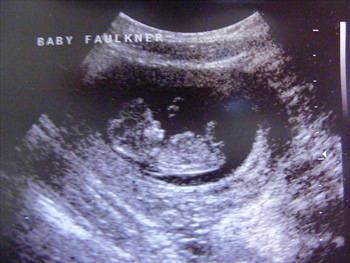
 One of the constant fears of pregnant moms is the possibility of losing their baby due to miscarriage. and key to diagnosing a potential miscarriage is through properly assessing an ultrasound scan early on.
How are miscarriages diagnosed? It was previously believed that by analyzing the existence and size of the pregnant woman’s gestational sac (in which the embryo grows), sonologists can determine whether a woman could be in danger of miscarrying.
In the United Kingdom, normally, if a gestational sac is greater than 20 millimeters wide, it is typically classified as a miscarriage. In the U.S., on the other hand, their standard is 16 millimeters wide or greater. However if the sac is empty or smaller, a scan is usually recommended seven to 10 days after the initial test. If it still has not grown, it is generally assumed that a miscarriage has already taken place.
In order to test the accuracy of such a measurement, researchers, led by Tom Bourne from the Imperial London College, looked at 183 women who were considered to have already miscarried, based on an ultrasound reading.
Bourne discovered that 175 were properly diagnosed, but the remaining eight’s embryos were actually still alive and could survive throughout the entire pregnancy. These eight women were diagnosed to have had miscarried based on the U.S. rule on the 16 millimeter-wide gestational sac.
Human Error
Human error is a factor that must be considered when miscarriages are misdiagnosed based on scans. According to another study, the readings may vary as much as 20 percent, depending on the person doing the reading. Sonographers may at times over- or underestimate the size of the gestational sac, which can lead to a pregnant woman being wrongly diagnosed to have had miscarried.
While there is merit in diagnosing women experiencing symptoms indicative of a possible miscarriage, as well as basing the assessment on the ultrasound scans, one cannot simply dismiss the percent of pregnant women that may still have viable pregnancies.
[previous|page|next]
Bourne notes though, that “There’s no doubt that on the basis of one scan, the potential for misdiagnosis exists. Some women seeking reassurance with pain or bleeding in early pregnancy may be told that they have had a miscarriage, and choose to undergo surgical or medical treatment when the pregnancy is in fact healthy.”
Despite this, Bourne also points out that most of the women who report bleeding are actually really miscarrying already. “We’re looking at patients with a diagnosis based on ultrasound, which is a subset of women, and we’re only talking about the ones who are near these cut-off levels,” Bourne explains.
Some 1/3 of the 500,000 women who have experienced miscarriages in the U.K., according to the Daily Mail, are diagnosed via ultrasound scans. An estimated 400 women who actually have healthy pregnancies end up being misdiagnosed every year, and told that their babies have already died.
What Pregnant Women and Healthcare Professionals Can DoBourne recommends that women who have been diagnosed with a miscarriage wait another week to get another scan first before undergoing surgery. Says Bourne, "If you have a diagnosis of miscarriage based on a scan, I would say repeat the scan in all cases. While there's always pressure to make a diagnosis, there is no harm in saying 'look we don't know, come back in a week and let's have another look'." The key, though, is to strike a balance in managing the woman’s anxiety and making sure an accurate diagnosis is given.
Ted Falconer, president of the U.K.’s Royal College of Obstetricians and Gynecologists, on the other hand, pushes for better training of healthcare professionals, in order to be more competent when it comes to antenatal screening and diagnoses.
Sources:
• October 14, 2011. Bonnie Rochman. “Ultrasound Guidelines May Wrongly Diagnose Miscarriage” healthland.time.com
• October 14, 2011. Linda Geddes. “Improve miscarriage guidelines to prevent misdiagnosis” newscientist.com
• October 14, 2011. Liz Klimas. “Study: Misdiagnosed Miscarriages Resulting In Unintentional Abortions” theblaze.com
Photo by Fred didn’t deserve it either via flickr creative commons

Lorem ipsum dolor sit amet, consectetur adipisicing elit, sed do eiusmod
Lorem ipsum dolor sit amet, consectetur adipisicing elit, sed do eiusmod