 In a country where traditional gender roles are still largely considered the norm, it’s not surprising for women to be consumed with the desire to have children. Considering other factors such as the “biological clock”, it is more common for women to want to get pregnant as their level of fertility and physical capability for childbirth dips with age.
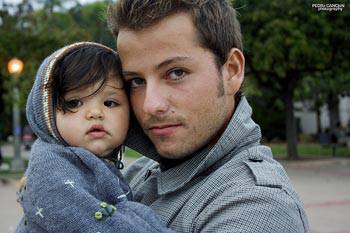
A new study, however, published in the journal Emotion, shows that baby fever - that irresistible urge to have a child - also occurs in men.
To explain how baby fever occurs, the researchers first took into consideration a theoretical standpoint, first on gender roles and the idea that women think they should have children because that’s what they should do.
The second theory looked at the human capacity for nurturing. Says Gary Brase, associate professor of psychology at the Kansas State University, “"We checked whether it is due to people looking at someone else's child and then having that trigger a misplaced sense of nurturing… but it wasn't that either."
The third theory looked at timing, how the brain could be sending a message that it would be an appropriate time to have a child. But according to answers the researchers collected from a total of 337 undergraduate students and 853 general population participants, none of the abovementioned theories seemed to have had a bearing on baby fever.
The first two theories had more of a visual sensory nature. Says Brase, “Seeing a baby, hearing a baby, smelling a baby led some people to want to have a baby."
On the other hand, smelling a dirty diaper, hearing a baby wailing, or other unpleasant experiences associated with babies resulted in a decline in “baby fever.”
[previous|page|next]
The third factor had more to do with the trade-offs, or what they would have to give up when they have children.
Another discovery that the researchers shared was that while women more frequently wanted to have a child, men more frequently wanted sex than to have a child. The researchers found it quite ironic, because when you think about it, the two things are actually related.
But upon comparing the baby fever level across different ages, the researchers also found out that women’s baby fever decreases with age while with men, the desire increases with age. Brase & company still aren’t quite sure to why this is so.
The researchers do acknowledge how being economically practical and yet still being driven with a biological desire to have a child can bring conflict to such a decision to pass on your genes. "Having children is kind of the reason we exist — to reproduce and pass our genes on to the next generation," says Gary Brase. "But economically, having children is expensive and you don't get any decent financial return on this investment. And yet, here we are, actual people kind of stuck in the middle."
Sources:
• September 3, 2011. “Moral of the Study: Baby Fever” healthkicker.com
• August 26, 2011. Diane Mapes. “’Baby fever’ is a real thing – and not just in women, study claims” bodyodd.msnbc.msn.com
• August 24, 2011. “Study Identifies The Causes of “Baby Fever” jezebel.com
• August 24, 2011. “Who’s the daddy? Men also suffer from ‘baby fever’, the desperate desire to be a parent” dailymail.co.uk
• September 7, 2011. “See One, Want One: The Roots of ‘Baby Fever’” livescience.com
Photo by PedroCancion via flickr creative commons

Lorem ipsum dolor sit amet, consectetur adipisicing elit, sed do eiusmod
Lorem ipsum dolor sit amet, consectetur adipisicing elit, sed do eiusmod