
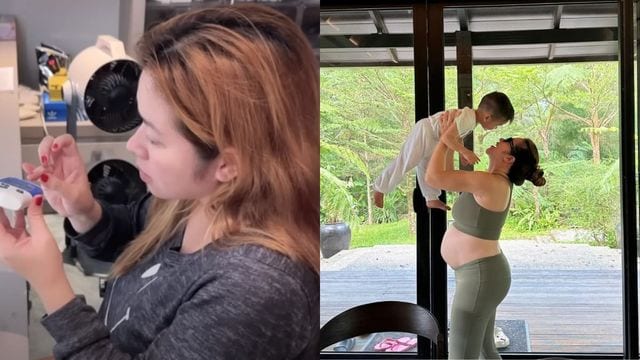
Expecting celebrity mom Angeline Quinto shared in her recent vlog that she has been diagnosed with gestational diabetes mellitus (GDM) or more commonly known as gestational diabetes.
Angeline on Managing Gestational Diabetes During Pregnancy
Angeline, soon to be a mom of two, opens up about her pregnancy challenge being diagnosed with gestational diabetes.
In her vlog, she admits how she hadn't been mindful of her diet, enjoying meals without much thought. However, since her diagnosis, she openly shares her swift transition to a healthier diet.
"Siyempre, uunahin ang kalagayan ko at ni baby kaya kailangan nating gawin lahat it," Angeline said referring to avoiding food she usually enjoys to manage her gestational diabetes.
Angeline is dedicated to practice discipline in her diet, avoiding excessive sweets and rice. She has substituted white rice with quinoa and regularly monitors her blood sugar levels to prevent complications upon child birth.
Angeline also shared how grateful she is for her supportive husband, Nonrev Daquina, who suggested incorporating quinoa into her diet.
Commonly Asked Questions About Gestational Diabetes
1. What is gestational diabetes?
- Gestational diabetes is a type of diabetes that can develop during pregnancy in women who don't already have diabetes. It usually appears around the 24th week of pregnancy.
2. Is gestational diabetes that common among pregnant women?
- According to a single-center study by HERDIN (Health Research and Development Information Network), “the overall prevalence of GDM was 16.7% from 2018 to 2021, with a prevalence of 6.5% noted in 2020 during the COVID-19 pandemic due to the closure of the outpatient department.”
In the U.S. every year, about 5% to 9% of pregnancies are affected by GDM.
3. What are the symptoms of gestational diabetes?
- Gestational diabetes often doesn't have any symptoms. If symptoms do occur, they might be mild, such as increased thirst or more frequent urination. The only way to know for sure is to get tested.
4. Am I at higher risk for gestational diabetes?
You are at higher risk if you:
- If you had gestational diabetes in a previous pregnancy.
- If you gave birth to a baby who weighed over 9 pounds.
- Are overweight.
- If you have a family history of type 2 diabetes.
- If you have polycystic ovary syndrome (PCOS).
5. What is the cause of gestational diabetes?
- Gestational diabetes happens when your body can't produce enough insulin during pregnancy. Insulin helps your body use sugar for energy. During pregnancy, increased hormone levels and weight gain can lead to insulin resistance.
6. Is it possible to prevent gestational diabetes?
- Before pregnancy, lifestyle changes like losing weight if overweight, eating a healthy diet, and getting regular physical activity can help prevent gestational diabetes. However, do not try to lose weight if you're already pregnant. Consult your doctor about healthy weight gain during pregnancy.
7. How is gestational diabetes tested?
- Testing for gestational diabetes typically occurs between the 24th and 28th weeks of pregnancy. If you're at higher risk, your doctor might test you earlier. The test involves drinking a sugary drink and then checking your blood sugar levels.
8. What can I do to manage gestational diabetes?
Manage gestational diabetes by:
- Regularly checking your blood sugar levels.
- Staying active to lower your blood sugar and improve insulin sensitivity.
- Eating healthy foods in appropriate amounts and at the right times.
- If these steps aren't enough, your doctor might prescribe insulin or other medications.
9. What are the risks if gestational diabetes isn't managed?
- If remained unmanaged, gestational diabetes can lead to complications such as high birth weight for the baby, which can lead to delivery problems. It also increases the risk of type 2 diabetes later in life for both the mom and the baby.
10. Will gestational diabetes go away after my baby is born?
- Gestational diabetes usually resolves after childbirth. However, about half of women with gestational diabetes go on to develop type 2 diabetes. It's important to discuss with your doctor how to lower your risk and how often to check your blood sugar levels post-pregnancy.
Bear in mind that this overview material shouldn’t replace the advice of your doctor or nutritionist-dietician.
SOURCES:
- Thomas R. Moore, M.D. June 1, 2010. “Diabetes Mellitus and Pregnancy” EMedicine.Medscape.com
- Centers for Disease Control and Prevention. 2024, May 15. “About gestational diabetes. In Diabetes. National Center for Chronic Disease Prevention and Health Promotion” https://www.cdc.gov/diabetes/about/gestational-diabetes.html
What other parents are reading

Lorem ipsum dolor sit amet, consectetur adipisicing elit, sed do eiusmod
Lorem ipsum dolor sit amet, consectetur adipisicing elit, sed do eiusmod
