
Editor’s Note: This article is intended for information purposes only. It does not substitute a doctor. It is vital to always consult a medically trained professional for advice that suits your needs best.
Andrew Schimmer never thought the severe asthma symptoms that his wife Jorhomy Rovero, nicknamed Jho, was experiencing in the wee hours of November 1, 2021 meant to warn them of an impending health crisis.
The actor said in an interview on NET 25's talk show Moments with Gladys Reyes-Sommereux that his wife had been used to having asthma attacks every day. That's why she's always had her inhaler, nebulizer, and other asthma medicines on standby at home.
But on that fateful day, Andrew recalled, he was awaken by Jho at around 3:30 a.m., telling him that "grabe 'yung hika niya" and "nahirapan daw siya huminga." The feeling was "parang nachu-choke."
Andrew said he wanted to take Jho to the hospital, but his wife insisted that he instead go to the drugstore and buy a certain medicine for her. He explained that Jho feared they would might contract COVID-19 virus in the hospital.
But when he returned home, Andrew got alarmed with how Jho looked: "Iba na itsura niya, iba na 'yung hinga, nag-iba 'yung pulse." By the time he got her in the car, she already had a cardiac arrest.
At the hospital, Andrew remembered Jho was given cardiopulmonary resuscitation (CPR) and responded at third try. The diagnosis given by the doctor was brain hypoxia.
He added, "Pinaliwanag sa 'kin maigi, 'Sir, huwag ka mawalan ng pag-asa. Hindi siya brain dead. Nag-restart 'yung brain niya kaya comatose stage siya ngayon.'"
Asthma and its symptoms
Asthma is a "heterogenous, chronic airway inflammatory condition which affects the size and shape of the airways causing breathing difficulties," said Dr. Paul Rilhelm M. Evangelista, a specialist in pulmonology medicine at interventional pulmonology, in a webinar organized by the Philippine College of Chest Physicians.
He added that the inflammation in the airways causes the tightness around the pulmonary area. Thus causing these primary asthma symptoms that lead to an attack:
Wheezing
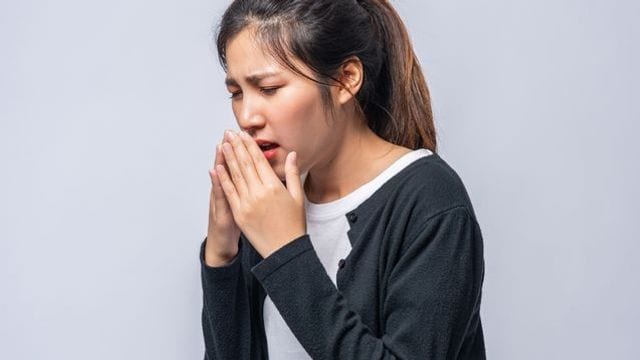
If your airways have narrowed, you will feel like gasping for breath and create a sound that is like birds chirping. This is actually called wheezing.
Cough
If there's too much mucus in the airways, you will cough a lot in a rather forced manner.
Breathlessness
If there's trapped air in your airways, you will have difficulty breathing like losing your breath.
Chest tightness
If you have narrowed airways, too much mucus, and trapped air, you will will feel tightness in your chest.
While there is no cure for asthma, there are ways to manage it with the help of your doctor. You will be prescribed long-term control medications, such as inhaled corticosteroids, that ease airway inflammation. You will also be given quick-relief inhalers that contain fast-acting albuterol to decongest the airways.
Severe asthma symptoms
During an asthma attack, Mayo Clinic says that the airways become swollen and inflamed. They add that the muscles around the airways contract and the airways produce extra mucus, causing the breathing (bronchial) tubes to narrow.
Asthma exacerbations can be classified as mild, moderate, severe, or life threatening, according to the American Academy of Family Physicians (AAFP). They add that criteria for exacerbation severity are based on symptoms and physical examination parameters, as well as lung function and oxygen saturation.
Experts warn that you will need immediate medical attention, if you experiences these signs saying you're not just having your usual asthma attack:
1. Severe breathlessness or wheezing, especially at night or in the early morning
2. Inability to speak more than short phrases due to shortness of breath
3. Having to strain your chest muscles to breathe
4. Low peak flow readings when you use a peak flow meter
5. No improvement after using a quick-acting, or rescue, inhaler
At the hospital, you will given emergency treatment, including:
- Nebulizer
- Oral corticosteroids
- Ipratropium (Atrovent HFA)
- Intubation, mechanical ventilation, and oxygen for severe cases
How to prevent severe asthma symptoms
Dr. Evangelista suggests you work closely with your doctor in controlling your asthma and avoiding asthma attacks. You have to religiously take your medications, which can be inhaled, injected, or taken orally. You also have to avoid your asthma triggers or causes of asthma.
Additionally, the doctor also suggests to continuously monitor your asthma. You can do this with the help of your doctor in making and following an action plan. You can also track your progress by keeping a journal, where you can jot down your observations.
If your condition is controlled, you may lessen or even avoid your asthma exacerbation, such as asthma induced by exercise and allergic asthma, as well as prevent severe asthma symptoms.
Read here about the 5 types of asthma based on the frequency, cause, and severity of symptoms.
What other parents are reading

Lorem ipsum dolor sit amet, consectetur adipisicing elit, sed do eiusmod
Lorem ipsum dolor sit amet, consectetur adipisicing elit, sed do eiusmod
