
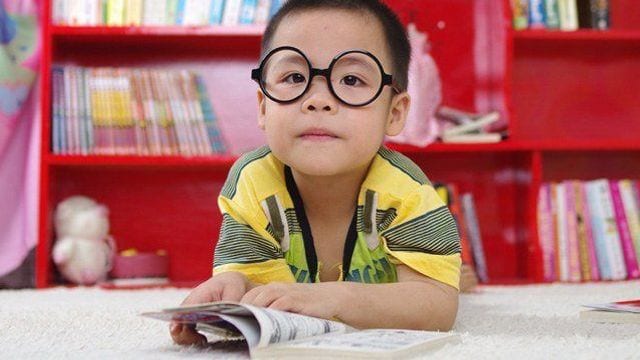
As we shift to online learning for the new school year, parents are making sure to cover all bases — from buying kid-sized furniture, meeting laptop requirements, and more — to help their kids have an easier time adjusting to the new setup. On our Facebook community, Smart Parenting Village, a lot of moms and dads have been asking about blue light blocking glasses. They are wondering to get one for their kids since they’ll mostly be facing screens during school days.
What is blue light?
Blue light is often associated with screens and gadgets, but the largest source of blue light is sunlight, according to Dr. Rahul Khurana, MD, a spokesperson for the American Academy of Opthalmology. It is basically light with blue wavelengths and it is supposedly beneficial during daylight hours. According to Harvard Health, blue light boosts attention, reaction times, and mood.
At nighttime, however, blue light can become disruptive, according Harvard Health. It suppresses the secretion of melatonin, a hormone that influences circadian rhythms, and can affect a child’s sleep. The U.S. National Sleep Foundation recommends shutting off tablets and other blue-light emitting devices an hour or two before bedtime to prevent kids from being “sleep-deprived.”
What other parents are reading
Does my child need blue light blocking glasses?
You might have seen these in online ads. These glasses supposedly filter the high-energy blue light coming from screens and devices to lessen eyestrain, improve sleep habits, and prevent eye disease. But do they really work —they are pretty expensive — and do your kids need them?
According to most experts, like the United Kingdom’s Association of Optometrists, there is not enough evidence to support blue light blocking glasses for the general population “to improve visual performance or sleep quality, alleviate eye fatigue, or conserve macular health.”
On their Facebook page, the Philippine Society of Pediatric Opthalmology & Strabismus recently posted an infographic debunking the myths behind blue light and our eyes. According to them, the amount of blue light that we get from screens is not significant enough to cause eye disease. When we experience eye strain, it is most likely caused by how we use our devices and not the blue light coming out of them. We can also improve sleep by decreasing screen time at night and we do not need special eyeglasses for this. Lastly, blue light blocking glasses have not been proven to have an effect on eye health.
What other parents are reading
If screen use is unavoidable, how can I ensure that my kids avoid eye strain and still get enough sleep?
Digital eyestrain, which is connected to prolonged screen time, can cause burning, itchy, or tired eyes, according to Healthline. It can also cause blurred or double vision, and head and neck pain. However, these don’t usually last long.
If you’re worried about your child, here are some tips you can do to protect their vision:
1. Limit screen use.
As some moms in our Village pointed out, your kids will not be facing screens the whole day. What you can do is to cut back on gadget use once classes are done so the blue light won’t affect your children’s circadian rhythm.
2. Decrease the brightness of screens.
You can also activate the blue light filter on their devices. It’s commonly called “night mode” or “night shift” and it decreases the amount of blue light displayed on the screen.
What other parents are reading
3. Use the “20-20-20” rule.
Doctors recommend this method to reduce digital eyestrain. If your child is using a gadget for an hour or more, ask your child to look away from the screen every 20 minutes and stare at a distant object — around 20 feet away — for at least 20 seconds.
4. Promote proper posture.
Make sure that your child’s computer is at eye-level (so that his neck is not flexed while learning) and that his feet are supported.
5. Take frequent breaks.
Avoid that “ngawit” feeling from being seated the whole day — ask your kids to stand up, move, or look out the window to rest their eyes. You can also incorporate physical activity — according to the World Health Organization, kids 3 to 4 years old need at least 180 minutes of physical activity every day. At least one hour should be dedicated to moderate- to vigorous-intensity activities.
Experts say increasing screentime during the COVID-19 pandemic can harm children's eyesight. Click here to read more.
What other parents are reading

Lorem ipsum dolor sit amet, consectetur adipisicing elit, sed do eiusmod
Lorem ipsum dolor sit amet, consectetur adipisicing elit, sed do eiusmod
