Both work-from-home moms and full-time office workers have proven that you can’t do it all — as much as you’d like to. It’s always a good idea to get some help and build a support system when raising a family and running a household. Whether it’s family (like your mother-in-law, sister, or older children) or hired services (from laundry and deep cleaning to a kasambahay), though, it comes at a cost — if not monetary, it can be in sharing space — that you should be willing to pay.
Some may find it harder to navigate the rules and obligations around having family help out, so having a yaya becomes the best option. Fortunately, over the last couple of decades, the Domestic Workers Act (R.A. 10361) or Kasambahay Law has come into full effect to recognize, protect, and help improve the lives of household staff.
With the holidays approaching and the workforce coming into some sense of post-pandemic normalcy, many are looking forward to the perks and benefits of employment — like receiving the 13th month pay. The question is, is yaya also entitled to this?
The answer is: Yes! Yaya is entitled to 13th month pay and other employment benefits.
READ: 7 Things You Need To Know About The 13th Month Pay
FAQs About The Kasambahay Law's Employment Benefits
1. Who is covered by the Kasambahay Law?
The Kasambahay Law is made for:
Any person engaged in domestic work within an employment relationship such as, but not limited to, the following: general househelp, nursemaid or “yaya,” cook, gardener, or laundry person, whether on a live-in or live out arrangement, but shall exclude any person who performs domestic work only occasionally or sporadically and not on an occupational basis.
This includes a yaya, cleaner, cook, or similar that may be stay-in or stay-out, for as long as they do work for the household. (Drivers, however, are not included in the Kasambahay Law.)
2. What is the minimum wage of a domestic worker?
As of June 2022, the minimum monthly wage of domestic workers in Metro Manila has been increased to P6,000. In Cebu and the rest of Central Visayas, minimum wage is at P5,500. In Davao, it is at P4,500.
CALABARZON (Cavite, Laguna, Batangas, Rizal, Quezon, and Lucena) and the municipalities of Region 12 (Cotabato, Sarangani, South Cotabato, and Sultan Kudarat) have a P3,000 to P3,500 minimum wage for its domestic helpers.
3. What are the employer obligations and employment benefits for government contributions under the Kasambahay Law?
- The employer MUST enroll the kasambahay employee in SSS, Pag-IBIG, and PhilHealth even if the kasambahay does not want to become a member.
- The employer will shoulder the full premium payments to SSS, Pag-IBIG, and PhilHealth of the kasambahay employee IF they are receiving less than P5,000 per month.
- The employer and the kasambahay employee will share the payment of SSS, Pag-IBIG, and PhilHealth contributions IF they are receiving P5,000 and more per month.
NOTE: Metro Manila, Cebu, and Central Visayas domestic workers with minimum wages above P5,000 are then obligated to share in contributing payments for SSS, Pag-IBIG, and PhilHealth with their employers.
4. How much should the kasambahay employee receive for 13th month pay?
Any kasambahay employee that has rendered service of at least one month is entitled to 13th month pay, to be paid no later than December 24. This is equivalent to the total wage received in the calendar year divided by 12.
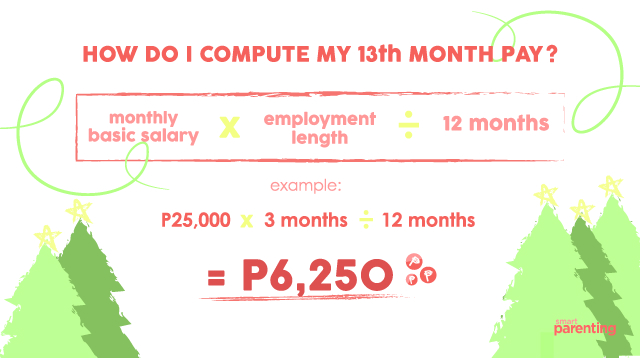
For kasambahay employees in Metro Manila that were hired on September 1 at minimum wage, for example, the computation by December would be: P6,000 x 3 months / 12 months = P1,500.
5. What other mandatory benefits is the kasambahay employee entitled to?
- Monthly minimum wage
- Daily rest period of 8 (total) hours
- Weekly rest period of 24 (uninterrupted) hours
- 5 days annual service incentive leave with pay
- 13th month pay
- SSS benefit
- PhilHealth benefit
- Pag-IBIG benefit
The employer is also obligated to create, present, and have the kasambahay employee sign a contract before the start of employment. For more information and FAQs, check out this primer from DOLE.
3 Celebrity Employers That Kasambahays Love To Work For
When it comes to running a household, these celebrities are model employers. Don't be pressured to live up to their standards, though they surely provide an example of quality of life that everyone can learn a thing or two from.
1. Isabelle Daza
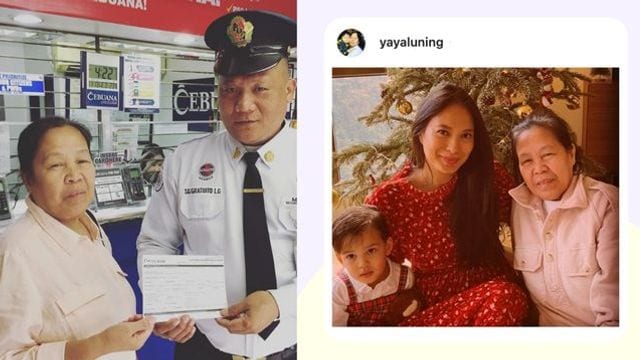
"Tayo nga napapagod ng 5 days a week, why do we expect them to be in our house for 7 days? They also need a life," said the actress, mom of two, and entrepreneur. Isabelle's own childhood Yaya Luning is still with her, and has become a central character in a children's book that she wrote. Isabelle is also known to double her helpers' savings on top of paying the mandatory employee benefits of her kasambahays.
2. Mariel Padilla
"I know that my staff, they’re happy because once that they enter, they’re here for a long time," said the actress and wife of Senator Robinhood Padilla. The celebrity couple has seven household staff, many of whom have been with them for years. During the pandemic, Mariel and Robinhood even surprised their helpers with an apartment and, once the travel lockdowns were lifted, took a couple of them to Spain during a family trip.
READ: Mariel Padilla On How They Treat Their Kasambahays: 'Robin Is Big On Benefits'
3. Dimples Romana
Dimples and her husband surprised Ate V, their household help of over 15 years, with her own two-bedroom townhouse. According to Dimples, it was a gift that reflected how much she valued the loyalty, advice, and sacrifices that Ate V had made over the years. “Sa totoo, siya talaga ang nanay ng bahay namin kasi most of the time I’m not there,” shared the actress.
What other parents are reading

Lorem ipsum dolor sit amet, consectetur adipisicing elit, sed do eiusmod
Lorem ipsum dolor sit amet, consectetur adipisicing elit, sed do eiusmod