

Nearly 40,000 advocates gathered at the SM Mall of Asia Arena last Sunday for the Autism Society Philippines' (ASP) Angels Walk 2025. The event set a new record as the largest turnout in its 22-year history, with families and partners coming together to champion autism awareness and foster a more inclusive society.
Miss Universe Philippines 2023, Michelle Dee, returned to the walk, a cause close to her heart, as she has two siblings on the spectrum.
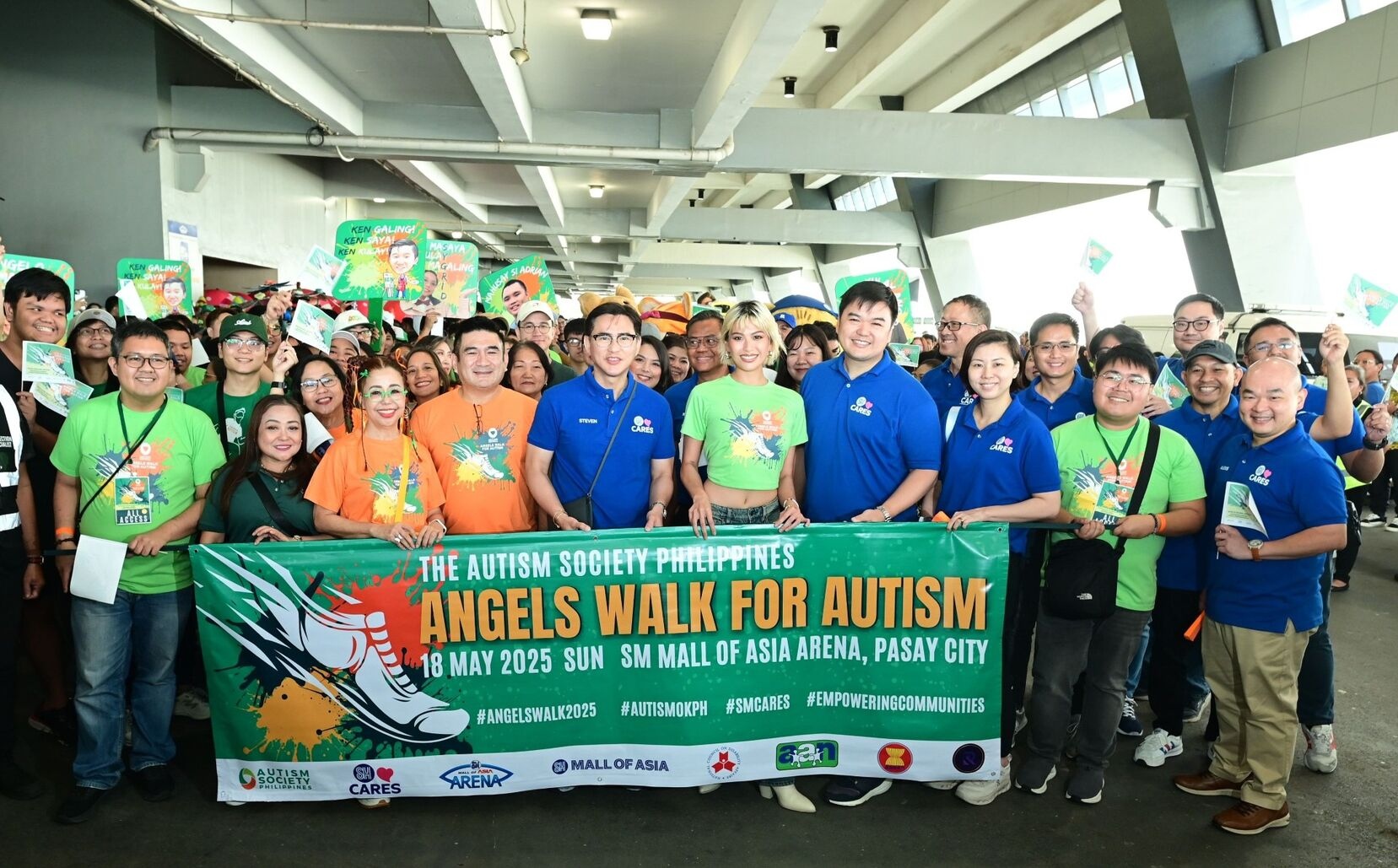
"Every time I'm here on behalf of the Autism Society Philippines, I'm reminded that this is about the community I serve. This is about my purpose, my family, and the families that go through this every single day. They have to be heard, they need to be seen, and they need support now more than ever." said Michelle during ASP's press lunch on Friday, May 16.
"I treat Autism Society Philippines as my home, and I know countless families and individuals treat ASP as their home as well. Our annual Angels Walk is not just about strength in numbers, but also strength in purpose."
Michelle, who championed autism advocacy on the Miss Universe stage and won the "Voice for Change" award, shared that ASP received the prize money from her win. However, for her, true progress lies in increasing visibility and fostering a deeper public understanding.
ALSO READ: What Is Autism Spectrum Disorder? Its Range Of Symptoms Including Patterns of Behavior
More Than Just a Walk
This year, the event's theme focused on refocusing the spotlight on the community—its stories, struggles, and victories.
"Every year, Angels Walk grows louder and prouder, but this time, we wanted to make sure that the community and their stories take center stage," said ASP national spokesperson Mona Magno-Veluz. "This is about the families who live this reality every day and about creating a society that truly sees, hears, and supports them."

What began in 2000 with just 200 walkers at Quezon Memorial Circle has become one of the country's largest movements for disability inclusion. By 2025, it had expanded even more, with SM Supermalls hosting walks in 10 provinces and drawing over 10,000 participants outside Metro Manila alone.
Clearing Up Misconceptions about Autism
Speaking to Smart Parenting, Michelle Dee highlighted common misconceptions about autism and why early, tailored support is important.
"One, that it's curable. Two, that you have time to wait, and three, that you can insert them (individuals on the spectrum) in a normal setting, and that will fix it. No, that's not what should be the case. Autism—you're born with it. You can only give early intervention," she said. "You need to have them assessed, and from there, build a program that supports them."
"You should not put them in an everyday setting because they do have special needs. The more you supplement what they need, the more fulfilled and accomplished they can become," she added.
She also shared how young people can support the autism community. "Join ASP, become a supporter," she said. "But you can also do something as simple as being kind. Being nice. Being understanding. Ask the right questions when you see someone struggling or when you don't understand why they do things the way they do. See it with a heart full of love and eyes full of understanding."

From a Small Group to a National Voice
ASP began in 1989 with just 11 mothers searching for answers at a time when professional resources, internet access, and inclusive education were limited. Today, the organization has grown to 106 chapters with over 16,000 members nationwide. One of its most impactful initiatives, Autism Works, has placed 286 individuals on the spectrum in jobs across 11 provinces.
"We are not just an advocacy group; we are a community with purchasing power, voting power, and a shared vision," said Magno-Veluz. "We demand inclusion not as charity, but as a right."

Looking Ahead
Michelle, who has worked with ASP since 2016, hopes that legislation, especially the passage of the National Autism Care Plan, will bring structural changes to schools and communities.
"There are so many lives and families that can be affected with the help of the government," she said. "The private sector can only do so much. We need this implemented in schools, and there are clauses within PhilHealth that can be leveraged. But again, there are still so many things that only the right government support can address."
For ASP, the next steps include nationwide sensitivity training, more inclusive work opportunities, and empowering individuals on the spectrum to take leadership roles.
"We are evolving, and our advocacy must evolve with us," said Magno-Veluz. "Together, we are building a more autism-inclusive Philippines."
More from sp

Lorem ipsum dolor sit amet, consectetur adipisicing elit, sed do eiusmod
Lorem ipsum dolor sit amet, consectetur adipisicing elit, sed do eiusmod
