
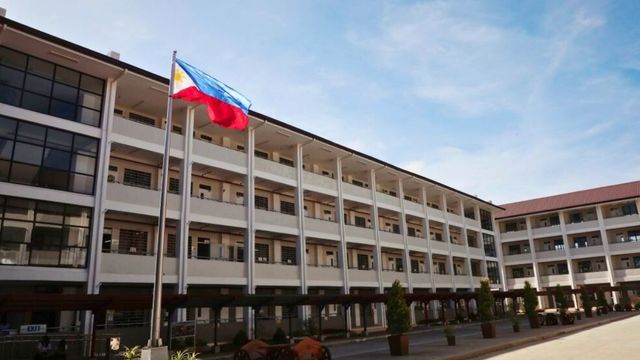
As sweltering heat impacts the country, the Department of Education (DepEd) is taking measures to protect students and staff while minimizing disruptions to learning.
ALSO READ: Ang Init! Extreme Heat Prompts Schools And Parents To Come Up With Solutions To Help Students
DepEd's Measures to Protect Schools from Extreme Heat
Several local government units (LGUs) suspended classes this week due to high heat index levels. Meanwhile, DepEd has instructed field offices and schools to implement preventive measures, like adjusting class schedules or transitioning to alternative delivery modes if necessary.
DepEd has advised schools to schedule morning sessions from 6:00 to 10:00 AM and afternoon sessions from 2:00 to 6:00 PM. Asynchronous learning is recommended during the hottest part of the day, from 10:00 AM to 2:00 PM. Extra rest and hydration breaks are encouraged, especially in classrooms without air conditioning.
The department also stressed the importance of good ventilation. Schools are encouraged to open windows, clear any obstructions to airflow, and add more fans or cooling devices as needed.
Other safety measures include limiting outdoor activities during the hottest hours, ensuring access to cool drinking water, and providing first-aid kits with cooling packs and emergency thermometers. Health personnel should be available to monitor and address cases of heat-related illnesses, such as heat cramps, exhaustion, and heat stroke.
DepEd clarifies that classes are not automatically suspended due to extreme heat. However, local chief executives may declare class suspensions in affected areas. If this happens, schools will shift to alternative learning activities or schedule make-up classes to ensure learning continues.
If the LGU does not declare a suspension, DepEd allows school heads and ALS coordinators to suspend in-person classes if the heat poses health risks. Schools will use self-learning modules (SLMs) and Dynamic Learning Program (DLP) tools in such cases.
The intense heat is expected to persist as the Philippines enters its dry season from mid-March to May.
According to the Philippine Atmospheric, Geophysical, and Astronomical Services Administration (PAGASA), the heat index, or apparent temperature, combines air temperature and humidity to indicate how hot it feels to the human body. This helps assess the impact of temperature and humidity on human comfort and health.
PAGASA classifies heat index levels as follows:
- 27°C to 32°C (Caution): Fatigue is possible with prolonged exposure and activity. Continuing activity could lead to heat cramps.
- 33°C to 41°C (Extreme Caution): Heat cramps and heat exhaustion are possible, and continuing activity could lead to heatstroke.
- 42°C to 51°C (Danger): Heat cramps and heat exhaustion are likely, and heatstroke is probable with continued exposure.
- Above 51°C (Extreme Danger): Heatstroke is imminent.
Practical Tips for Keeping Your Family Cool During Extreme Heat
In this Smart Parenting article, parents share helpful tips for keeping kids cool during extreme heat. Many recommend sending children to school with portable fans and cooling powders, and ensuring they stay hydrated by bringing water bottles and using cooling mists.
Parents emphasize applying sunscreen to protect children from the sun. They also encouraged wearing hats and using cooling patches for added relief, especially during the commute to school.
Click here for more tips on keeping your family cool.
More from sp

Lorem ipsum dolor sit amet, consectetur adipisicing elit, sed do eiusmod
Lorem ipsum dolor sit amet, consectetur adipisicing elit, sed do eiusmod
