
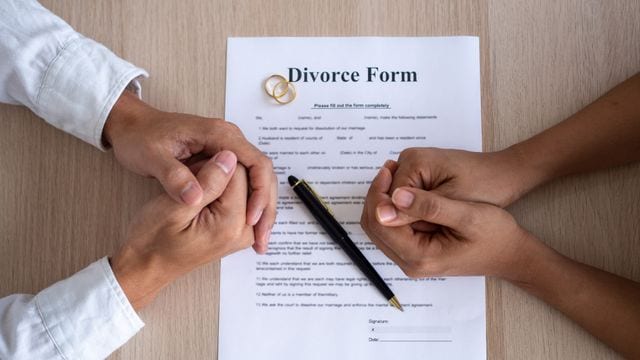
The House of Representatives has approved on final reading a bill that allows absolute divorce in the Philippines.
House approves Divorce Bill on Final Reading
On Wednesday, May 22, a total of 126 lawmakers voted in favor of House Bill No. 9349, while 109 voted against it, and 20 abstained.
To be known as the Absolute Divorce Act, the proposed measure aims to reintroduce divorce as an alternative legal option for dissolving broken or dysfunctional marriages.
Lawmakers who voted for the bill include Iloilo 1st district Rep. Janette Garin who said, “A million yes!” Gabriela Women’s Party Rep. Arlene Brosas who also voted yes, said, “The divorce bill’s aim is to restore divorce as a rights-based option, acknowledging that the right to enter into marriage includes the right to exit an irreparable one.”
On the other hand, Pampanga 2nd district Rep. and former President Gloria Macapagal-Arroyo voted no to the bill, which drew applause from the gallery. Cagayan de Oro 2nd district Rep. Rufus Rodriguez voted a “resounding and strong no to the divorce bill,” on the basis that the bill is unconstitutional as it violated the section of 1987 Constitution that provides “marriage as an inviolable social institution is the foundation of the family and shall be protected by the state.”
Grounds for Divorce under House Bill No. 9349
If enacted into law, couples may file a petition for absolute divorce through the following grounds:
- Legal separation under Article 55 of the Family Code of the Philippines
- Annulment of marriage under Article 45 of the Family Code of the Philippines
- Separation of the spouses for at least five years at the time of petition for absolute divorce is filed, with reconciliation highly improbable
- Psychological incapacity as provided in Article 36 of the Family Code of the Philippines
- Domestic or marital abuse, including acts under RA No. 9262 or the Anti-Violence Against Women and their Children Act of 2004
- Physical violence or grossly abusive conduct directed against the petitioner, a common child or the child of the petitioner
- Physical violence or moral pressure to compel the petitioner to change religious or political affiliation
- Drug addiction, habitual alcoholism, or chronic gambling
- Homosexuality of the respondent
At the same time, the bill also:
- Recognizes the validity of foreign divorce decree secured by either the foreign or Filipino spouse, provided it is authenticated by the Philippine Consul in or to the foreign country where it was secured
- Recognizes the dissolution of marriage by the proper matrimonial tribunal of the Roman Catholic Church or any recognized religious sectors
- Provides a mandatory 60-day cooling-off period after the filing of a petition for absolute divorce as a final attempt for reconciliation between the concerned spouses
Albay 1st district Rep. Edcel Lagman, the bill’s author and sponsor, emphasized that the bill will not allow for “quickie divorces.”
In a report on GMA News, Lagman further said, “To those who opposed the measure, I truly respect their differing views based on religious belief, fear of their bishops and pastors, following the preference of their constituents, apprehension of reprisals at the polls, it is a conjugal decision, and in order not to displease their respective spouses.
“I am happy to note that these objections do not go into the empirical and secular merits, constitutionality, and efficacy of the absolute divorce bill.”
Furthermore, he said that he and other advocates would “begin our campaign in the Senate so that its counterpart measure which has long been ripe for plenary deliberation shall similarly be passed.”
According to Smart Parenting’s survey last in 2019, 61% of the 4,000 parent members who participated voted yes to divorce. In a repeat survey in 2022, 79% said they are in favor. One mom commented at the time, “Kung masaya ang pamilya niyo, masaya ang pagsasama niyonh mag-asawa, eh ‘di wala kang dapat ikatakot kung maging batas ito. Kung hindi ito applicable sayo, or against sa beliefs mo, okay lang yun. Pero wag mo sanang ipilit na ipagkait ito sa mga nangangailangang makawala, makalaya, at makapag-bagong buhay.”
Read here on why we should rethink divorce.
What other parents are reading

Lorem ipsum dolor sit amet, consectetur adipisicing elit, sed do eiusmod
Lorem ipsum dolor sit amet, consectetur adipisicing elit, sed do eiusmod
