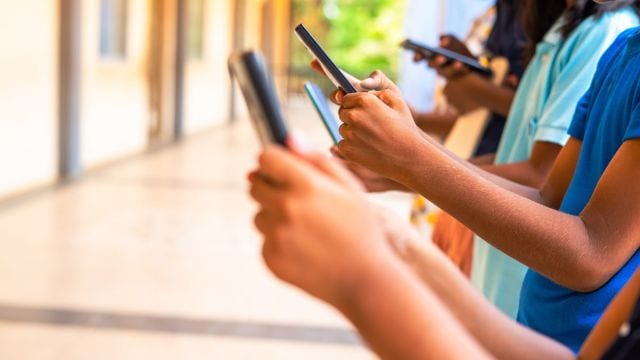
Senator Sherwin “Win” Gatchalian has proposed a new bill aiming to ban cellular phone use in the country’s basic education institutions. Simultaneously, he aims to promote and rekindle the learners’ interest in reading physical books as he is also set to file a measure institutionalizing the observance of the “National Reading Month” every November.
Cellphone ban in schools for basic education students
Gatchalian, who is the chairman of the Senate Committee on Basic Education, shared his thoughts on the matter during Thursday’s “Kapihan sa Senado” news forum. “Isa sa mga observation, hindi lang dito sa atin ha, pati sa ibang bansa. Marami sa ating mga bata, talagang nalululong na sa paggamit ng cellphone. Even dun sa loob ng classroom,” he said.
“Dapat nagbabasa sila pero nanonood ng YouTube, nanonood ng TikTok. Pinag-aaralan ko ngayon yung i-ban na yung sa mga bata lang, yung paggamit ng cellphone sa loob ng classroom at sa loob ng school hours.”
The proposed ban would specifically target the use of mobile phones by basic education students during school hours, permitting their use only after classes are dismissed.
“Dahil nauubos talaga yung oras nila sa kakatingin sa cellphone, lalo na ngayon ang social media very accessible na.”
National Reading Month
Under the proposed “National Reading Month,” the government and related institutions aim to foster a reading culture among the youth. This initiative would include partnerships with bookstores to offer discounts on books, making reading more accessible financially to all students.
“Lahat ng mga ahensya na may kinalaman, at mga institusyon, tumulong na maghikayat na magbasa ang bata… yung mga bookstores hinihikayat natin magbigay din ng discounts, kasi kailangan ding bumili ng libro,” Gatchalian said.
Support from other officials
Senator Gatchalian’s colleagues voiced their support for the initiatives, with Senator Robin Padilla sharing his family’s experiences. “Kaming mag-asawa, hirap sa anak namin lahat na magandang libro binibili namin… Ang kalaban mo laptop, tablet, cellphone. Ang pinakamaganda, ang libro, pwede download sa tablet,” Padilla said.
“Ang physical na libro pag pinilit sa bata… hirap na hirap kami kasi iba ang panahon ngayon. Gadget ang kalaban natin,” Senator Padilla further stressed.
On the other hand, Senate President Pro Tempore Loren Legarda asked the Department of Education (DepEd) to ensure that public school libraries and library hubs are filled with books and that they are readily accessible to children. “All students and young people deserve the same opportunity to discover new worlds, broaden their horizons, and increase their curiosity through literature… Let us now underestimate the value of promoting Filipino content in our libraries,” she said in her keynote address at this year’s Philippine Book Festival.
“We should creatively integrate arts and culture in our textbooks for Filipino, English, Science, and Mathematics… can hit two birds with one stone, as they say, so why not use texts from our history as we drill students on subject-verb agreement?” she added.
The Philippine Book Festival, running from April 25 to 28 at the World Trade Center Manila, boats of four main zones: Kid Lit, Komiks, Booktopia, and Aral Aklat. With 170 exhibitors, workshops, and special exhibits, the event aims to ignite the Filipinos’ love for reading books and revive support for Filipino literature.
What parents say about the proposed cellphone ban in schools
On the Smart Parenting Village, parents have mixed feelings about the ban:
1. Several parents noted that cellphones are already not allowed in children’s schools, and if students do bring one, it should be surrendered to the teachers during class hours. “Bringing of cellphones is not allowed na sa school namin. Matagal nang rule yun na dinidiscuss sa parents palagi,” one parent shared.
2. A few parents shared that they let their children bring cellphones to school for peace of mind in case of emergencies, but they agree it’s okay to surrender them to teachers during actual class hours. “Pwede magdala, pero surrender sa teacher pag pasok sa classroom and ibalik kapag breaktime, then surrender ulit pag nag-resume ang class. Balik ulit pag pauwi na.”
While another said that it’s better if kids bring and use basic cellphones, “Siguro if for the sole purpose na macontact ang anak anytime and in case of emergency, pwede naman yung pinaka-basic na phone ang ipadala. Yung units na capable to call and text, walang camera, walang data. Iba na din kasi ang panahon ngayon, kaya necessity na ang accessible means of communication.”
Another highlighted the modern necessity for parents to contact their kids, saying, “Nope, we live in modern times. Madaming nangyayari ngayon which is dapat alam ng parents ng mga bata lalo na if it's something that needs immediate response from us. Pwede naman at the start of class, collect ng teacher yung phones then after class, ibalik sa kanila.”
3. One parent agreed to the ban, citing concerns that children bringing cellphones to school might access inappropriatecontent. “Yes, may case sa mga classmate ng anak ko, nagsumbong yung teacher na huwag na magpadala ng cellphone kasi nahuli niya na may x-rated content sa cellphone ng bata. Nakakagalit kasi baka doon pa nabuksan o natuklasan ng mga bata ang panonood ng x-rated content.”
4. Another parent raised concerns about the disparity of resources between public and parent schools. She pointed out that in public schools, where educational materials and facilities are not always adequate, cellphones sometimes serve a necessary educational purpose. “Sa school ng anak ko, hindi necessary ang cellphone because yung facilities and materials sa pag-aaral, provided na lahat, secure din ang kids sa loob ng school at kaya ng admin ma-inform ang parents ng students agad if needed. Pero as a public school teacher, na kung saan hindi naman namin kayang iprovide sa mga bata ang lahat ng facilities and materials needed to meet the required competencies ng DepEd, cellphone is sometimes necessary.”
What do you think, parents? Do we need to ban cellphone schools to help boost our children’s love for reading by minimizing digital distractions?
Find out how you can raise a lifelong reader here.
What other parents are reading

Lorem ipsum dolor sit amet, consectetur adipisicing elit, sed do eiusmod
Lorem ipsum dolor sit amet, consectetur adipisicing elit, sed do eiusmod