
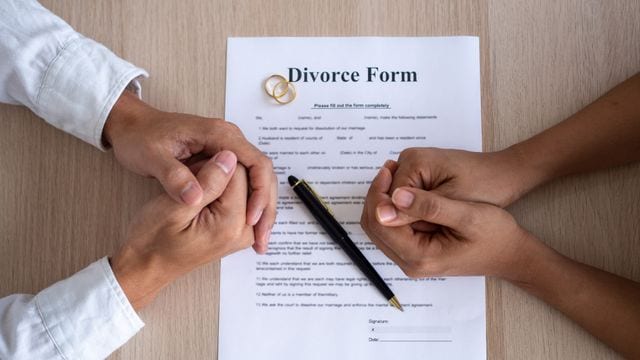
After the House of Representatives approved the Divorce Bill on its third and final reading, Senate President Pro Tempore Jinggoy Estrada conducted a survey to determine where the senators stand on the controversial bill. Out of the twelve senators who responded, six are in favor of the proposed measure, while the other half are against it.
Opposition to the Divorce Bill came from prominent senators such as Senate President Francis Escudero, Senate Majority Leader Francis Tolentino, Senators Cynthia Villar, Joel Villanueva, Ronald Dela Rosa, and Estrada himself.
On the other hand, Senators Risa Hontiveros, Pia Cayetano, Grace Poe, Imee Marcos, Raffy Tulfo, and Robin Padilla expressed their support for the Divorce Bill.
Other senators have yet to make their position clear on the proposed divorce measure.
ALSO READ: Philippine House Approves Divorce Bill in Final Reading
Senator Risa Hontiveros, the principal author and sponsor of the measure in the Senate, emphasized that the committee report on the Divorce Bill has been ready for some time. She mentioned that they are waiting for the committee report to be briefed in the Senate plenary session.
Hontiveros, who chairs the Senate Committee on Women, Children, Family Relations, and Gender Equality, presided over the hearings on the Divorce Bill and is eager for it to be discussed in the Senate. She also pointed out that the goal of divorce is to give those in a broken and toxic marriage a second chance at life and happiness.
How does the Divorce Bill come into effect?
If the Senate approves the bill, it is authenticated and transmitted to the President. However, if any amendments are introduced, the bill is transmitted back to the House of Representatives. Then, if the House agrees to the amendments, the bill is authenticated, and transmitted to the President. Otherwise, the differences will be settled by the Conference Committees of the Senate and the House.
House Bill No. 9349 or Divorce Bill
Authored by Albay Representative Edcel Lagman, House Bill No. 9349, or the Absolute Divorce Act, seeks to reinstitute absolute divorce as an alternative mode for the dissolution of marriage.
As Lagman put it, the Absolute Divorce Act "signals the imminent liberation for Filipino wives who are entombed in toxic, abusive, and long-dead marriages."
What counts as grounds for absolute divorce?
Under the Divorce Bill, the following are considered grounds for absolute divorce:
- Physical violence or moral pressure to compel the petitioner to change religious or political affiliation
- Attempt of respondent to corrupt or induce the petitioner, a common child, or a child of the petitioner, to engage in prostitution, or connivance in such corruption or inducement
- Final judgment sentencing the respondent to imprisonment of more than six (6) years, even if pardoned
- Drug addiction or habitual alcoholism or chronic gambling of the respondent
- Homosexuality of the respondent
- Contracting by the respondent of a subsequent bigamous marriage, whether in the Philippines or abroad
- Marital infidelity or perversion or having a child with another person other than one’s spouse during the marriage, except when upon the mutual agreement of the spouses, a child is born to them through in vitro fertilization or a similar procedure or when the wife bears a child after being a victim of rape
- Attempt by the respondent against the life of the petitioner, a common child or a child of the petitioner
- Abandonment of petitioner by respondent without justifiable cause for more than one (1) year
- When the spouses are legally separated by judicial decree for more than two (2) years, either spouse can petition the proper Family Court for an absolute divorce based on said judicial decree of legal separation
Read here to know what Smart Parenting readers think of the legalization of divorce in the Philippines.
More from sp

Lorem ipsum dolor sit amet, consectetur adipisicing elit, sed do eiusmod
Lorem ipsum dolor sit amet, consectetur adipisicing elit, sed do eiusmod
