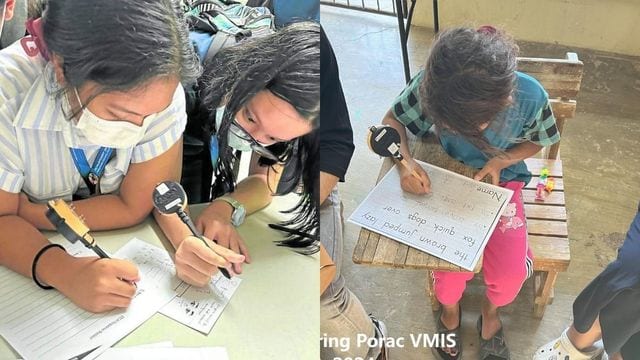
Parents who notice their children struggling with handwriting may soon find help through a new technology developed by researchers at the University of Santo Tomas (UST). Called iSULAT, this smart pen is designed to track and analyze how children write to identify areas where they may face challenges.
Although still in the testing phase, iSULAT aims to make handwriting practice more effective and give children the support they need to improve their skills and confidence.
ALSO READ: What Is Autism Spectrum Disorder? Its Range Of Symptoms Including Patterns of Behavior
What Is iSULAT?
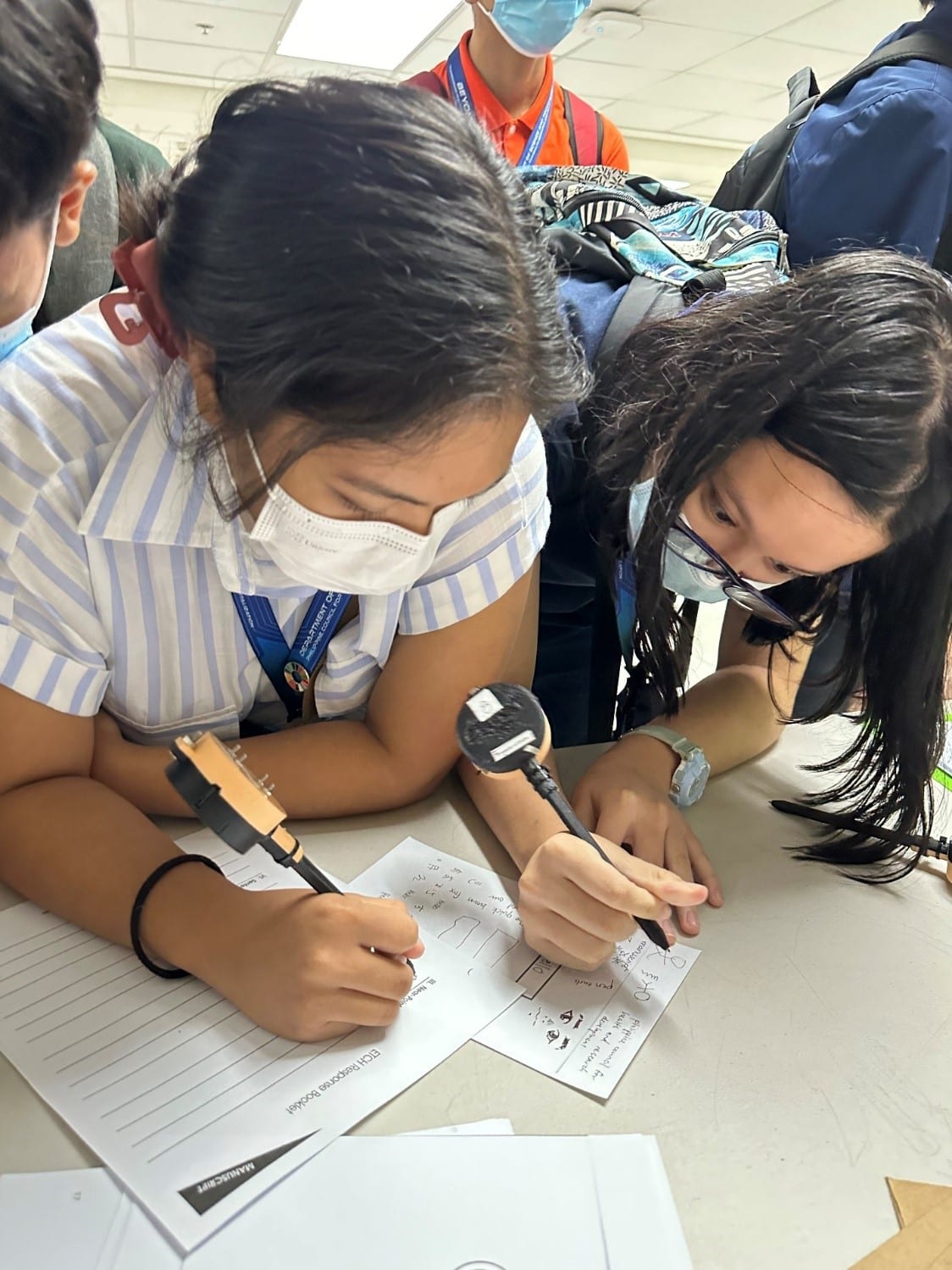
iSULAT stands for Intelligent Stroke Utilization, Learning, Assessment, and Testing. It is a software-based handwriting assessment tool paired with a pen equipped with built-in sensors that capture details about how a child writes. These sensors measure factors such as stroke speed, pressure, and writing angles. The collected data is then processed in real time and compared to a database of handwriting samples from Filipino children.
This comparison allows iSULAT to provide objective and detailed feedback on the child's handwriting, including common issues like inconsistent strokes, uneven pressure, and improper letter spacing.
By reducing the need for time-consuming manual evaluation, iSULAT helps parents, teachers, and therapists detect handwriting difficulties early. Early identification can lead to timely support that prevents these problems from affecting a child's learning progress or self-esteem.
Beyond Handwriting in Schools
Experts also believe iSULAT has potential applications outside traditional schooling. It could assist in assessing handwriting and motor skills for individuals with neurological or medical conditions such as stroke, Parkinson's disease, dyslexia, and early-onset depression.
By offering objective, accessible handwriting assessment, iSULAT could transform how therapists and educators identify and address writing difficulties across different groups.
The development of iSULAT is a collaborative effort between the Electronics Engineering Department, the Research Center for Natural and Applied Sciences, and the College of Rehabilitation Sciences at UST. The project received P3.2 million in funding from the Department of Science and Technology's Philippine Council for Health Research and Development (DOST-PCHRD).
Dr. Edison A. Roxas, project leader, said the idea for iSULAT began before the pandemic. "The iSULAT envisions itself as the future standard in handwriting evaluation for the Filipino children," he stated.
DOST Secretary Fortunato de la Peña also highlighted the importance of addressing handwriting challenges, noting that between 5 to 25 % of children struggle with handwriting, which can negatively impact their academic performance and confidence. He emphasized that handwriting remains one of the most immediate forms of communication despite the rise of digital technology.
Current Testing and Future Plans
Currently, iSULAT is at Technology Readiness Level 5, meaning it has a working prototype that has undergone initial testing. Pilot studies have been conducted in several schools in Luzon, including Villa Maria Elementary School in Pampanga, Juan Sumulong Elementary School in Metro Manila, and Bulacan Montessori School.
Engr. Jomel Herras, project manager, explained that more testing is necessary to improve the tool's accuracy and reliability. His team is actively seeking partners and schools nationwide to expand pilot testing and collect more data.
Phase I of the project ran from 2022 to October 2024. Looking ahead, Herras hopes phase II will begin by 2026. This next stage aims to extend iSULAT's use beyond children with typical learning needs to those with Attention Deficit Hyperactivity Disorder (ADHD) and autism spectrum disorder.
Click here to discover signs that your child needs to see a specialist for Autism Spectrum Disorder.
More from sp

Lorem ipsum dolor sit amet, consectetur adipisicing elit, sed do eiusmod
Lorem ipsum dolor sit amet, consectetur adipisicing elit, sed do eiusmod