
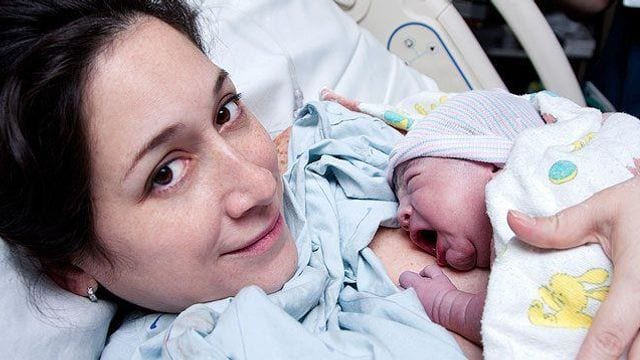
Pregnancy is a great motivator for women to make her well-being a priority aside from her baby's health. It's great that soon-to-be moms are taking control of their birthing experience. It's about time that pregnant women become more involved in making informed decisions about how they want to welcome their little bundle of joy. While a birth plan is not set in stone, it can empower you -- it is your body and your child, after all.
When making a birth plan, these essential after-birth care steps make sure your newborn baby gets a good start at a healthy life. And the good news is it's a protocol that is already in place. The World Health Organization (WHO), together with the Department of Health (DOH), had launched the Essential Newborn Care (ENC) protocol and First Embrace or Unang Yakap program three years ago to help prevent neonatal deaths. Most hospitals in the country follow this protocol that has saved infants since 2015.
We highly encourage you to let your doctor know you want to follow these procedures after childbirth:
1. Drying the baby immediately and thoroughly after birth
Bathing the newborn too soon may hinder a baby's natural reflex to crawl to his or her mother's breast. As soon as he is born, the baby is instead dried to help stimulate his breathing, keep him warm, and prevent hypothermia. "Waiting 24 hours to bathe the baby is beneficial because the vernix, the substance coating a newborn's skin, can protect them from potentially lethal infections," pediatrician Dr. Howard L. Sobel, coordinator for the Reproductive, Maternal, Newborn, Adolescent Health at the World Health Organization (WHO) Regional Office for the Western Pacific, told SmartParenting.com.ph via email.
What other parents are reading
.
2. Immediate skin-to-skin contact
When your baby comes out, he should be laid on your chest. Direct skin-to-skin contact transfers the mother's warmth and protective bacteria that helps keep the baby calm and healthy. "Direct skin-to-skin contact is recommended for no less than 90 minutes, or at least until the first breastfeeding should have been completed," clarified Dr. Sobel. Separation from the mother almost always causes the baby distress.
3. Appropriately timed clamping and cutting of the cord
There is no set waiting time before cutting the umbilical cord. Doctors are advised to clamp it only after the umbilical cord's pulsations have stopped, stresses Dr. Sobel. It means that the cord has stopped pumping blood to the baby, which may take 30 seconds to one to three minutes or more. Doing so helps reduce anemia and prevents brain hemorrhage for smaller babies.
4. Initiation of exclusive breastfeeding
When the baby shows cues such as drooling, tonguing, rooting, or biting his or her hand, the mother's breast should be offered to start breastfeeding. Skin-to-skin contact also helps facilitate the baby's first meal: his mom's milk. Breast milk ensures the newborn gets the necessary nutrients he needs to keep illnesses at bay. According to WHO, initial breastfeeding reduces the risk of death by 22 percent.
For WHO, these four steps are non-negotiable. According to Dr. Sobel, there are only rare exceptions (e.g. babies with rare metabolical disorders that would need special formula) where it's okay to skip these first four essential steps. Even if a mother delivers her baby via C-section, it's still important and very possible to take these first four critical steps for you and your baby. (Read about it here).
What other parents are reading
After the first four vital steps have been accomplished, only then can doctors and other health professionals perform routine tasks such as tests and vaccinations. The Unang Yakap program also promotes Kangaroo Mother Care (KMC), which is essentially prolonged skin-to-skin contact, which may be done by the father or the baby's older siblings. "Aside from promoting better bonding between parent and child, KMC helps facilitate exclusive breastfeeding which, in turn, strengthens the baby’s immune system.
Premature babies, babies born with low birth weight, babies who need a ventilator, jaundice babies receiving phototherapy will benefit from skin-to-skin contact and the other steps in the Unang Yakap campaign. "Preterm babies often have a problem called apnea of prematurity, where they stop breathing multiple times in a minute. When placed in KMC and skin to skin contact, this is reduced," Dr. Sobel added.
ENC coaching, a hands-on, on-site, evidence-based protocol to essential newborn care, focusing on the first hours and days of life, aims to train and educate health workers about the Unang Yakap program. It has been ongoing in at least nine national, 30 regional, and 157 first-level referral hospitals all over the country.
Discuss this with your and your baby's doctor ensures your baby gets the best care as you take your much-needed rest after giving birth.
What other parents are reading

Lorem ipsum dolor sit amet, consectetur adipisicing elit, sed do eiusmod
Lorem ipsum dolor sit amet, consectetur adipisicing elit, sed do eiusmod
