
Fact-Checked by Ronna Capili Bonifacio
This article was published on February 14, 2020, and has been updated on September 30, 2024.
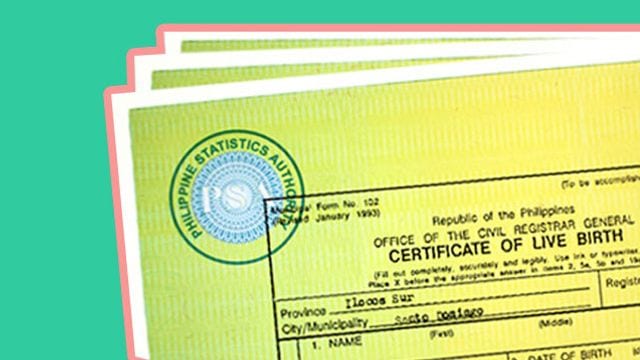
The birth certificate is one of the most important documents you will need to establish your identity. Every institution in the Philippines will require you to submit a copy of your birth certificate from the Philippine Statistics Office (PSA), from the time you become a part of the educational system up until adulthood.
You will also need your birth certificate when you apply for government-issued IDs, including your passport, when you apply for work, all the way to your retirement when you claim your benefits and file for pension and insurance claims. Thus, filing the birth certificate with the proper agency is very important.
The responsibility of registering the birth of a child falls on your attending physician at the hospital where you gave birth, or your doula or midwife if delivery happened in a lying-in clinic or at home.
Filing the birth certificate at the local civil registry is free, but it must be done within 30 days after the child’s birth. Beyond the 30-day period, the child’s birth certificate will have to be filed under late registration, which has a more rigid process.
What other parents are reading
Steps for late registration of birth certificate for Philippine-born applicants
1. Visit your local civil registry.
Go to your local civil registry and confirm that there is no existing record of the child’s birth.
The reason for this is because there are instances when the local civil registry has the child’s birth certificate but has not yet forwarded it to the PSA. In this case, all you need to do is file a formal request for the document to be forwarded to the PSA office.
If your child has no records with the local civil registry, you can start applying for one.
2. Verify with the PSA that your child has no record of birth in their database.
Visit any PSA office near you. (Click here for a list of PSA branches) If it is confirmed that your child has no existing records in the PSA database, you will be issued a Negative Intent or Negative Results Certification (NRC) which you will use to apply for your child’s birth certificate.
3. Prepare the necessary documents.
Here are the documents you need to bring for late registration of your child’s birth certificate:
- Negative Results Certification or NRC
- Baptismal Certificate
- Marriage contract of the parents (if married) or acknowledgement of the biological father and a copy of his Community Tax Certificate (CTC), if not married.
- 4 copies of the Certificate of Live Birth carrying the signature of your physician, doula or midwife.
- Affidavit of late registration accomplished by the child’s father, mother, or guardians, explaining the reason why the birth was not declared within 30 days.
- Affidavit of 2 witnesses who were there at the child’s birth.
- Your most current Community Tax Certificate.
- Three documents that prove the validity of the full name, date of birth, and birthplace of the child.
Other documents that may be considered are the child’s school records, parents’ income tax return, insurance policies, medical records, and barangay captain’s certification.
Don’t forget to bring the child’s valid IDs which indicate her full name and birthday, if any.
The birth date in the ID must match the birth date in the birth certificate; otherwise, your application will not be processed.
4. Submit the documents at the local civil registry that has jurisdiction over your child’s place of birth.
Assessment and processing may take 5 days more or less, after which you can already pick up your child’s birth certificate.
If the child’s place of birth is too far from your current location, you may go to the civil registry closest to you and request them to endorse the documents to the civil registry at your child’s place of birth.
You will be charged an endorsement fee to process this request.
What other parents are reading
Late registration of birth certificate for Filipinos born in a foreign country
If your child was born in a foreign country, you will have to apply for a Philippine-issued birth certificate in person at the Department of Foreign Affairs (DFA) office.
The documents you need to submit must include 5 accomplished and notarized forms of Report of Baby, an authenticated foreign birth certificate translated into English (if necessary), passport or travel documents, report of marriage of parents (if married), or affidavit of use of father’s name (AUSF) if not married, and passports of the applicant’s parents.
You will also need to bring 5 recent passport sized photos of the child, a DFA-authenticated Birth Certificate of both of the applicant’s parents, and an affidavit of delayed registration for registrants above one year. Fees will depend on the local civil registry.
The documents will be evaluated to determine if your child is qualified for an issuance of a Philippine Birth Certificate, or if you need to submit further proof.
Whether you are based in the Philippines or living outside the country, as long as you can present documents that will solidly prove your child’s identity and date of birth, you will be able to apply for a birth certificate so he can enjoy the same benefits Filipino citizens enjoy.
Common reasons for late birth registration
According to the Philippine Statistics Authority (PSA), the country has an average of 972,830 delayed birth registrations per year from 2013 to 2022. And of the 111 million Filipinos in 2020, 3.7 million did not have birth certificates or were not registered. The agency said that the common reasons for late birth registration include:
- Parents who might be unaware of the process in reporting births in their local civil registrars
- The family is located in far-flung areas with no access to local civil registrars
- The proliferation of fake birth cerficates-leading to parents thinking that the birth is already registered
Legal implications of late birth registration
A late registration of the birth does not invalidate the event or the birth, but it can complicate the processing of official documents, such as passports or other government IDs. Failure to register may also affect the individual's access to legal rights and benefits, such as inheritance claims or social welfare programs.
Fees and costs associated with late birth registration
The local civil registrar's fees for delayed birth registration does not exceed P200 pursuant to MC 2021-01.
Online resources for birth certificate registration
You can visit the PSA official website for more information on late registration of birth.
Frequently asked questions (FAQs) on late registration of birth
What happens if I never register my child's birth?
A birth registration is a fundamental human right and it helps ensure that the child's other rights are upheld, including thir right to protection from violence, and essential social services like health care and government benefits. As aforementioned, having no official birth certificate can also affect the child's application for other official documents such as passport and other government IDs.
How long does it take to process a late birth registration?
It can take around two to four months from the time you processed your child's late birth registration in your local civil registrar before you can get an official copy of his PSA birth certificate.
Can I register a birth online or through proxy?
The birth can only be registered via the local civil registry office. Responsibility of reporting the birth can fall on the following:
- Hospital or clinic administrator: If the birth occurred in the said institutions
- The physician/nurse/midwife/anybody who attended the delivery of the child: If the birth did not occur in a medical institution
Read here for exceptional cases for the place of reguistration of birth.
What is the difference between a birth certificate issued by the local civil registry and the PSA?
The main difference between a birth certificate issued by the local civil registry and the PSA is the logo and a small print at the bottom reflecting the date when the birth was officially registered. Most institutions require and honor the PSA-issued birth certificate.
What other parents are reading

Lorem ipsum dolor sit amet, consectetur adipisicing elit, sed do eiusmod
Lorem ipsum dolor sit amet, consectetur adipisicing elit, sed do eiusmod
