
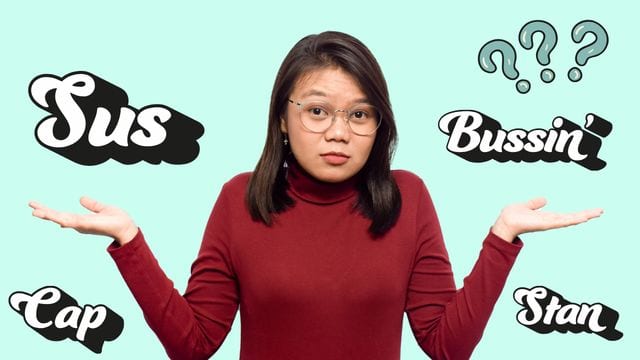
Have you ever experienced being around your kids at home and heard them say a word that you've never heard before? Especially if you are a millennial parent and have Gen Z kids (born from 1997 to 2010), or Gen Alpha kids (born after 2010), then this is your sign to brush up on their slang words.
Dr. Gail Galang, a registered psychologist with a PhD in Child and Family Studies and member of the Smart Parenting Board of Experts recently shared a short video on Instagram highlighting the importance of knowing your kids' language, even the slang words they use on a daily basis.
"It can really strengthen your relationship with your kids and so you become a smarter parent," Dr. Galang emphasized.
Here's a roundup of popular Gen Z and Gen Alpha slang that you might encounter, what they mean, and how to use them without sounding too cringe.
A parent's ultimate guide to Gen Z, Gen Alpha slang
Everyday expressions
These are words you might catch your kids saying in a normal conversation, yet you might not know their meanings or how to use them in a sentence.
'Bet'
What it means: similar to saying "yes" or "sure"
How to use it: "Want to go to the grocery with me?" "Bet."
'Bias'
What it means: someone's favorite person, thing, or group, in the context of fandoms, like K-Pop, P-Pop, or TV shows.
How to use it: "Who's your bias in BINI? Mine is BINI Mikha!"
'Cap' / 'No cap'
What it means: "cap" means a lie or something that's not true, while "no cap" means you are being honest
How to use it: "No cap, this is the best weekend we've ever had as a family!"
'G.O.A.T'
What it means: an acronym for "greatest of all time," used to describe someone amazing or the best in what they do
How to use it: "Mom, you're the G.O.A.T!"
'Extra'
What it means: being overly dramatic or exaggerated
How to use it: "Your project is so extra! I'm proud of you!"
'Ship'
What it means: short for "relationship," and is used to express support for two people in a relationship, whether real or fictional
How to use it: "I ship Donny and Belle! How about you?"
'Slaps'
What it means: used to describe something nice or amazing, especially in the context of music
How to use it: "Wow! This new song slaps! Lakasan mo pa!"
'Sus'
What it means: short for suspicious or suspect; used when something or someone is fishy or untrustworthy
How to use it: "Your dad said he's not buying me anything for Mother's Day. But that's kinda sus."
'Vibe check'
What it means: checking whether a certain person or place feels right or has good energy
How to use it: "Vibe check muna natin 'yung coffee shop before we buy something!"
'Yarn'
What it means: a playful way to say "iyan"
How to use it: "Wow, ang healthy ng food mo ah. Diet yarn?"
Affirmations and emotions
These are slang words that you can tell your kids to compliment them. These terms can also give you an idea how they are feeling.
'Baddie'
What it means: someone who is confident and stylish
How to use it: "You're such a baddie in that 'fit! It looks good on you!"
'Bussin''
What it means: often used when referring to food, meaning it's extremely good
How to use it: "This tinola is bussin'!"
'Cringe'
What it means: something is awkward or embarrassing
How to use it: "Napanood niyo yung trending na dance challenge sa TikTok? Sobrang cringe!"
'Glow up'
What it means: when you notice something improved in someone's appearance or confidence
How to use it: "Naks, nag-glow up ka ah! Motherhood looks good on you."
'Slay'
What it means: often used as a compliment, suggesting that someone is doing great or looking fabulous
How to use it: "Wow naman. You're slaying that outfit, 'nak!"
'Stan'
What it means: a superfan, an expression to say you like someone so much
How to use it: "I stan you baby so much!"
Digital and meme culture
These acronyms are harmless, parents! Decode these acronyms before getting angry!
'AFK'
What it means: an acronym for "away from keyboard," when the person is not actively present, especially in online games or chats
How to use it: "AFK ka muna 'nak, dinner muna tayo!"
'Naol'
What it means: shortened version of "Sana all" meaning "I wish I had that too!"
How to use it: "Naol may hug bago matulog!"
'GG'
What it means: stands for "Good game," meaning "It's over" or "Deads"
How to use it: "Naku, sira na naman 'yung aircon. GG tayo sa init niyan."
'Skrrt'
What it means: means to leave quickly, as if imitating car sounds
How to use it: "Skrrt tayo sa bahay nila Lola mamaya!"
Why is it important to know their language?
Dr. Galang, who is a mom of four and also a co-chair of the Miriam College Psychology Department, cited three reasons why it's essential for parents to familiarize themselves with the slang words their children use.
"It shows your kids that you're interested in their world, which can help bridge the generation gap and keep the lines of communication open." —Dr. Gail Galang
1. It improves the way you connect and communicate.
"First, [it helps] for enhanced communication. When you understand these terms, it helps you to connect with the kids. You'll be able to engage in conversations about their interests, no matter what these may be," she said.
2. It keeps you up to date.
If you are vying to be a cool parent, knowing these words helps you stay relevant. "Slang is a very big part of youth culture, and knowing this will keep you in the loop. It shows your kids that you're interested in their world, which can help bridge the generation gap and keep the lines of communication open," Dr. Galang explained.
View this post on Instagram
3. It gives you a sense of how they are feeling.
Slang words often carry emotional weight. Dr. Galang reminds that by knowing these words, you will be able to understand how your kids feel about certain things. This way, you will be able to support them effectively.
Tips for learning and using Gen Z, Gen Alpha slang words
1. Don't overdo it!
You know your kids. They don't like it if their parents overdo things, that's why if you want to try using slang, don't force it or make a big deal out of it.
2. Listen and observe how your kids use slang.
Your kids don't want you to be using slang words in every chance you get. Also, set boundaries and discuss moments when slang is inappropriate, such as during formal events and in school.
3. Stay up-to-date by engaging with their interests.
The best way to engage with your kids is to really take time and make an effort to know what they like, dislike, and love. Whether it's the new series they like on Netflix or the artists they listen to or follow on social media, they will appreciate it if you go the extra mile to know about their current faves.
Follow Dr. Gail Galang (@docgailgalang) on Instagram and on TikTok.
What other Gen Z and Gen Alpha slang words do you know? Let us know in the comments section! Skrrt!
More from sp

Lorem ipsum dolor sit amet, consectetur adipisicing elit, sed do eiusmod
Lorem ipsum dolor sit amet, consectetur adipisicing elit, sed do eiusmod
