
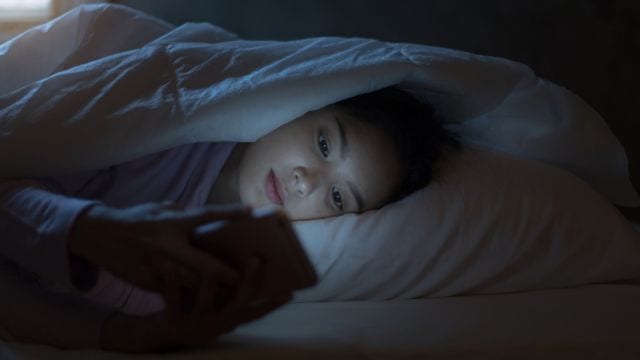
It’s not uncommon to see kids having and using mobile phones these days. They use hem every chance they get, whether for school, social activities, watching videos,or playing games. Most parents, for their part, try to limit their kids’ time on said devices as much as they can, especially for young kids. While a lot has been said about how detrimental screen time is for kids, a recent study shows how screen time can impact a child’s performance in school.
In a recent study published in The Journal of Early Adolescence, researchers found that late-night smartphone use in children can impact their academic performance. Previous studies have found that excessive screen time has several negative impacts on kids, such as difficulty in focusing and even ADHD-like symptoms. This new study “aims to provide a more comprehensive understanding by examining these associations over time.”
Anja Stevic, a postdoctoral researcher in the Department of Communication at the University of Vienna and study author, said, “The topic caught our interest due to concerns surrounding increasing smartphone use among children. However, the context in which smartphones are used is of key relevance in this study.”
“Understanding the potential impact of late-night smartphone use on attention during the day and school performance is crucial, as education is a fundamental aspect of a child’s development. Conducting research on the consequences of nighttime smartphone use has significant implications for education, health, parenting, and policy-making. It addresses critical concerns about the impact of technology and provides insights into how to support optimal smartphone use habits among children.”
The study
A two-wave panel survey was conducted in Germany, with 822 parent-child pairs in the first wave (Time 1) and 384 pairs in the second wave (Time 2) with a four-month interval. This setup allowed researchers to monitor and study how children’s nighttime smartphone habits can impact their attention and school performance in the long run, while also controlling baseline measures.
Parents and kids were also asked to complete an initial questionnaire which included questions about nighttime smartphone use, attention problems, self-assessed school performance, and actual school performance.
What other parents are reading
The findings
Researchers were able to observe the following:
- More parents reported that their children were more likely to experience attention-related issues during the day when they have significant nighttime smartphone use.
- Parent-reported attention problems in the children also have a negative effect on the children’s subjective school performance–meaning the kids themselves see that they are not performing well in school.
- In addition to a negative effect on the children’s subjective school performance, the parent-reported attention problems also affected the children’s achieved school performance – meaning they tend to receive lower grades in school.
- However, the study also found a direct positive relationship between nighttime smartphone use and achieved school performance. This means that children who use their smartphones at night tend to receive good grades in school. Stevic said of this, “In a way, this finding suggests a benefit of having access to smartphones during nighttime and actively engaging with it. For children, the device is also a source of invaluable information and social support from peers, thus positively contributing to their achieved school performance.”
What parents should know
It is important for parents to understand that this study reveals the associations or connections, and not causation, and there might be other factors at play in the relationship between smartphone use and school performance. The content or activity done on smartphones – such as reading or gaming, for instance – was not assessed in this study, which could be an important indicator of the experiences the children are exposed to before they sleep.
The study also highlights the importance of responsible smartphone use, digital literacy education, and effective communication between parents and their kids. Parents should recognize the impact of smartphone use on their child’s sleep and attention problems, and possibly take steps to mitigate any potential negative consequences.
Finally, the study reveals a complex relationship between children’s late-night smartphone use and their school performance. While excessive screen time can lead to attention problems, the positive relationship between smartphone use and school performance suggests that technology can be beneficial when used responsibly. It emphasizes the need for further research and the development of interventions to optimize children’s nighttime smartphone use, ultimately ensuring that digital technologies positively contribute to their developmental progress.
READ MORE ON HOW SMARTPHONES CAN HELP OUR KIDS:
What other parents are reading

Lorem ipsum dolor sit amet, consectetur adipisicing elit, sed do eiusmod
Lorem ipsum dolor sit amet, consectetur adipisicing elit, sed do eiusmod
