How to Raise Resilient Kids: 6 Lessons From a Behavioral Pediatrician
A parent's job isn’t to remove every obstacle but to help children navigate challenges. Here are six expert-backed lessons on raising resilient kids.

Published on Oct 13, 2026
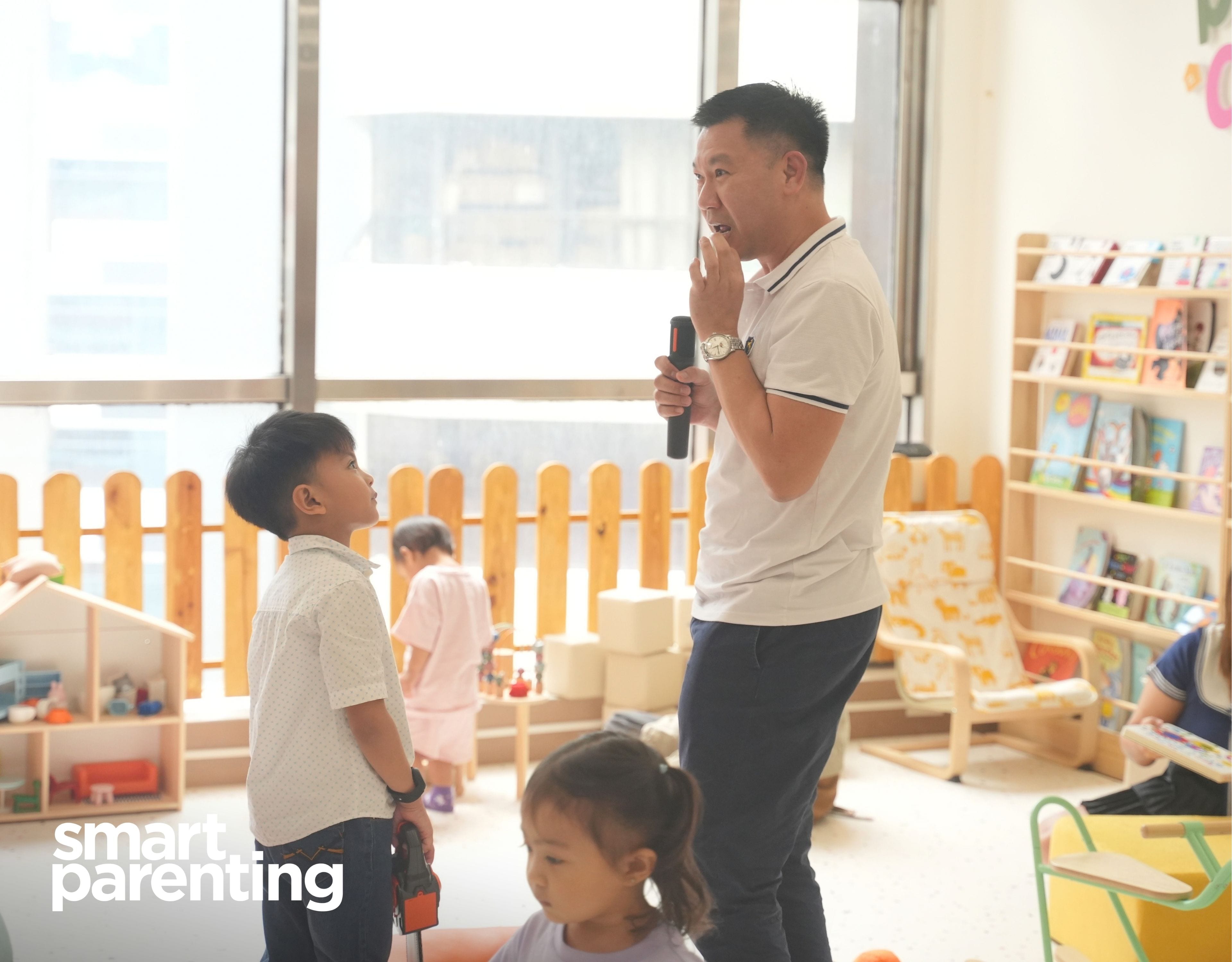
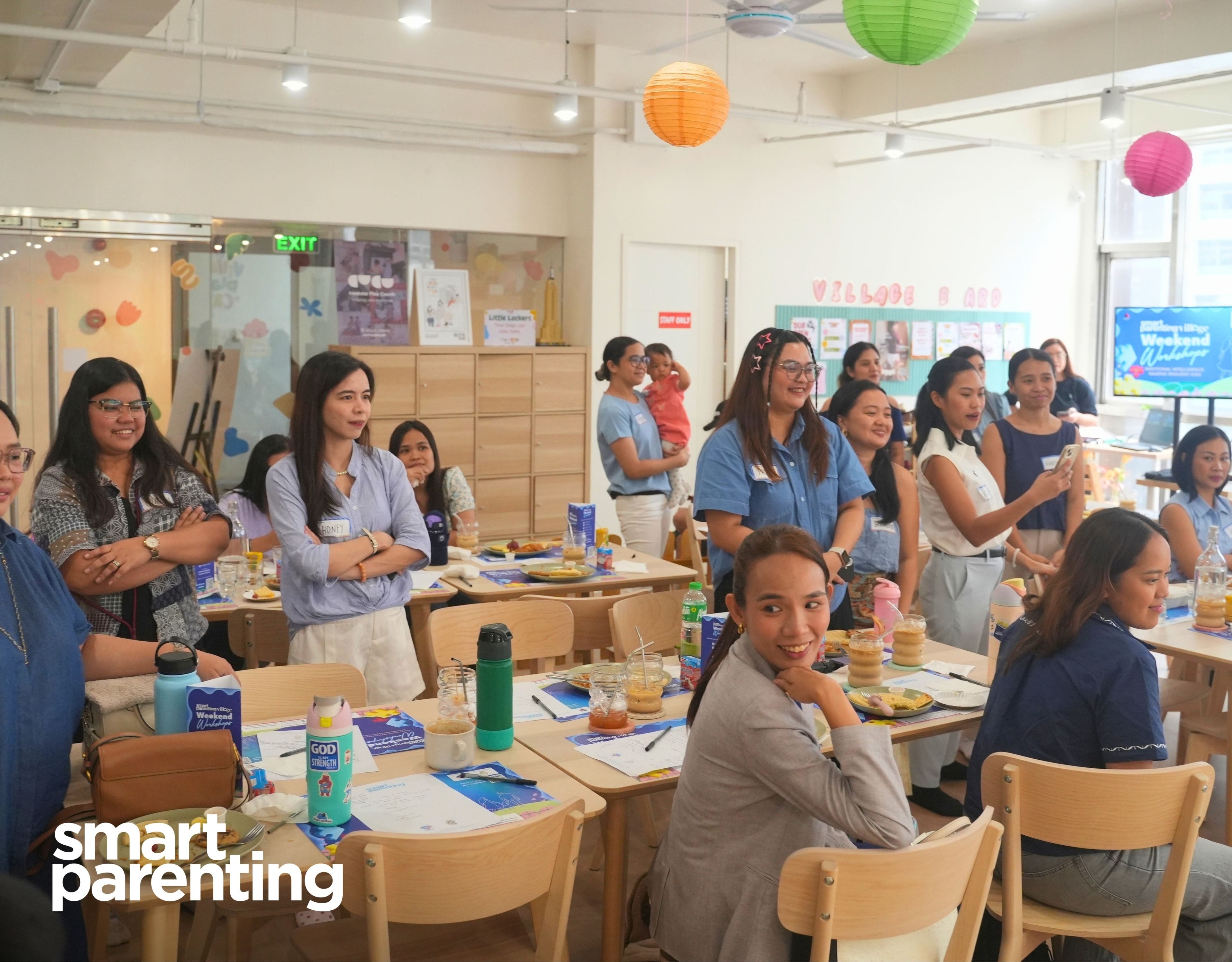
“Is overcoming difficulty what makes you a resilient person?” Smart Parenting Editor-in-Chief Ronna Capili Bonifacio posed this question as she welcomed parents and Smart Parenting Villagers to the second Smart Parenting Weekend Workshop, held in partnership with Safeguard and The Village Play Cafe.
Resilience is a term often used to describe Filipinos. According to a study published in an international journal on Social Science and Humanities, “It is in our nature not to give up, it is in our nature to exhaust first all means before submitting to a final fate or destiny, it is in our nature to be confident and believe that all things will come to pass, and that someday, everything will fall into its proper places.”
But what does resilience look like in children?
According to developmental-behavioral pediatrician Dr. Jan Harold Sia, a member of the Smart Parenting Board of Experts, resilience means “learning to move through hard feelings with support and skills.”
This was at the heart of the latest Smart Parenting Weekend Workshop, “Emotional Intelligence: Raising Resilient Kids.”
Rather than simply telling parents to be strong or let kids figure things out on their own, Dr. Sia focused on practical ways parents can help children name and understand their emotions, regulate their feelings, solve problems with support, and develop healthier relationships.
For Dr. Sia, “a parent's job is to walk beside the child through obstacles, not remove all obstacles.”
“Resilience grows when kids feel understood and coached, not just told to be strong,” he said.
Here are six important lessons from the workshop, including specific phrases Dr. Sia encouraged parents to use with their children.

Screen Time and Your Baby's Brain: Why Your Phone Habits Matter
Read here6 Lessons on Raising Resilient Kids
1. Resilience isn’t about making kids tough. It’s about helping them through hard feelings.
Emotional intelligence starts with helping children name what they feel. Dr. Sia described emotional intelligence, or EQ, as the ability to be aware of emotions and make wise choices even when those emotions are strong.
“EQ is not about being nice or well-behaved…It's about being aware and making wise choices even when emotions are strong, particularly negative emotions,” he said.
The important part is making emotions something children can talk about rather than something they are expected to hide. One practical strategy he emphasized was “name it to tame it.”
Instead of simply telling a child, “Don't cry,” parents can help put their feelings into words. For example, they might say, “You feel disappointed because your tower fell.” Other examples Dr. Sia suggested saying include:
“You must feel really sad.”
“You must feel angry because you didn’t get what you wanted.”
“I see you’re smiling. You must be very happy riding your horsey.”
For younger children who don’t have enough words to express themselves yet, parents can use pictures, drawings, feeling faces, or an emotion chart.
Dr. Sia suggested making an emotion weather chart, where sunny represents happiness, cloudy represents another feeling, and stormy represents a more intense emotion.
Parents can also expand their children’s emotional vocabulary beyond happy, sad, angry, and scared by introducing words such as frustrated, left out, nervous, and proud.
For older kids and teenagers, Dr. Sia even encouraged parents to use expressions their children are familiar with.
“You look sus,” he offered as one playful example, followed by, ‘What happened? Tell me about it.”
The goal is to make conversations about feelings a normal part of family life. As Dr. Sia explained, emotional intelligence is a learnable skill. The more children practice recognizing and naming their emotions, the better they become at understanding them.

The Manosphere Is Here—and It's Coming for Our Sons
Read here2. Resilience means learning to move through hard feelings with support and skills.
Resilience doesn’t develop when parents solve every problem for their children. Dr. Sia encouraged what he called productive struggle: allowing children to experience age-appropriate challenges while giving them the support thet need.
“Struggle with support builds strength,” he said. This was the idea behind what Dr. Sia called productive struggle.
The goal isn't to leave children to figure things out alone. It's to resist the urge to immediately rescue them whenever they encounter something difficult. A resilient child can experience disappointment or failure, recover, learn from what happened, and try again.
That means parents don't have to remove every obstacle from their children's path. Instead, they can walk beside them as they face age-appropriate challenges.
Dr. Sia acknowledged how tempting it can be to take over, especially when parents are busy and in a hurry. But doing everything for a child also takes away opportunities for them to learn.
And when children overcome these challenges, Dr. Sia encouraged parents to “praise efforts, strategies, and persistence, not just results.”
Instead of simply saying, “Ang ganda naman ng drawing mo,” parents can be more specific about the effort they noticed.
For example, Dr. Sia suggested, “I like it that you’re doing it again to make it perfect.”
He also encouraged parents to ask children questions after a setback, such as “What did you learn?” and “What will you try next time?”
These questions help children reflect on their experiences and think about what they can do differently, rather than focusing only on whether they succeeded or failed.


Saab and Jim’s 7-Year-Old Son Vito Recorded His Debut Album
Read here3. Connect before you correct.
For Dr. Sia, this means putting the relationship first before enforcing rules. “Children listen better when they feel felt. Children will listen to the adult who gives them the most positive attention. Hindi porke Mommy ang title or Daddy ang title, makikinig ang bata sa inyo–No,” he explained.
When a child is upset, parents may instinctively want to solve the problem immediately.
But Dr. Sia encouraged parents to “connect first, then coach. Validate first. Solve later.” That means noticing the emotion, naming it, validating it, and only then helping the child figure out what to do. “Hindi kailangang lecture palagi,” he said.
Validation doesn't mean agreeing with everything a child says or does. It means acknowledging that the child's emotional experience is real.
For example, parents can say, “That's okay that you feel that way. It's normal that you feel that way.” Dr. Sia also encouraged parents to draw from their own childhood experiences when talking to their kids. “That must have been really hard for you. I remember when I was a five-year-old, I also felt that way. Ang sakit-sakit, 'no? Nakakaiyak talaga,” he offered as an example.
“Avoid minimizing,” reminded Dr. Sia. Instead of saying, “It's not a big deal,” “Wala lang 'yan,” or “Stop crying, you're fine,” parents can acknowledge their child's feelings and give them time to calm down.
“Choose words and reactions that build skills, not shame,” he said.

Suspended na Naman? Parents, Educators on Lost School Days
Read here4. Emotion coaching reduces anxiety and behavioral problems.
Let kids struggle—but don't leave them struggling alone. It's tempting to step in when a child is taking too long, getting frustrated, or doing something differently from how we would do it. But sometimes, that struggle is part of learning.
Dr. Sia encouraged parents to allow age-appropriate challenges while remaining available to guide their children. Instead of immediately doing the task for them, parents can break a difficult task into smaller steps and let the child participate in solving the problem.
Dr. Sia explained, “Once the child is calm, that's when you ask, ‘What do you think could help? Ano kaya pwedeng nating gawin? What's one small step that we can do?’"
For example, if a toy breaks, parents don't have to immediately fix it or buy a replacement. They can help their child figure out where the pieces are, what might be needed to put them together, and whether they need help.
He also emphasized the importance of carving out “special time”—around 15 to 20 minutes of one-on-one, device-free time with a child. The goal isn't to turn this time into a lesson or a series of instructions. Instead, parents focus on the child's play and give them their full attention.
To help parents make the most of this time, Dr. Sia introduced the PRIDE skills:
P — Praise appropriate behavior.
R — Reflect or repeat what the child says.
I — Imitate the child's play.
D — Describe what the child is doing.
E — Enthusiastically enjoy the interaction.
Of these five skills, Dr. Sia particularly emphasized praise, reflection, and description.
For example, when a child is playing with blocks, parents can say, “You're playing so quietly with the blocks.”
When a child says, “Mommy, look, I made a pizza,” parents can reflect the statement by saying, “Oh, you made a pizza.”
And when describing play, parents can simply narrate what their child is doing: “You're getting fruits. You're opening the blender. You're putting fruits inside the blender.” Dr. Sia compared this to being a sports commentator.
He also reminded parents that praise should be specific. Rather than simply saying “Good job,” they can say, “That's a great way to play gently with the toys,” or “I like it when you share the blocks.”
During special time, parents should avoid asking too many questions, giving instructions, or correcting their child's play. The point is to let the child lead while the parent gives positive attention. This becomes especially helpful when teaching children skills such as sharing and taking turns.
During the workshop's Q&A, Dr. Sia suggested that when siblings fight over a toy, parents can acknowledge what both children are feeling. “I can see you're fighting over this one. You're both angry. Tell me what happened,” he offered as an example. And when parents notice their children sharing, they can reinforce the behavior by saying, “Wow, I like it that both of you are sharing toys and taking turns.”

Angelu De Leon on Single Parenting: ‘I Was Once a Solo Parent, Mahirap’
Read here5. Practice emotional-regulation tools before the meltdown happens and model it, too.
A child who is already overwhelmed may not be ready to learn a new coping strategy in the middle of a meltdown. That's why Dr. Sia encouraged parents to practice regulation skills while children are calm.
Some of the tools discussed during the workshop included:
Balloon breathing: Slowly breathe in while allowing the tummy to expand, then slowly breathe out. Dr. Sia suggested helping children imagine they're smelling a flower and blowing out a candle.
5-4-3-2-1 grounding: Notice five things you can see, four things you can touch, three things you can hear, two things you can smell, and one thing you can taste or feel.
Movement: Shake, stretch, dance, or move the body to release tension.
A calm corner or cozy space: Create a comfortable place where a child can settle down with appropriate sensory items, books, drawings, or whatever helps them feel calm.
The key is repetition. Children need to practice these tools when they're calm so the skills are more familiar when difficult emotions arrive. “Don’t learn in crisis,” Dr. Sia reminded parents.
Of course, helping kids regulate is just as important as modeling them. “Show empathy to others in front of them. 'Di ba when you're meeting with your friends, ipakita niyo 'yan. Apologize and repair. Eh, wag tayong mayabang. I raised my voice–I'm sorry. Next time, I'll pause first,” he explained. Or when a conversation becomes heated, they can pause and say, “Wait, stop. I need to be quiet first.”
Dr. Sia also encouraged parents to show empathy toward others and apologize when they make mistakes. “I raised my voice. I'm sorry. Next time, I'll pause first,” he offered as an example.
He even shared something he tells his own children: “I need help. Please, kids, if you hear me na nagshi-shout na 'ko, you tell me. When we repair after mistakes, we teach them that relationships can heal,” he explained.
“Modeling is more powerful than our lectures,” Dr. Sia emphasized.

Girls in Sports Become Leaders in the Workplace
Read here6. Emotional intelligence is built on five core skills.
Dr. Sia discussed five core emotional-intelligence skills: self-awareness, self-regulation, motivation, empathy, and social skills or relationship management. These aren't fixed personality traits, he emphasized. They’re skills that children can learn and strengthen through practice. For younger children, parents can make emotions easier to understand by using feeling faces, drawings, an emotion thermometer, or even a “weather” chart.
For example, sunny might mean happy, cloudy might mean uncertain, and stormy might mean overwhelmed. These simple tools give children a way to recognize and communicate what they're feeling, even when they don't yet have the words to explain it. Parents can make the feelings chart part of their daily routine by asking, “Where are you on the chart right now?”
Dr. Sia also suggested a simple family activity called “rose, thorn, and bud,” which parents can practice during dinner. The rose represents something good that happened that day. The thorn represents something difficult. And the bud represents something the child is looking forward to.
Parents can also encourage gratitude by asking children to name one to three things they're thankful for.
For school-age children, Dr. Sia recommended practicing social situations through role-play. For example, a parent can pretend to be a classmate who takes their child's toy and ask, “What will you say? What will you do? What will you feel at that time?” If the child doesn't know how to respond, the parent can model what to do.
For teenagers, Dr. Sia emphasized the importance of respecting privacy and listening without judgment. When a teenager comes home upset, parents can say, “You look sad. Do you want to talk? I am here to listen.” And when teenagers aren't ready to talk, parents can reassure them: “I'll leave you alone muna. When you are ready to talk, I'm just here. The door is always open.”
The goal is to make children feel safe coming to their parents, even when they've made mistakes or experienced something difficult. For teenagers especially, Dr. Sia's advice was to listen more and lecture less.

"I'm Still Growing Up" Dani Barretto on Healing and Raising Kids
Read hereThere’s No Such Thing as Perfect Parenting
Your relationship with your child is one of your most powerful parenting tools. At the end of the day, the biggest takeaway wasn't a complicated parenting formula or how to become a perfect parent. It was the importance of building a positive parent-child relationship.
And that starts with something much more doable: connecting, coaching, modeling, and practicing these skills together.
Emotional intelligence develops in ordinary moments—as parents, we must consider the most mundane moments as opportunities for our kids to sit with their feelings and feel safe to seek support without us parents completely controlling their environment.
In the end, Dr. Sia also reminded parents that they may want to seek professional support if a child has frequent, intense tantrums or behavioral difficulties that don’t improve with parents’ coaching. Other signs include ongoing withdrawal or difficulty interacting with others, changes in sleep or appetite, school refusal, or continued struggles to make or maintain friendships despite support.
Parents who find it difficult to connect with their children or who are experiencing their own emotional difficulties may also benefit from professional guidance.
“Asking for help is a sign of wisdom. It's not failure,” Dr. Sia said. Seeking help is also a positive step toward supporting a child's emotional well-being.
As Dr. Sia reminded parents, “You don't need to be a perfect parent.” What matters is being present and willing to learn alongside your child.

Dr. Jan Harold Sia earned his medical degree from the University of the Philippines Manila and completed his pediatrics residency in New York. He pursued a fellowship in developmental-behavioral pediatrics at Yale School of Medicine and received specialized training in parenting programs through the Yale Child Study Center. He currently practices at Makati Medical Center.
Even something as simple as checking our phones while spending time with our babies can affect the quality of our interactions. Here's why your screen habits matter more than you might think.
5 Smart Money Moves to Future-Proof Your Family’s Finances
Read hereA doting mother of two, April finds her greatest joy in traveling to new places with her family. When she's not chasing new horizons or penning down her thoughts, she channels her creativity into cooking, baking, or getting lost in the pages of a beloved book.