
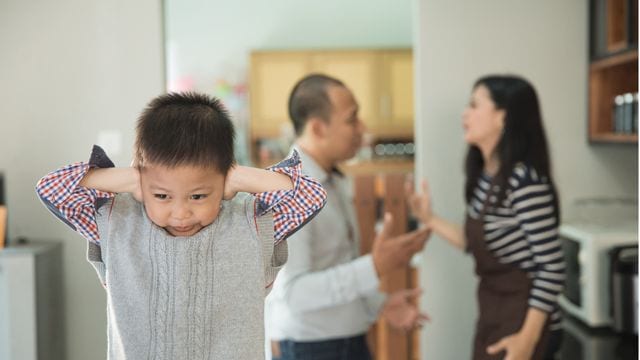
You spent the day taking care of your child: preparing all his meals and snacks, playing with him, putting him down for a nap, cleaning up his mess around the house, showering him, and putting him in clean clothes–all while troubleshooting and meeting deadlines at work. Then, your partner comes home from a day at work, parks himself in front of the TV, and asks what’s for dinner.
And you lose it because you’re human and you’re tired of keeping it together throughout the day for your toddler and work. He loses it too, because he’s human and tired from a whole day of work, possibly missing his toddler. But you both lost it and took it out on each other with a shouting match. And then, you realize, your child is there with you, and he heard everything. So what do you do?
BigLittleFeelings, an Instagram account from child therapists, tackles this topic in one of their posts: How to make any possible meltdowns or fights between you and your partner as teaching moments for your child. Because the truth is, parents are still humans who will sometimes let their emotions get the best of them.
The first thing that you and your partner should do is to calm down and then process and repair with your child by:
Owning it
You can say: “We were having a lot of big feelings earlier today.”
Or: “Marami lang kaming feelings kanina at hindi namin ma-control.”
You have to show your child that you acknowledge your feelings. Own your feelings. Akuin mo. This way, you also get to show your child that having big feelings and acknowledging them is normal for everyone. This will help them develop strategies to manage their emotions, which can then help build social-emotional skills. The more aware and skilled our children are socially and emotionally, they can more effectively handle their relationships, calm down, and problem solve when they encounter challenges.
Acknowledging their feelings
You can say: “You heard our voices get loud, and I’m sorry if that scared you or made you upset.”
Or: “Narinig mo kaming nagsisigawan kanina. Sorry if natakot o nalungkot ka because of it.”
It’s always important to acknowledge our child’s feelings, and while we might feel guilty that we are the cause of their getting upset this one time, it’s more important that we talk to them about it afterwards. Acknowledging their feelings can help them calm down and strengthen our relationship with them. Telling them that it’s okay if they feel upset or scared or mad helps communicate to them that we understand them and they are loved, even if they feel these things.
Making them feel secure
You can say: “Mommy and daddy are still friends and still love each other–even when we have big feelings.”
Or: “Love pa rin namin ang isa’t-isa. Friends pa rin si mommy at daddy kahit nagagalit o naiinis kami minsan."
A sense of security is important for growing children as it can keep them mentally healthy. And seeing their parents fight or angry with each other can affect this sense of security. It can make them worry if the fight is because of them or can affect their way of life. So it’s important to show them that you have made up and love each other no matter what to reaffirm their sense of security.
Setting a growth goal
You can say: “We will work on handling our big feelings without yelling next time.”
Or: “We’ll try na maging maayos at hindi magalit o sumigaw sa susunod.”
It has always been said that parents are their children’s role models, and that children mirror their parents in terms of behavior and attitude. So in this instance, it’s important to tell and show them that you’re willing to do the work in handling your big feelings and improving your relationship with your partner. This can show your child that there’s always room for improvement in oneself and one’s relationships even as adults.
What other parents are reading

Lorem ipsum dolor sit amet, consectetur adipisicing elit, sed do eiusmod
Lorem ipsum dolor sit amet, consectetur adipisicing elit, sed do eiusmod
