
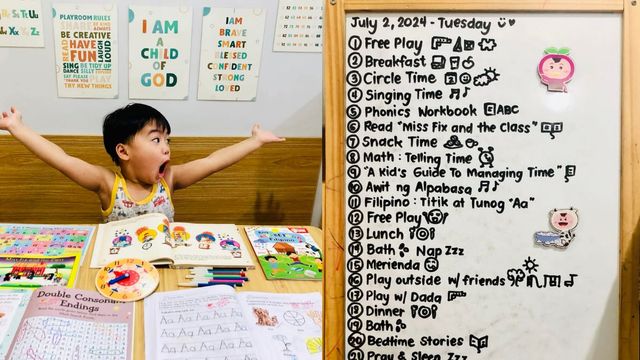
Did you know that children who stick to routines are more likely to feel secure and promote emotional resilience?
In James Clear’s book, Atomic Habits, we learn that when adults adhere to good habits, they experience compounding benefits in their self-improvement.
Similarly, children who follow consistent routines are more likely to develop and thrive in their growth and well-being. Establishing routines helps children understand the structure of their day, making transitions smoother and reducing anxiety.
Here's how a mom was able to reduce her son's screen time by setting and adhering to a daily routine.
Mom sets routines for child to help reduce screen time
Mommy Sarah Mateo, a homeschooling mom, shared on her Facebook account the routines that Kaius, her 4-year-old son, accomplishes daily. She described her son as a very expressive kid, who is "playful, curious, talkative, and spunky." He also loves painting, storytelling, and playing pretend as a police officer, soldier, or doctor. He especially loves riding his scooter and playing outside with his friends.
In her Facebook post, some of her son's routines include free play, storytelling, and guess what: a bit of screen time as well. Mommy Sarah also wrote her own routines alongside her son's tasks.
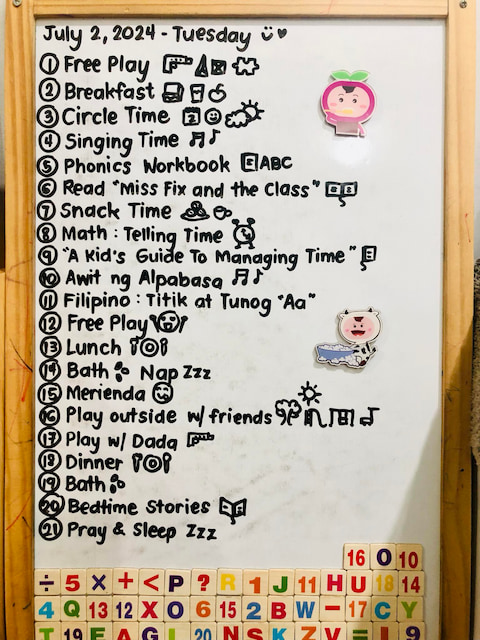
Kaius's favorite routine is his outdoor activity in the afternoon, where he gets to play with his friends at the playground. Their bedtime routines also include playtime with his Dada and his Mama's bedtime story. "We say our prayers, and he finally sleeps," Mommy Sarah recounted.
"[My son] went from being able to sit still working on one worksheet to enjoying answering three worksheets in one sitting! It definitely helped reduce his screen time." —Mommy Sarah Mateo
Having an expressive and outgoing son may be challenging for some moms, but Mommy Sarah found a solution by establishing routines in their home. When Smart Parenting asked her why she chose to stick to routines, she said she once noticed that her son's screen time and tantrums had increased. Her son also became fidgety and unable to sit still for long periods. Mommy Sarah thought it was because she spent less time playing and teaching her son, as she gets busy creating educational materials and selling them online.

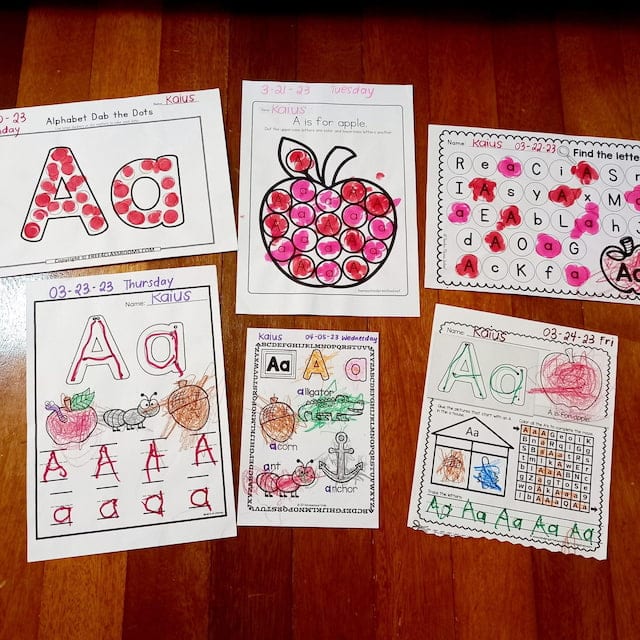
"I had to make a choice, and of course, I chose to focus on Kaius and his development," she shared. "Aside from playing and painting together and reading him books, I introduced phonics to him through simple coloring and cutting activities. After breakfast and before bedtime, we would work on one activity/worksheet."
"After a few days of consistently having the same routine, he'd start preparing the materials and setting them up on his small table. He went from being able to sit still working on one worksheet to enjoying answering three worksheets in one sitting! It definitely helped reduce his screen time," she revealed.
"Where well-established rhythms exist, there is much less parental verbiage, less effort, and fewer problems around transitions." —Kim John Payne, M.Ed.
The routines made a significant impact on her son's behavior at home. A few months later, they decided to start their homeschooling journey with a provider. Her son became more productive and confident. "He proudly and excitedly shares what he learns from our lessons. We both felt accomplished!" Mommy Sarah shared.
Mommy Sarah allows approved videos and channels on YouTube Kids, "He particularly loves Danny Go right now. Perfect sa kanya na gustong gumalaw nang gumalaw, sumayaw, at mag-release ng stored energy."
Her son also enjoys watching Lingo Kids, Zoboomafoo, Dr. Binocs, Bluey, and Paw Patrol.
"Pwede siyang mag-screen time after studying sa umaga (30 minutes) and before maglaro sa labas sa hapon (30 minutes). Minsan pag di nakanood sa umaga, we let him watch sa hapon for up to an hour. 'Pag hindi araw ng nood, we just play sa oras na yan," she shared.
Benefits of Having Consistent Routines on Children
1. Routines establish trust and security.
In his book Simplicity Parenting, Kim John Payne M.Ed. mentions that establishing routines means having "the sense of security and predictability that rhythm affords a child." He quotes: "Where well-established rhythms exist, there is much less parental verbiage, less effort, and fewer problems around transitions."
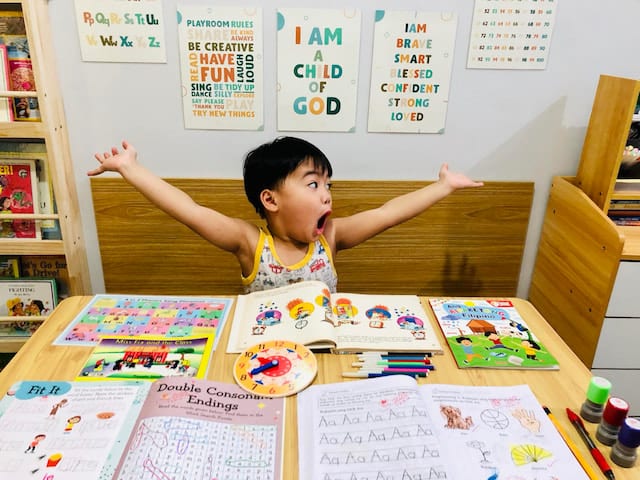
Children want predictability about what will happen the next day. That way, they learn to trust the adult world.
"When we started to have routines in our home, we witnessed great improvements in our family life— more meaningful interactions and more tasks completed." —Mommy Sarah Mateo
2. Routines encourage independence and resilience.
In an article by a group of clinical psychologists in Australia, they highlighted that routines encourage independence and resilience by providing children with a structured environment where they can accomplish things that spark joy and creativity. As children grow accustomed to their daily routines, they develop a sense of independence and autonomy. Understanding what is expected of them and taking responsibility for completing tasks boosts their self-confidence and self-esteem.

3. Routines reduce unwanted behaviors.
Because children have occupied themselves with tasks to be finished, they are likely to feel less restless and more focused. If children are given many choices regarding their gadgets, toys, and environment, they tend to feel overwhelmed, which leads to tantrums or disruptive behavior. By helping them stick to tasks that are helpful for their growth, they will be more confident about their day, and unwanted behaviors will be reduced.
Mommy Sarah shared how advantageous routines were to their family: "With routines, children also learn to be independent and responsible. They also learn what is expected of them. When we started to have routines in our home, we witnessed great improvements in our family life— more meaningful interactions and more tasks completed."
It takes a conscious effort to stick to routines. Sometimes, even bath time or breakfast at different times may disrupt children's development. As parents, we are responsible for establishing worthwhile routines that will help them feel less entitled and more trusting in the world around them. Maintain consistency in establishing routines and it may solve most of our parenting problems.
Check out this two-hour night routine that can benefit you and your child.
More from sp

Lorem ipsum dolor sit amet, consectetur adipisicing elit, sed do eiusmod
Lorem ipsum dolor sit amet, consectetur adipisicing elit, sed do eiusmod
