
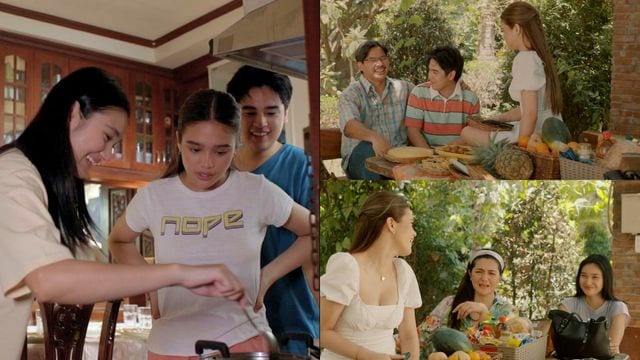
This Mother's Month, Maalaala Mo Kaya (MMK) aired a two-part episode about the Maguad siblings' tragedy. It depicted the 2021 murder case in Cotabato where two minor siblings died at the hands of a teenage girl their family had taken in. Unfortunately, the episode stirred fear-based narratives about adoption, many of which were one-dimensional.
Instead of critical conversations about systemic failures, restorative justice, or the complexities of trauma, some responses reinforced a dangerous idea: that bringing a non-biological child into your home is inherently risky. While this line of thinking is to be expected given the tragic case, it quickly shifts from caution to stigmatization.
When we conflate one case—however horrifying—with all foster or adoptive situations, we do a disservice to the thousands of families who have built safe, loving homes through adoption. We also risk vilifying children who have already experienced instability and abandonment.
On May 24, MMK issued a statement and disclaimer on the two-part episode:
To help clear up adoption misconceptions, we spoke with Chrina Cuna-Henson, an advocate for adoption and foster care. She's the Managing Director of Generations Home (formerly ROHEI Foundation), a licensed Child Placement Agency in the Philippines, and a member of the Smart Parenting Board of Experts since 2022.
Rethinking Adoption: Beyond the Headlines and Stigma
Adoption is often misunderstood partly because it's tied to situations society views as moral failures—like birth outside marriage, divorce, and poverty, among other things. After the MMK episode aired, many people began asking: Can adoption ever truly be safe? Doesn't a child's "background" determine everything?
Cuna-Henson offered a steady counterpoint. "We suggest a myth-busting approach. According to scientific research, what can genetics determine? What can genetics not determine?
Let's talk about neuroplasticity. What is it? With realistic and careful matching and support, the trauma left in the brain of a child from a hard place can be healed, and the family can thrive."
A study published in the National Library of Medicine, defines neuroplasticity as "the biological capacity of the brain to adapt physiologically or even alter its anatomical structure in response to stimuli or damage." This ability is central to learning, memory, injury recovery, and adapting to environmental changes.
This means a child's brain isn't fixed at birth. Their development depends largely on positive interaction, healing, safety, and connection.
She also addressed the nature-versus-nurture debate, or, in other words, whether a child's future is determined mainly by biology or by upbringing. She stressed that it's not that simple. Clinging to one explanation overlooks the complex ways genetics and environment shape a child.
"Nurture versus nature is an oversimplified way of looking at what goes into the psychology of a child. An unwanted child, regardless of social status, will experience neglect," explained Cuna-Henson.
"Physical trauma can happen in any family. Children learn from adults what causes differences between one person and another. Stigma is learned, not known since birth. A child may have genetic predispositions, but the rules of psychology (safety, survival, etc.) will work on them no matter if they are biological or adopted."
But What If We Can't Reach Them?
Still, many hesitate to adopt, especially when it comes to older children. There's another fear: What if we can't reach them? What if their hurt is already deeply established?
Cuna-Henson addressed this directly: "There are two windows of opportunity to support a child's healing and growth. First is from 0 to 3 years old, when the brain is rapidly making connections. The second is during the teenage years, when the brain is rewriting itself almost as fast as a toddler's, preparing for the future. When we adopt older children, we can look forward to a window of connection and healing as we build relationships with them."
She continued, "This is why high school friends have so much influence, or why teens seek mentors and parental figures. They're looking for connections that help them grow and mature. The benefit of older-child adoption is that they can verbalize their emotions and thoughts. They can speak for themselves or learn to."
"Babies are non-verbal, which is why addressing their issues may seem 'easier,' but older children are able to speak for themselves or learn how to speak for themselves."
For those hesitant about adoption—or made more uncertain by what they've watched—remember: the system is in place for a reason. Legal adoption takes time, and while that may seem like a drawback, it protects everyone involved. It helps ensure families are prepared, matches are thoughtful, and support is available every step of the way. Organizations like Generations Home guide families through this process.
"The National Authority for Child Care (NACC) designs systems with the best interests of the child and the adoptive family in mind. Each child has a social case study report and goes through a six-month trial period, with at least three case study assessments. Social workers, mental health professionals, and adoptive communities all provide support," explained Cuna-Henson.
Esther Suson, an adoptive parent to an older child and child therapist, shared her own process: "I prepared by thinking realistically about the challenges of adopting an older child. I joined seminars, read, did research, and talked to other adoptive families."
Communities Play a Role, Too
Communities also have a role to play. Cuna-Henson encouraged everyone to get informed, fight stigma, and recognize each child's potential.
"Learn to see every child—whatever their background—as someone with a unique opportunity to grow and thrive in a healthy family, with the right support."
In an earlier Smart Parenting interview, Chrina framed adoption not as a fallback, but as a joyful, intentional path.
"To understand adoption, we have to start by recognizing that it's just one of the ways to build a family."
She emphasized a shift in perspective: "Just as you would consider having a biological child, families can also consider growing through adoption."
"I don't think adoption should be seen as a Plan B. Families should adopt because they see the beauty in it. They believe a child who comes to them through adoption is no less precious than a biological one," she said. "You can love both the same. The only difference is how they came into your life."
A Larger Picture Often Overlooked
As of December 2022, roughly 5,875 children were living in government and private childcare facilities, but "only 1,369 were being processed for adoption," according to data from the NACC.
The majority of unadopted kids are over the age of four, but there are virtually no available statistics from the Philippine government on how many children have aged out without being adopted.
Stories like the one MMK featured can stir deep emotions, but they should also challenge us to think more deeply, not jump to sweeping conclusions. Adoption is not without its complexities, but it is also full of possibility, healing, and love. When we lead with fear, we risk closing doors that could lead to transformation for children and families. Listening to expert voices helps ground our perspective in truth, compassion, and long-term hope.
Click here for detailed information on adoption guidelines in the Philippines.
More from sp

Lorem ipsum dolor sit amet, consectetur adipisicing elit, sed do eiusmod
Lorem ipsum dolor sit amet, consectetur adipisicing elit, sed do eiusmod
