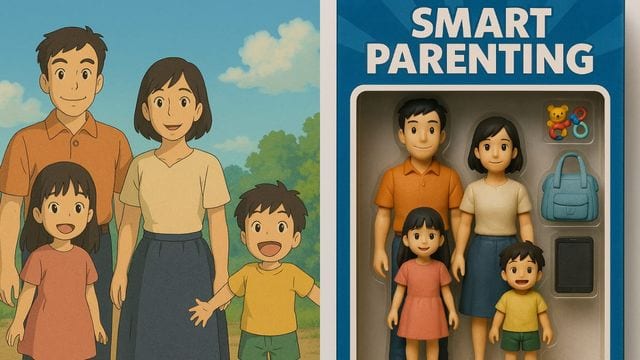
The images shown are AI-generated and do not depict real people or actual products. They are created for illustrative and creative purposes only.
Unless you’ve been living under a rock, you’ve probably seen your social media feeds filled with dreamy, Ghibli-inspired portraits. Over the past few weeks, people of all ages have taken to generating and posting AI-generated versions of themselves in the style of beloved Studio Ghibli films on their Facebook and Instagram accounts. It’s cute, creative, and fun—but before you upload your own, here are a few things to consider, especially if your kids are doing it too.
Here’s what every parent should know about AI-generated art and photo trends—and why it’s worth thinking twice before jumping in.
What are AI-generated photo trends
AI-generated images are digital images created by artificial intelligence algorithms instead of a human artist. They can be created in several ways, including using machine learning algorithms trained on existing images or generative models that can create new images based on a set of inputs. These images can then be used for a wide range of projects, including social media, marketing, and website visuals.
AI image generators are now widely accessible. Anyone, including kids and teens, can use free or low-cost apps or websites to turn themselves into anime or Disney characters, Pixar-style figures, Ghibli-like art, or even toy doll figures. All they need to do is upload their photos and either type in a command or press a button.
AI-generated images and art might seem easy, fun, and harmless, but they raise serious concerns, from data privacy to artistic integrity. The risks are even higher when children are involved.
Why you should be cautious
Here are key issues parents need to be aware of and discuss with their children before taking part in viral AI photo/art trends:
1. Privacy and data harvesting
Data privacy and usage are among the main concerns when using such platforms. You (or your children) are handing over your images to them. Many apps store, reuse, and sell your photos and biometric data. This means anyone can use your image or likeness in other pictures or things you have no control over. Users cannot easily scrub their data once uploaded, raising privacy and copyright concerns.
2. Children’s data in the wild
Teenagers love and are quick to jump into social media trends, especially AI-generated photos in which they can see themselves transformed into characters from their favorite films or series. Yet, they might be too young to fully understand the possible dangers and repercussions of uploading their photos onto apps or digital platforms.
Most of these AI apps are unclear about how they handle users’ data, including those of minors. This is concerning, especially since children’s images are sensitive and can be exploited in ways they or their parents can’t predict.
3. Potential for scams and deepfakes
Deepfakes are videos of a person that’s digitally altered to appear that they’re saying or doing something they didn’t say or do. It’s typically used maliciously or to spread false information. And as AI-based apps or websites generate most photo trends and deepfakes, the chances of your (and your kids’) photo getting used in such are high.
4. Hidden costs
Although most of these apps start free, they tend to push pricey subscriptions or in-app purchases to unlock “premium features.” Others might charge users once they’ve uploaded their photos, leaving them feeling trapped or scammed.
5. Ethics and the impact on artists
Most of the debate surrounding AI-generated images and art involves questions about its authenticity, ethical use, and impact on artists and the creative industry. Artists spend countless hours honing their craft, just for AI to copy it in a few minutes without the artists’ consent. AI somewhat devalues the artists’ work by making it easy for anyone to do at no cost.
Critics also argue that AI art lacks the “emotional depth, personal expression, and unique perspective that human artists bring to their work.” Unlike art, AI art cannot fully convey or capture human emotions and creativity since it is primarily based on existing data and algorithms, not human imagination.
AI-generated portraits may also violate intellectual property when they produce images using styles that mimic specific studios, like Disney or Ghibili, even if the images might seem harmless.
6. What the artists say
Concerns over AI-generated art are even more highlighted with the Studio Ghibli trend. Hayao Miyazaki, Studio Ghibli’s creator, has been very vocal about his thoughts on AI. When presented with an AI-generated project, he said, “I strongly feel that this is an insult to life itself.”
So what should parents do?
Before uploading your child’s, your family’s, or your photo to an AI app, parents should do the following smart steps and, at the same time, train their children to do the same:
- Read the fine print: Check if the app’s terms of use specify how your data will be used or stored. Know what rights you give up when you upload photos or use their app.
- Avoid uploading photos of your children: If possible, try to refrain from uploading any child’s image since their data is more valuable and more challenging to protect.
- Use reputable apps: If you really want to join the trend, stick to well-reviewed apps from reputable developers.
- Educate kids: Talk to your children about personal data, digital footprints, data consent, and the risks of sharing personal images online.
- Stay updated: Stay current with AI-related tools, trends, laws, and data privacy to guide your kids.
Online trends like AI-generated art and photos may seem harmless and fun, but it’s still best to be aware of the possible repercussions, such as losing control of your image and data. So before you upload that family photo, ask yourself, is it worth the risk?
Read this guide to digital parenting.
What other parents are reading

Lorem ipsum dolor sit amet, consectetur adipisicing elit, sed do eiusmod
Lorem ipsum dolor sit amet, consectetur adipisicing elit, sed do eiusmod