
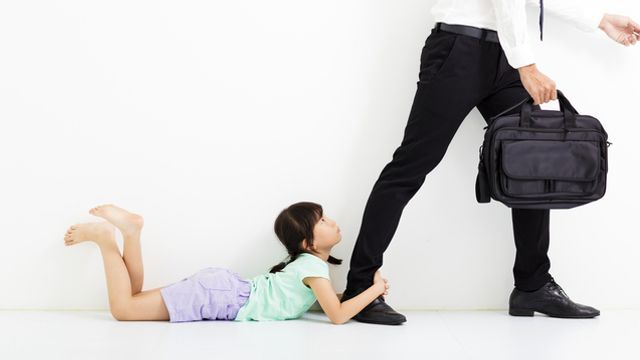
There is a perception that when it comes to children's development, the influence of mothers' affection takes the lead and fathers are second best. However, this is not the case, at least according to one study, which found that feeling rejected by a father is actually more detrimental to a kid's well-being than that of a mother's.
After analyzing 36 studies about parental rejection and acceptance conducted in various parts of the world, researchers Ronald Rohner and Abdul Khaleque said they have "not found any other class of experience that has as strong and consistent effect on personality and personality development as does the experience of rejection, especially by parents in childhood."
Their study concludes rejection by parents in early childhood increases the possibility of kids being anxious and having low self-esteem as they grow old. It also becomes a trigger for them to develop hostility and aggressiveness toward others. As a result, it becomes more difficult for them to build healthy relationships with their partners as they reach adulthood.
Another striking finding from the analysis published in Personality and Social Psychology Review is both feelings of rejection and physical pain trigger the same parts of the brain. But for Rohner, rejection lingers more since "unlike physical pain, however, people can psychologically re-live the emotional pain of rejection over and over for years."
Why effects of paternal rejection weigh more
Based on over 500 studies, paternal rejection is seen to create a bigger tear on a child's personality. Why do you ask? A group of psychologists think this is because fathers usually hold higher "prestige" in the family, making them more influential in a sense compared to a mother.
A recent study published in January 2021, with twins as respondents also found that a father's affection is directly linked to a child's self-esteem. The research "found that the identical twins in the pairs who felt greater affection from their father tended to have higher self-esteem. Surprisingly, this was not the case with mothers."
Acknowledging this heightened influence the father has on the child’s development, should shut down "mother blaming" or the tendency to put the whole weight of child-rearing on a mother's shoulder, making them the sole target of criticisms when a youngster misbehaves.
Rohner explains, "the great emphasis on mothers and mothering in America has led to an inappropriate tendency to blame mothers for children's behavior problems and maladjustment when, in fact, fathers are often more implicated than mothers in the development of problems such as these."
All these findings should encourage fathers not to hesitate to show their affection and support to their kids. Sometimes, not giving kids enough quality time or overlooking their milestones and achievements are forms of rejection.
In the end, both mothers and fathers should be able to work as a team when it comes to ensuring that their kids feel how much they are loved and cared for. It's time to defy old-school notions, which limit mothers' and fathers' roles in child-rearing.
Sources: Science Daily, Berkeley
What to do if you are not the favorite parent of your kids? Click here to find out more.
What other parents are reading

Lorem ipsum dolor sit amet, consectetur adipisicing elit, sed do eiusmod
Lorem ipsum dolor sit amet, consectetur adipisicing elit, sed do eiusmod
