
Trigger warning: depression, suicide
Mental health is not just the business of a psychologist. It's everyone's responsibility to care for the mental health of a community, and usually, it starts with the family.
"If a child has mental health issues and it's clinical, then family support is not enough." This is what television host, dad, and athlete Kuya Kim Atienza emphasized during a panel discussion on mental health last October 2023.
Kuya Kim was part of a panel moderated by Cat Triviño, founder of Mind Nation in celebration of World Mental Health Day. Together with Kuya Kim were Lynn Pinugu, co-founder of She Talks Asia; Leah Rasay, co-founder of Husay.co, and psychologist Lucille Foja, RPsy.
Kuya Kim Atienza opens up about mental health issues in his family
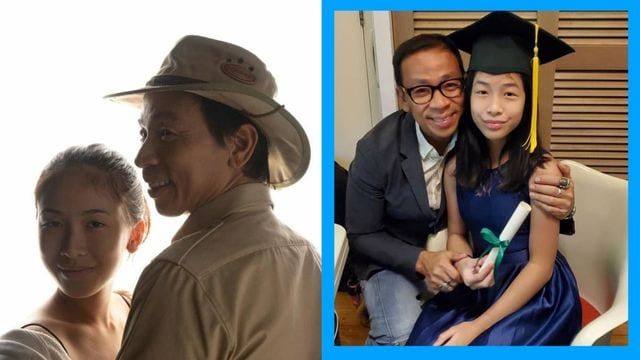
Kuya Kim shared that his daughter, Emman, was diagnosed with bipolar disorder, "Despite the fact that we give her so much love, so much attention, and so much understanding. There have been attempts at self-harm."
Emman is the eldest among three children with his wife, Felicia Hung-Atienza.
He said they kept it a secret for a long time because it's personal. But when his daughter herself posted about her ordeal on social media in 2022 to raise awareness on mental health, he also started to be open.
View this post on Instagram
As a Gen X-er born in 1967, Kuya Kim said that in his generation, mental health is something that's not being talked about, "You are either makulit or hyper." He even thinks that he has attention deficit and hyperactivity disorder (ADHD).
"Same thing with a lot of kids. A lot of them go undiagnosed, when actually it's already a matter of life and death," he said.
He then imparted the story of his 18-year-old niece, who took her life in a mall in Makati, in 2015.
Kuya Kim shared, "She was reaching out so badly, but no one understood her. As a matter of fact, before she took her life, she posted on Twitter: "Give me one reason not to." But it was so cryptic. Nobody understood what it was. Nobody replied. She took her life that day."
Their family only saw his niece's post after the tragedy. This made him become more sensitive about his friends' posts on social media that if he notices even just a hint of self-harm, he would reach out to them.
"At first I was thinking, "Arte lang ito." Very typical of a Pinoy parent. But you know the risk was just too high. Paano kung hindi umaarte? What if she succeeds in taking her life?" —Kuya Kim Atienza
Kuya Kim reiterates, "Family support is not enough. If a kid is diagnosed to have clinical depression or being bipolar, then medical help is crucial as well."
What hinders kids from seeking help
"Teens don't want to become a burden that's why they are hesitant to seek professional help," said Foja. Another factor are the stigmas that surround mental health.
"There are many ways to seek professional help, if there's none in the family," Kuya Kim emphasized.
Advocating for mental health awareness starts by changing our mindset, Kuya Kim says. "From a parent's point of view, I changed my paradigm. When my daughter was starting out with her disease/issue, at first I was thinking, "Arte lang ito." Very typical of a Pinoy parent. But you know the risk was just too high. Paano kung hindi umaarte? What if she succeeds in taking her life? Would I rather have a 'maarte dead Emman' or a 'maarte alive Emman?' It's that simple."
"So I had to change my paradigm, to emphatize, and to think from her point of view, rather than imposing my 1970s culture na lahat ay arte lang, na lahat ng Gen Z ay snowflake at malambot."
"Hindi eh, to them it's real. And a lot of her friends are the same, and it's really an epidemic. I'd rather have a 'maarte' alive daughter than a 'maarte' dead daughter, that simple," he said.
What parents should do if they see signs of mental health issues in kids
Psychometrician and professor Lucille Foja, RPsy shared what parents should do if they sense that their child is going through a mental health issue. Remember these three L's.
1. Look for the signs.
Observe if there are any deviant or dangerous behavior on your child, and if there's a distressing event that has occurred. Another sign also she said, would be when they suddenly become hostile, "Pag nananakit na sila. Always look for that sign," Foja said.
2. Listen to them.
Put aside your own opinions, and put yourselves in their shoes. Practice empathy. "We think that we need to respond by solving another person's problem whenever they tend to open up to us. I think what we need to practice more is how to respond with empathy," Lynn Pinugu said. "People with mental health issues sometimes just need to unload and express their thoughts and be reminded that they are not alone."
3. Link them to a mental health professional.
When the support needed by your child is beyond what the family can provide, it's best to seek professional help.
For those who want to seek professional help for mental health issues, there are a lot of options available online, including free and affordable mental health services from MindNation. Check out these mental heath apps too.

Lorem ipsum dolor sit amet, consectetur adipisicing elit, sed do eiusmod
Lorem ipsum dolor sit amet, consectetur adipisicing elit, sed do eiusmod
