
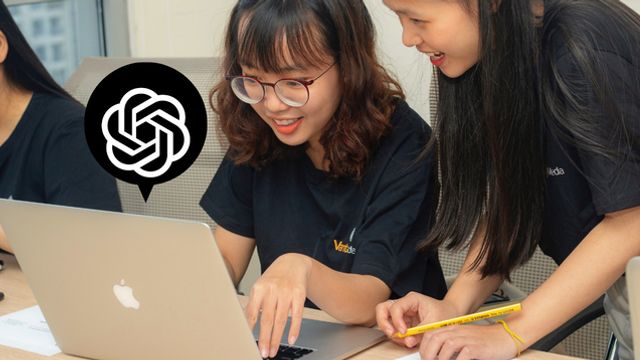
Imagine having a tutor that one can chat with any time of the day, any day of the week. Someone who could help answer questions, research, and even write papers. Now imagine that on the other end of that chat is not an actual person, but an artificial intelligence app, that you don’t even have to pay for.
Sounds too good to be true? Maybe, maybe not.
ChatGPT is a chatbot created by OpenAI, a company founded by Sam Altman, Elon Musk and others. It was released in November 2022, and within five days garnered one million users worldwide. When I tried to make an account, I found out that it’s at capacity already.
What makes it so attractive…let’s see.

ChatGPT and students
It’s free for now. Plus, it’s user-friendly. It can help not just with answering questions about homework, but also create schedules, write letters, summarize texts and more. It’s been described as the best AI chat platform ever released.
But what does this mean for school-aged children? Should we be allowing them to use ChatGPT with their schoolwork?
'Some consider it as just another study tool, just like calculators, thesauruses, Cliff Notes, Google...' -Thumby Server-Veloso, early childhood educator
Parents often complain about how difficult homework is nowadays. There’s also the difference in the way things are being taught. Parents and children argue about solving math problems, with kids insisting, “But that’s not how my teacher showed us!” So if we hire tutors to help our children, what’s the difference with using ChatGPT?
On the plus side, one of the amazing things about this AI is that it can answer questions in a conversational and articulate way. It’s as if you were chatting with someone in real time. Which makes it easy for students to use. The way it is programmed, the more it is interacted with, the better it will become at providing answers.
Consider it as another study tool
Some consider it as just another study tool, just like calculators, thesauruses, Cliff Notes, Google, Google Translate, Google Earth, etc. Which students should be able to use to get the extra help they need when they need it.
Teachers could show how to collect responses from ChatGPT that could help students when composing essays, creating task schedules, or even breaking down team assignments in group projects. Students can also compare and contrast collected answers, or see how they can improve the responses generated by the app. There is a treasure trove of things ChatGPT can do for students.
The possible problems of ChatGPT and education
1. Dependence
The problem with ChatGPT arises when students become too dependent on it and simply copy their answers without doing their own research, double checking facts, or inputting their own thoughts, ideas, and learnings. And if you turn in something copy-pasted from ChatGPT, it’s cheating.
2. Source of information
Plus it’s important to note that one of the identified downsides to ChatGPT is that it gets its information from the Open Web. We know not everything on the internet is true, there are sites that exist to spread false information. ChatGPT does not yet seem to be able to fact check, or distinguish a fact from misinformation.
'Some schools have already been strengthening their values program and putting emphasis on their honesty system' as a response to artificial intelligence
Then, there are some who claim that ChatGPT is known to “hallucinate” which in AI terms means something like giving out wrong answers confidently. I know a few people that do that, but was surprised to learn this was an issue with AI, too.
3. Sexism or racism
Another problem is that ChatGPT could possibly come up with sexist or racist comments, depending on which sites were used to create the response. Plus it’s not able to name its sources or give information beyond the year 2021. While ChatGPT was programmed to decline malicious or inappropriate requests, some users have found that by rephrasing questions to seem harmless they have received answers that the programmers might not have wished the AI to provide.
What parents and educators can do in response to ChatGPT
1. Strengthen values
It’s fairly new, and maybe there’s no need to worry so much about it. In time, all the issues that worry us about ChatGPT may be resolved. In the meantime, some schools have already been strengthening their values program and putting emphasis on their honesty system and rules for honor or recognition, as students over the years have been finding more and more tech-savvy ways of cheating.
2. Upskill and learn how to identify tech-based cheating
Educators are also learning how to use tech to fight tech-based cheating. A student from Princeton, Edward Tian, created a program, GPTZero, that determines how much of a text is AI generated. While other schools are clamping down by restricting access on the school internet to unfavorable apps or sites.
3. Remember that children need guidance in navigating the Internet
For now, teachers and parents should help their children wade through the wonderful world of technology. Using tools like these might be inevitable, especially since they are so exciting and groundbreaking.
The best thing we can do is educate our children of the risks, and more importantly, teach by example and practice together how to ethically and responsibly use it.
Thumby Server-Veloso is a member of the Smart Parenting Board of Experts. She is an early childhood educator with 30 years of experience. She is fondly known as Teacher Thumby by the students of Toddlers Unlimited and Thinkers Unlimited, where she is the Managing Director. Thumby has a masters degree from the University of the Philippines in Family Life and Child Development.
WATCH THIS RELATED VIDEO ON EARLY CHILDHOOD EDUCATION:
What other parents are reading

Lorem ipsum dolor sit amet, consectetur adipisicing elit, sed do eiusmod
Lorem ipsum dolor sit amet, consectetur adipisicing elit, sed do eiusmod
