
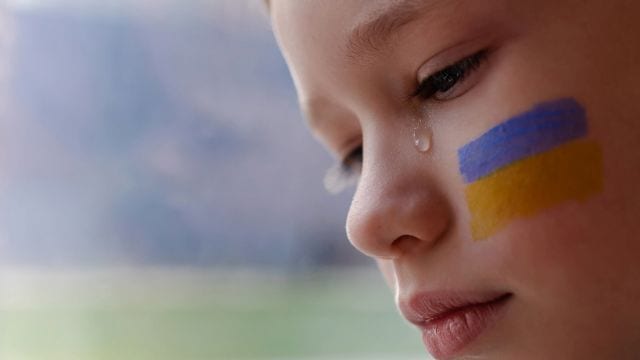
Your school-aged child has likely seen the news or maybe TikTok videos on Ukraine. And if they haven’t been asked to research and report about it for school yet, they probably will.
So should you talk to them about it? And if so, what can you say?
Consider this: Your child has been finding their way around a global pandemic in the recent years and now they’re hearing about invasions. And apparently, world war if we’re just talking about TikTok as a source.
For parents with young kids (ages 8-10): You will know whether you need to talk to them about it or not. If you decide to, keep it short and clear.
You might say something like: “There’s a war far away. It’s a big deal. But we are safe.”
Four words to remember when talking to your kids
1. Listen.
You might be surprised how much your child already knows about the conflict. “We tend to assume that our kids feel a particular way and we’re wrong a surprising amount of time,” says Dr. Deborah Gilboa, parenting expert, to Today.
Listening “lets them start where they are instead of where we think they are,” she says.
If your kids are already hearing about the war from various sources (think: TikTok, YouTube, their friends, the news), listening is the place to start. Allow them to ask you questions and give them your full attention.
This is an opportunity to help your children know what are reputable sources and what are poor sources of information.
We can correct misconceptions after listening. Don’t feel the need to have all the answers as well, too. You can communicate to your older kids that you can learn about this together.
2. Validate.
“Naku, huwag mo na yan problemahin,” may sound helpful in our perspective but what we’re doing with such a statement is dismissing their feelings. Children should not feel judged by their feelings and concerns.
“When children have the chance to have an open and honest conversation about things upsetting them, it can create a sense of relief and safety,” says Good to Know on talking to our children about the war.
Instead of dismissing their feelings, try saying: "I know it’s a scary time. We can talk about it. I’m here for you."
3. Reassure.
Child Psychologist Lee Chambers says in an interview, “It’s certainly a challenging time for children at the moment. After years of disruption from the pandemic, there is now added uncertainty of conflict that is being shared wider than ever before.”
He adds, “For many young people, this will be their first experience of being surrounded by war reporting, and they will be naturally curious and trying to make sense of it.”
If you’ve ever heard your child say something along the lines of “how can I go out and have fun if I know some out there is suffering,” remind them that this event is not their problem to solve.
Kids should not feel guilty about being young and doing what they enjoy like seeing their friends, playing, or their hobbies.
4. Support.
If your older children want to help, there are many links online that are already vetted. Examples include the UN Central Emergency Response Fund and Ukrainian Red Cross.
Washington Post says that when kids feel they are making “some impact during such tumultuous time" it gives them a sense of "agency and a feeling that they can make a difference.”
This step is another opportunity to talk about what are legitimate sources.
Parenting experts have made the same reminders since the war broke out. Kids can tell how their parents feel. If you are anxious about the situation, they will pick up on it. But they may express it differently like being suddenly irritable or an unexplained tummy ache.
Reminding them that they can approach you about their thoughts and questions, and assuring them that you can learn together will help them process their feelings.
What other parents are reading

Lorem ipsum dolor sit amet, consectetur adipisicing elit, sed do eiusmod
Lorem ipsum dolor sit amet, consectetur adipisicing elit, sed do eiusmod
