

Trigger Warning: Discussions around miscarriage.
Martine Cajucom-Ho took to Instagram to open up about her emotionally challenging journey to conceive, detailing the trials and the hope that IVF (in vitro fertilization) has brought into her life.
Martine and Cliff’s IVF journey
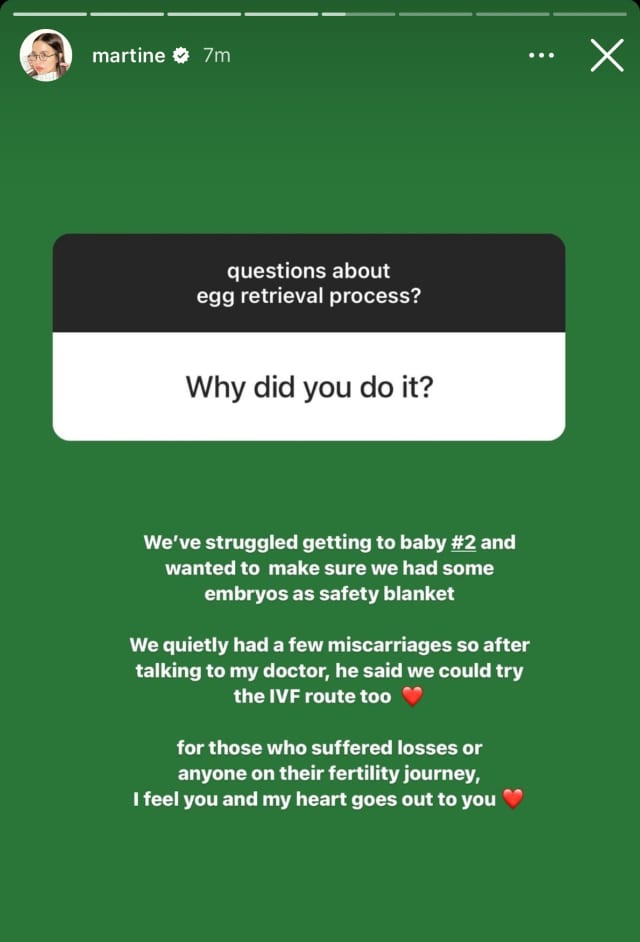
On April 2, 2024, Martine engaged with her followers in a candid Q&A session on Instagram, revealing that she and her husband, Cliff Ho, have embarked on the IVF route in hopes of conceiving their second child. The couple has a daughter, Penelope Martine, and admitted that their journey to expand their family has been challenging, including several miscarriages.
“We’ve struggled getting to baby #2 and wanted to make sure we had some embryos as a safety blanket. [...] I did mine through create fertility in Melbourne which was a great experience,” Martine shared.
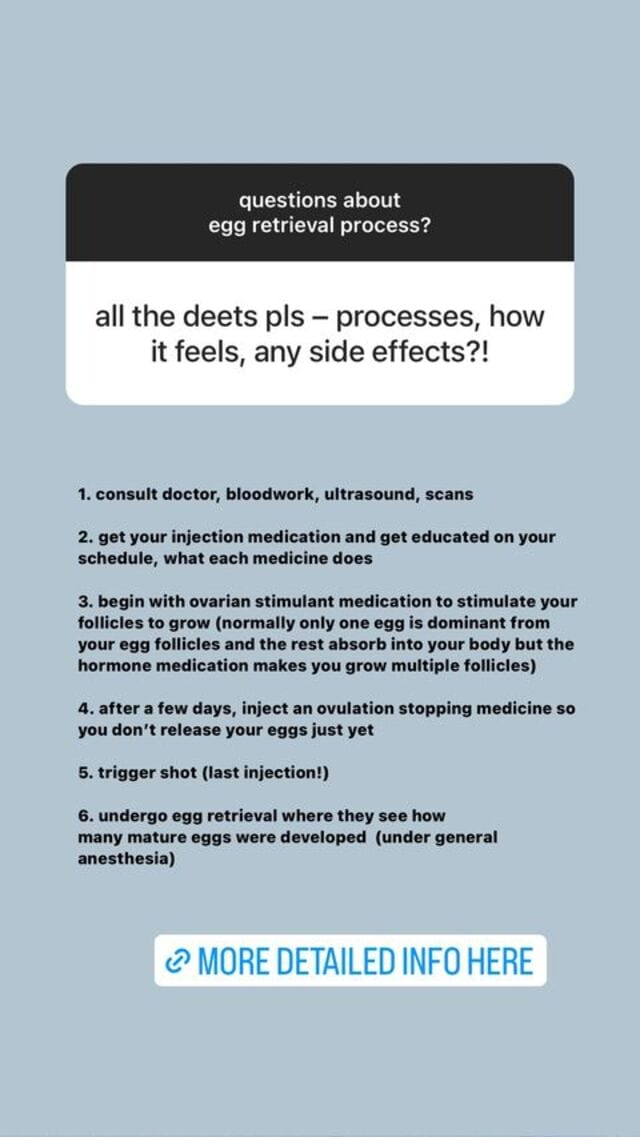
She went on to describe the egg retrieval process, the initial step in IVF, with honesty, addressing concerns many might have about the pain and side effects. “I actually didn’t think the injections were that painful and I am so scared of needles and have a low pain tolerance. (ice packs make a massive difference!) Side effects: bloating, bruising at the injection site, increased appetite.”
Regarding the retrieval procedure itself, Martine shared, “I was asleep under general anesthesia and afterward, I was just tired and wanted to be a couch potato. Slight cramps but nothing significant or bothersome.”
Understanding IVF
For those unfamiliar, IVF is a medical procedure where an egg and sperm are combined outside the body, allowing the embryo to develop before it is transferred to the uterus. This process offers hope to many who face difficulties conceiving due to various health issues.
In her Instagram, Martine also shared a quick overview of the IVF process:
Martine’s advice and encouragement
Martine also touched on the topic of egg freezing, saying, “Still will try natural too. I’m not ruling it out but will keep our embryos for a rainy day or if natural doesn’t work it.”
When asked about the best time for women to have their eggs frozen, Martine says to do it whenever possible, as long as one has the means. However, she also noted, “Your eggs in your 20s are the best quality and after 35, egg quality has a massive drop off. So if you’re thinking of doing it, earlier is better and I highly encourage anyone, if they have the means to do so, to go for it 100%. With that said, I’d definitely still do it if I was in my later 30s.”
Martine also shared her support to others who might be on a similar path, saying, “If I can survive this, literally anyone can because I’m scared of everything and think everything hurts [...] For those who suffered losses or anyone on their fertility journey, I feel you and my heart goes out to you.”
Through her story, Martine not only provides valuable insights into the IVF process but also offers a beacon of support for those facing similar challenges. Her message is clear: while the journey to parenthood can be full of hurdles, there is hope, and no one has to walk that path alone.
Read here to learn more about IVF.
What other parents are reading

Lorem ipsum dolor sit amet, consectetur adipisicing elit, sed do eiusmod
Lorem ipsum dolor sit amet, consectetur adipisicing elit, sed do eiusmod
