
Editor's note: This article is published for informational purposes only. It is not intended as substitute for professional medical advice and should not be relied on for health or personal advice. For medical advice about conceiving, always seek help from a qualified health practicioner.
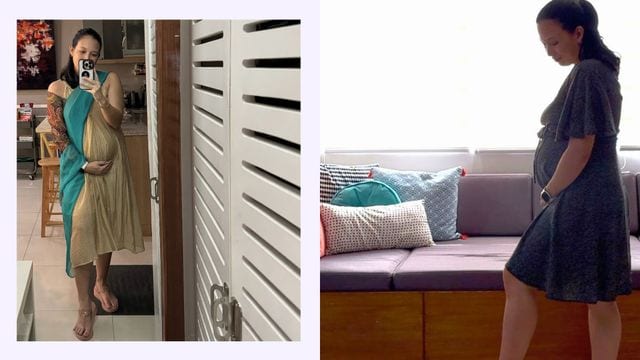
When all you need is a kit and a baby daddy to get pregnant, an outsider may easily deem artificial insemination (AI) at home as too easy that it takes away the seriousness of what it means to bring new life in this world. But every pregnancy journey is unique and Cheryll Ann Selda’s story is no exception. When she decided more than three years ago that she wanted to be a mother, she made sure she weighed every aspect of the journey carefully before finally opting to get pregnant through AI.
IVF vs AI
It was a life-changing conversation with a friend that got Cheryll started on her rollercoaster journey to getting pregnant using a fertility treatment at 35. “A friend of mine who was on the path (of considering in-vitro fertilization or IVF) had asked me if I was interested to have a baby. I was single and it wasn't something I really considered in my adult life, to be honest. So my friend encouraged me to think about it so I can be at peace with my choice and not have regrets in the future, ” says Cheryll, now 38.
What happened next after that saw Cheryll deep dive into the process of artificial insemination in the last three years. Approaching an uncle of her best friend who is an OB-GYN, she inquired about using IVF (in-vitro fertilization), a fertility treatment wherein eggs and sperm are harvested and fertilized in a lab and, once it develops into an embryo, is transferred into a woman’s uterus. “I asked the question blindly at the time. I was unaware if I had a fertility issue or if I was going to have a partner or spouse. It was purely exploratory,” recalls Cheryll.
Given her age and medical background, the same doctor who is also now her OB-GYN, suggested artificial insemination (AI) instead. She wasn’t only young enough for it, but the option is also more affordable. AI is when sperm is inserted directly in a woman’s cervix, uterus, or fallopian tubes, according to WebMD. It can be done assisted by a professional or alone at home using a kit that contains a cup for the sperm and syringe used to inseminate the sperm into one’s vagina.
Whether she was weighing in on IVF or AI, her doctor says there is no assurance of either one’s success so the more practical option is a better way to go.
With this knowledge in mind, Cheryll was convinced that she was ready to have a baby. Life happened, however. “My father passed away from COVID. I had to set those plans aside because I was focusing on helping the family and ended up traveling a lot for the family business.”
Finding ‘baby daddy’
Running the business set her decision back a few years but Cheryll picked up where she left off and started finding a date online. However, not every date was a success so she figured, being an introvert, dating might not be for her. It was at this time where she considered turning to a sperm bank but a Netflix series about a fertility doctor who used his own sperm to inseminate his patients instead using that of their husbands’ prompted her to press the pause button. “While I was perfectly willing to raise a child alone, I would definitely want to control who and where the sperm came from. Since there's no governing body regulating these types of fertility procedures, the OC person in me couldn't find peace,” she says.
This thought brought her back to dating apps to find the ‘right’ donor. After weeks of swiping, Cheryll surprisingly found what she considers the right one. “This educated Caucasian male of similar age living as a digital nomad in Southeast Asia was looking for a willing baby mama who would consider carrying his child,” she says. The donor, who happens to be Dutch, added his medical history and a disclaimer that ‘while he would love to play a role in the child's life it would be best not to set expectations as he wasn't sure how they would both communicate and relate to each other.’
'I figured, "Oh well, [it] couldn't possibly hurt to try once or twice before I go to a clinic and pay more." I bought two kits so we could try twice and I remember getting the package and looking at the cup that came with two syringes and said to myself… well isn't this a scam?' -Cheryll Selda on trying an artifical insemination kit at home to conceive
It was then that Cheryll finally realized she found a donor who was actually on the same page as her. “Suffice to say I was in shock and I cried a lot reading and re-reading (his messages) to make sure I haven't gone crazy yet,” she recalls her reaction then.
AI at home for $49.99
Months of video calls allowed both parties to build trust in one another. The donor decided to come to the Philippines, rent a condo, and stay for a couple of months to be with Cheryll as they did home insemination. “I want to underscore is that in the months leading to our home insemination we both did our due diligence,” narrates Cheryll. “I prepared 9 out of 10 of my meals from scratch and kept an active lifestyle with workouts 5-6 times a week,” she narrates. Working in the wellness industry I have always been an advocate of a food-first approach and taking back control of our wellness and this is precisely what I practiced.” She adds that her baby daddy led the same active and healthy lifestyle.
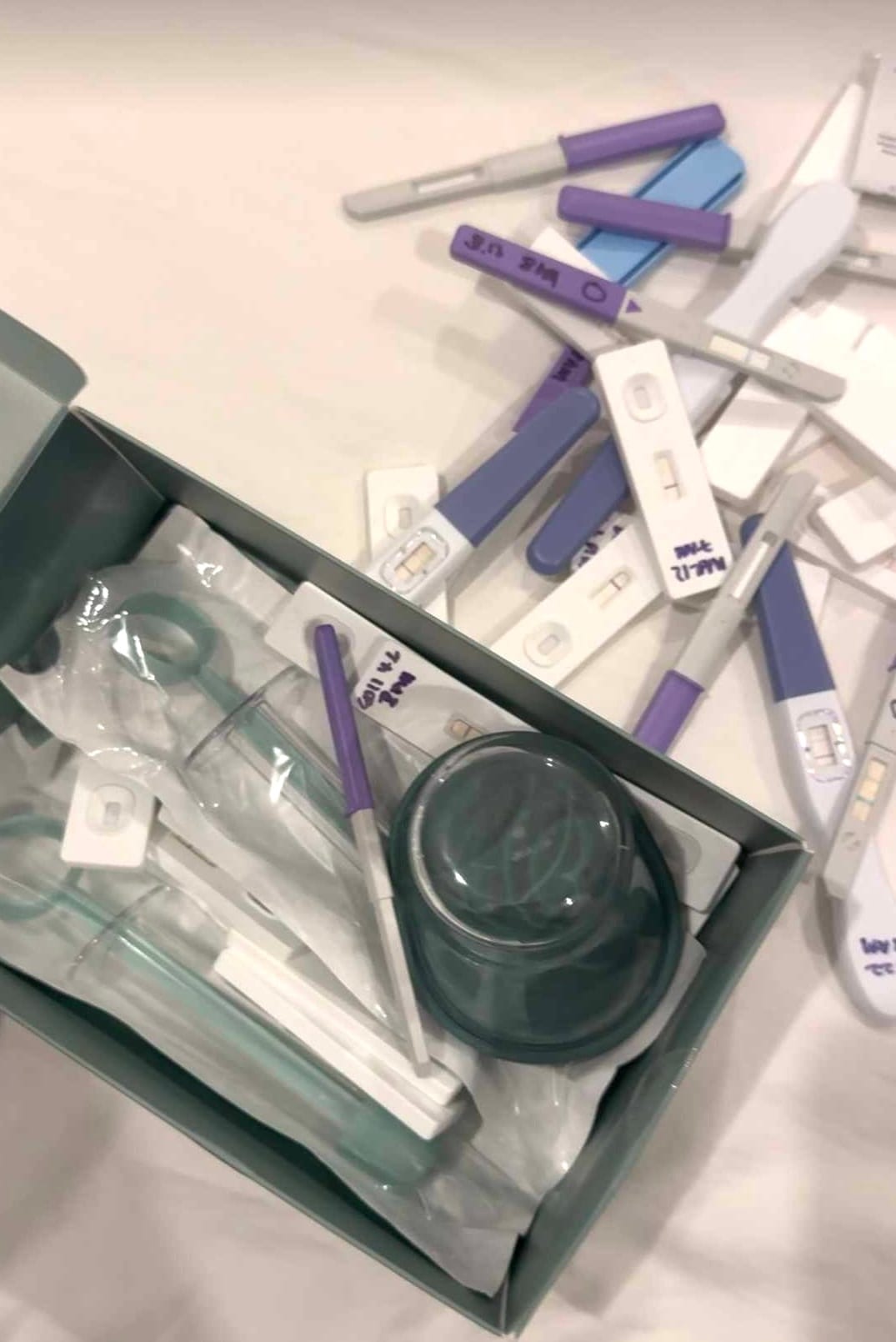
Around this time, Cheryll was still going for AI but in a clinic with a professional where tools may be used to do intrauterine insemination (IUI) to easily bring the sperm directly to the uterus. It would cost around PHP 60,000 to 70,000 per insemination. While it wasn’t nearly as expensive as an IVF, the amount could still double or triple if she wasn’t successful at the first try. By this time, her baby daddy suggested buying an AI home kit on Amazon which only cost $49.99. “I figured ‘Oh well, couldn't possibly hurt to try once or twice before I go to a clinic and pay more.’ I even bought two kits so we could try twice and I even remember getting the package and looking at the cup that came with two syringes and said to myself… well isn't this a scam?”
The kit includes a collection cup for the sperm and a syringe that Cheryll would use to inseminate herself with once the sperm had been collected. “You actually have some time—maybe 30-60 minutes—from the time the sperm is collected but in our case my baby’s dad said to do it right away so I was lying down with my legs up while he was collecting his sperm,” Cheryll explains.
“We were done in like 10-15 minutes tops and yes no romance was involved in the process. We did the insemination twice in that ovulation cycle and timed it in between my peak fertility day,” she explains.
Pregnant at first try
With the treatment done, it was just a matter of waiting which Cheryll says gave her more anxiety than the insemination process. Her baby daddy decided to stay until the results came out. To her surprise, the pregnancy test showed she was positive on her first ovulation cycle. When she finally found out, she found herself absorbing the moment alone. “(I was) too quiet that I didn't say a word to anyone for like half a day then of course I called my donor and told him the good news,” she says.
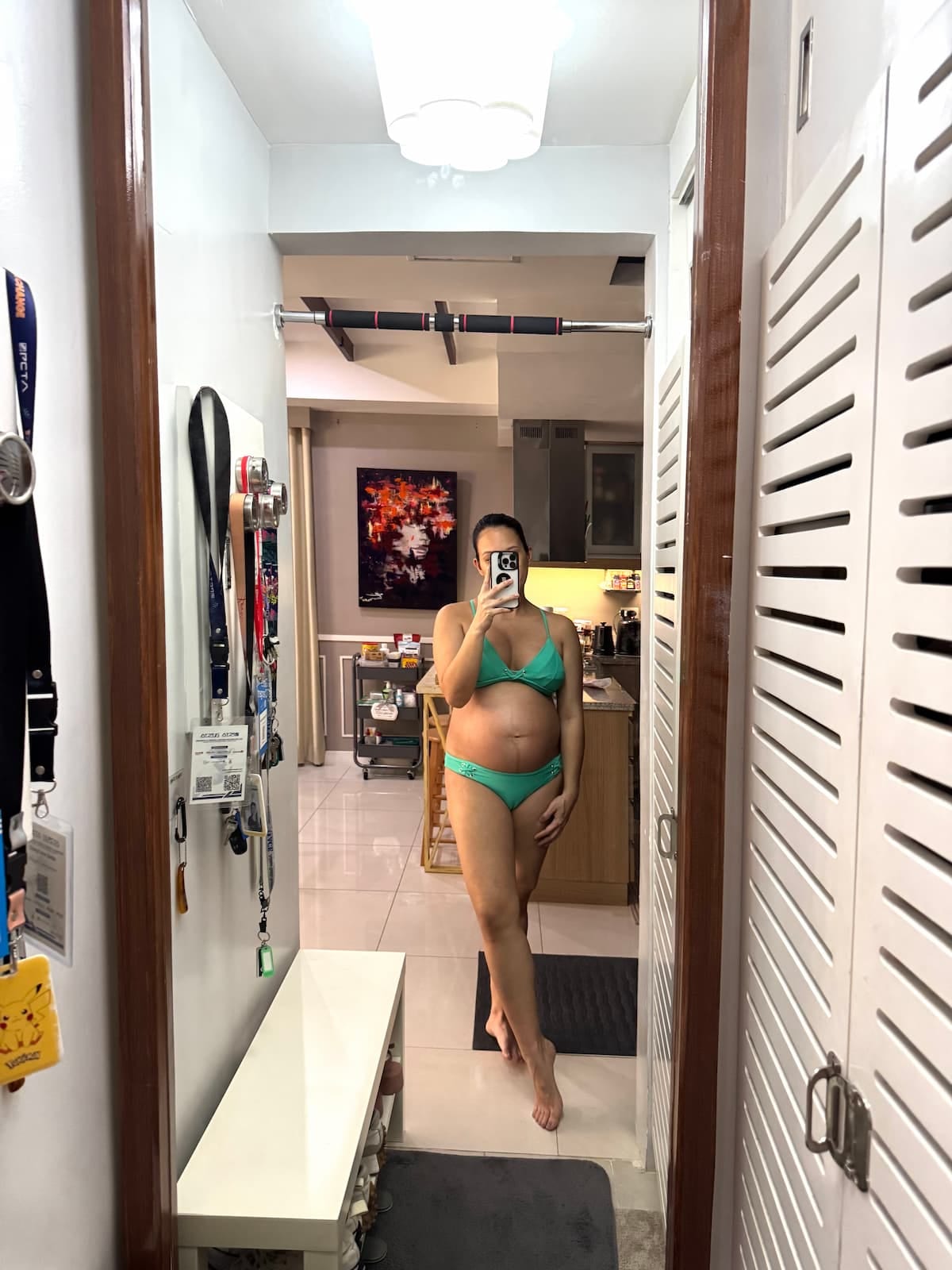
After overcoming bleeding episodes in the first trimester, Cheryll’s pregnancy is going well and she is already eight months on the way. While she has no romantic involvement with her baby's father, she says he has been checking in on her every one to two weeks. “He doesn’t have to do anything in my book but I accept and welcome anything for the baby,” she clarifies, adding that her present relationship with her baby daddy makes everything less complicated. “Call me crazy but I’m very optimistic he will be a great dad. Maybe because even if he doesn’t, it wouldn’t matter to me. I will love my (soon-to-be) child very much and I have so many friends who will hold my hand in this process.”
Cheryll is aware that not everyone will be open to the kind of pregnancy journey she took but she says she has her family’s support. “For the last three years I've openly discussed and mentioned my plans to get pregnant with family and friends as I was looking for a sperm donor. I didn't really get any opposition as my family has gotten used to my independence.”
Outside of her immediate circle, she says she often gets the ‘shocked’ reaction. “Every time I share my story I almost always get a shocked response as it is really a unique pregnancy story for Filipinos. It's not unique for people living in developed countries but locally it really isn't usual,” she says. AI at home is still something she would recommend those who are trying to conceive, she adds. “I would definitely suggest this route before trying any treatments especially if money is a concern. However, I would stress that each individual is unique. While I don't have a spouse or partner and I've never tried conceiving before, I live an above average healthy lifestyle than most people and I strongly believe that making the right choices in wellness plays a huge role in fertility—both for men and women.”
Cheryll admits that she continues to have her struggle and doubts about becoming a parent but she has come to terms with it and find strength from her immediate circle. “As I've discovered from friends who are parents there's really no perfect time to choose to be parents. Life will always throw us a curve ball,” she concludes.
Looking for a list of clinics for in-vitro fertilization? Read this article.
More from sp

Lorem ipsum dolor sit amet, consectetur adipisicing elit, sed do eiusmod
Lorem ipsum dolor sit amet, consectetur adipisicing elit, sed do eiusmod
