

Anemia has been identified as a moderate public health concern among Filipino women, says the Department of Science and Technology – Food and Nutrition Research Institute (DOST-FNRI).
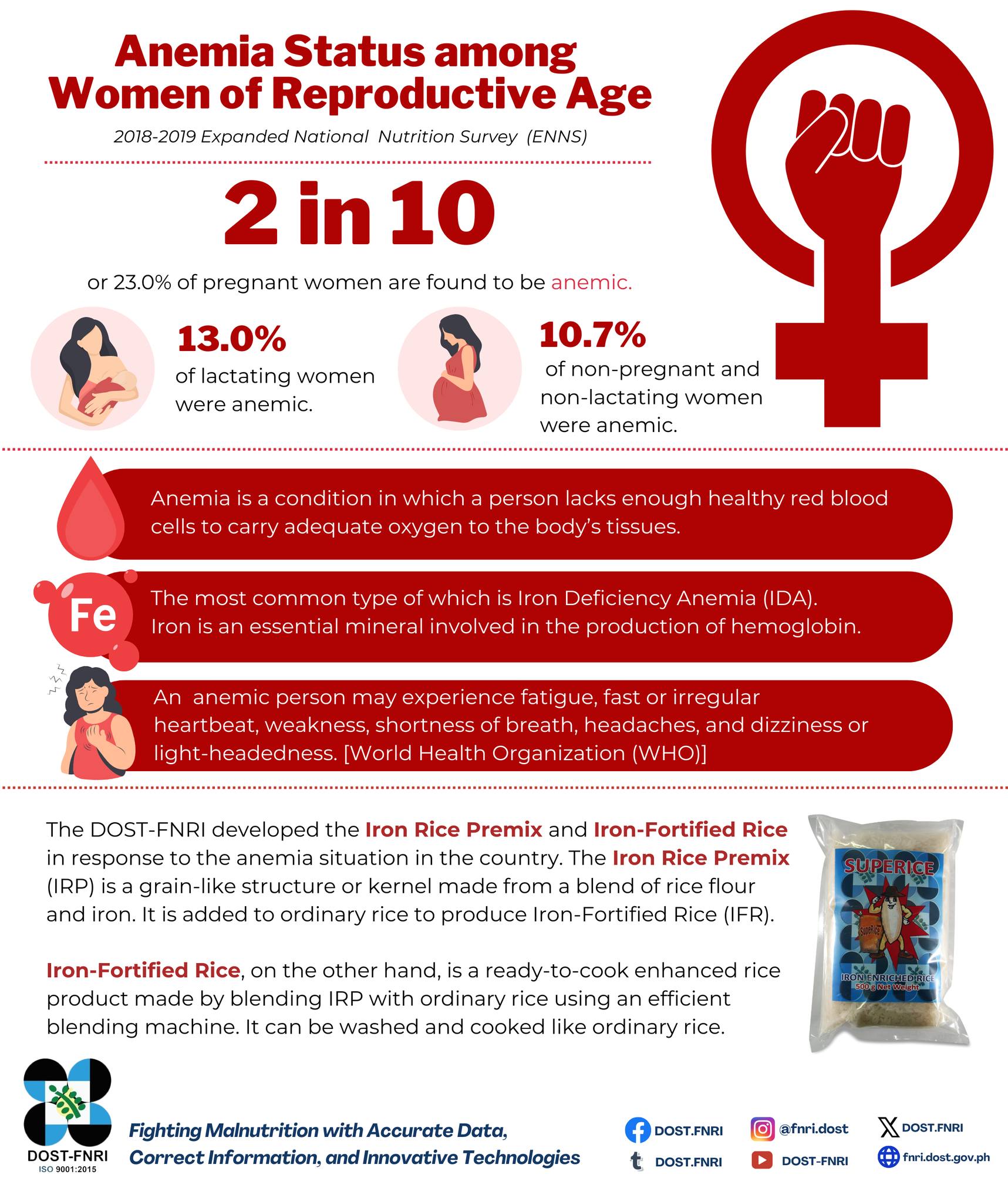
Data from the 2018 to 2019 Expanded National Nutrition Survey revealed that 23% of pregnant women are anemic. That means nearly 1 in 4 moms-to-be are dealing with low energy and other symptoms that could be more than just normal pregnancy fatigue.
But it's not just pregnant women affected. About 13% of lactating women were also found to be anemic. Even among women who are not pregnant or breastfeeding, 10.7% of those aged 15 to 49 were affected.
Anemia in pregnant women
According to the World Health Organization (WHO), anemia is a condition where the number of red blood cells or the hemoglobin concentration in them is lower than normal.
The DOST-FNRI states that the most common form of anemia is Iron Deficiency Anemia (IDA), which can be caused by blood loss, pregnancy, or insufficient iron intake in the diet.
Iron is an important mineral that helps make hemoglobin, a protein in red blood cells that carries oxygen from the lungs to the rest of the body. It also helps produce myoglobin, a protein that delivers oxygen to the muscles.
If you lack iron, you may experience fatigue, a fast or irregular heartbeat, weakness, shortness of breath, headaches, and dizziness or light-headedness.
During pregnancy, it is important to increase blood volume to supply oxygen to the baby. Lactating women also need adequate iron to sustain milk production for the baby.
The DOST-FNRI notes that anemia can lead to premature birth, low birth weight, maternal death, poor child development, and a weakened immune system.
Eating iron-rich foods can greatly contribute to the prevention and control of anemia. These include animal products, like red meat, particularly liver, seafood, and poultry, as well as plant sources, like dark green leafy vegetables, and iron-fortified products.
Iron-fortified rice by DOST-FNRI
The DOST-FNRI has developed the Iron Rice Premix and Iron-Fortified Rice to address the issue of anemia in the country.
Iron Rice Premix (IRP) is a grain-like kernel made from a blend of rice flour and iron. It is added to ordinary rice to produce Iron-Fortified Rice (IFR).
Iron-fortified rice is a ready-to-cook enhanced rice product created by blending IRP with ordinary rice using an efficient blending machine. It can be washed and cooked like regular rice.
The institute is inviting potential licensees of these rice technologies to help reduce anemia among women of reproductive age and other population groups and to contribute to the economy by providing livelihood opportunities for people.
Read more about the signs and symptoms of anemia in this article.
More from sp

Lorem ipsum dolor sit amet, consectetur adipisicing elit, sed do eiusmod
Lorem ipsum dolor sit amet, consectetur adipisicing elit, sed do eiusmod
