Editor’s Note: This article is intended for information purposes only. It does not substitute a doctor. It is vital to always consult a medically trained professional for advice that suits your needs best.
Diabetes mellitus, commonly referred to as diabetes, is a group of disorders in the endocrine system. It results from either not having enough insulin in the body or the body not responding to insulin. Insulin is a hormone produced by the pancreas that controls glucose, also known as blood sugar, in the bloodstream.
(Read here on the symptoms of diabetes.)
People with diabetes have high glucose levels, that's why they are generally advised to cut down on sugar consumption. This is not limited to the usual sweet stuff but also to carbohydrate-rich foods to avoid with diabetes.
Here are some of the myths debunked by registered nutritionist dietician and diabetes educator Jennina A. Duatin. She gave an explanation in her online talk for the GIMIK Diabetes Year 16 event, with the theme “Say No to XXX! No to Xtra Rice, No to Xtra Calories, No to Xtra Pounds.” The event was organized by the Philippine Center for Diabetes Education Foundation, Inc. (Diabetes Foundation).
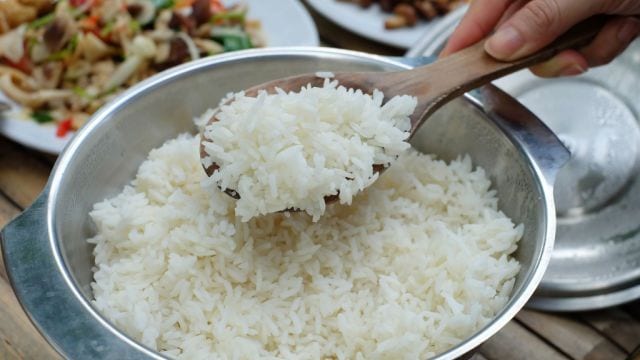
Myth: Rice will make your blood sugar rise.
"Based on studies, meron tayong specific amount of carbohydrates na kailangan nating kainin every day," said Duatin. "Sa adults, kailangan 130 g. So hindi puwedeng walang kanin na kainin."
She went on explaining, "Dahil kadalasan, hindi nga kanin pero maraming kinakain na bread, pasta, noodles na ibang sources ng carbohydrates. ’Yan ang hindi tama. Ang hindi tama kung sobra ang kakainin mong kanin depende sa allowance mo. ’Yun ang hindi nakokontrol sa blood sugar."
She pointed out, "Huwag sisihin sa kanin. Maraming pagkain na mayaman sa carbohydrates, hindi lang kanin. Hindi kanin ang nagpapataas ng blood sugar. Ang dami ng kinain." (Read here to know if the blood sugar level is high.)
Myth: Coffee is not for diabetics.
"Ang taong may diabetes ay may required caffeine intake," said Duatin. "The recommendation is not more than 200 mg of caffeine every day. Kung brewed, nakukuha ang 200 mg sa isang tasa. Pero kung 3-in-1 mix, almost 45 mg lang ng caffeine.
"Ang problema lang kung ang diabetic, meron ding hypertension at kidney problem. Kaya lesser dapat ang caffeine intake. Ang problema sa 3-in-1 mix, mataas ang sugar content. Ang isang sachet ng regular with sugar, may one tsp na sugar. So almost 1/3 cup of rice.
"Kung walang problema sa hypertension, puwede one cup of coffee every day. Kung artificial sugar ang gamit, walang carbohydrate content. Pero ang creamer, source of calories din ’yun. Kung sugar-free, walang effect sa blood sugar after one hour, two hours mong na-consume."
Myth: Kids with diabetes should quit milk.
On the contrary, children, even with diabetes, are encouraged to drink milk because, Duatin said, "it's a complete food." She added that children with diabetes need to adhere to their milk allowance with the guidance of a registered nutritionist dietician.
"Dahil growing stage, depende sa preferences ng patient," she pointed out. "Ilang beses ba niya gustong uminom ng gatas? Kailan mo gustong inumin."
Myth: Crackers are healthy snacks.
Duatin said she's had patients admit to snacking on crackers during their evaluation. But she'd tell them to hold off the crackers "if mataas ang blood sugar." She'd suggest opting for "alternatives with low glycemic index na carbohydrates." (Read here for examples.)
The glycemic index (GI) is a rating system for foods containing carbohydrates, according to the United Kingdom National Health Service. It shows how quickly each food affects the glucose, or blood sugar, level when that food is eaten on its own.
When Duatin's patients reach the normal glucose levels, she'd then teach them how to read the food labels that will serve as their guide in buying foods with low GI.
She explained, "Sa food labels, ang dapat na tinitignan ang total carbohydrates. Not the sugar content and dietary fiber. Kapag ang calorie allowance is 19 g. pwedeng ipasok sa carbo allowance sa snack. Pero dapat may better alternative na tatagal sa tiyan."
Fact: Weight management is a must.
"Kung may diabetes, kailangan controlled ang timbang," Duatin said. "Once na hindi controlled ang timbang, tumataas din ang insulin resistance at mga possible na complications."
The registered nutritionist dietician gave this weight management summary to avoid being overweight:
1. Know your calorie requirement in a day. You can do his with the help and guidance of your nutritionist dietician, who will make recommendations based on your age, physical activity, and medication you're taking.
Duatin pointed out, "Hindi lang magdepende sa gamot. Kailangan din ang nutrition o tamang pagkain. Alamin ang tamang allowance para sa carbohydrates. Kailangan ang consistency sa dami at uri ng carbohydrates. Para makontrol ang blood sugar at timbang."
2. Engage in physical activity to manage your weight. As Duatin put it, "Kung walang physical activity, walang karapatang kumain nang kumain. After three months to six months, siguradong lolobo na. Tataas ang risk sa non-communicable diseases."
3. Planning ahead is important to maximize your resources and time, while enjoying the pleasure of healthy eating. You should also have the standard measuring cups and other implements to make sure you're consuming the right amount of calories and not just relying on what you know about foods to avoid with diabetes.
Read here on what you need to know about childhood diabetes.
What other parents are reading

Lorem ipsum dolor sit amet, consectetur adipisicing elit, sed do eiusmod
Lorem ipsum dolor sit amet, consectetur adipisicing elit, sed do eiusmod