This article was updated on December 26, 2023.
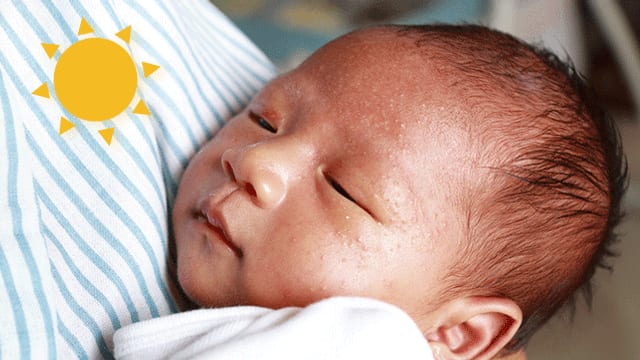
It’s almost summer time and with the humidity and heat, it’s not surprising that one may develop prickly heat, or bungang araw as we commonly know it. Bungang araw isn’t only common among kids and babies—anyone can develop prickly heat rash during the summer months, especially those who are more prone to sweating, or those on the heavy side. However, according to Dr. Karissa T. Platon, MD, DPPS, a pediatrician, “Babies, infants and young children (under 4 years old) tend to be more affected because their sweat glands are still developing.”
Types of prickly heat rash
1. Clear (miliaria crystallina)
It is the mildest form and appears as 1–2 mm superficial clear blisters resembling beads of sweat. There is no inflammation or itchiness, and the blisters are usually seen on the head, neck, and upper trunk.
2. Red (miliaria rubra)
It is the most common type of prickly heat rash. It appears red with or without blisters, and are noted to be very itchy. In infants and kids, it appears mostly on the skin folds of the neck and groin area (singit). In adults, it affects the upper trunk, scalp, and neck, and other areas where there’s friction between the skin and clothing.
3. Deep (miliaria profunda)
It usually appears on adults after repeated events of heat rash. They are flesh–colored, 1–3 mm diameter bumps that are usually seen on the trunk and extremities.
What other parents are reading
Causes of bungang araw
According to Dr. Platon, the most common triggers for prickly heat are hot weather and humidity. She explains, “The body makes sweat to cool down our skin and when you sweat more than usual, your sweat glands can become overwhelmed. As sweat ducts become blocked, either by excessive sweating or by an overgrowth of bacteria which normally lives on our skin, sweat is trapped deep underneath the skin, or sweat may leak through layers of the skin close to the top layer and become trapped there. Any body part with sweat glands may be affected.”
These are the common areas where bungang araw usually appear: face, neck, shoulders, back, abdomen, groin, chest, upper arm folds or other folds of the skin, and buttocks.
Managing the symptoms
Dr. Platon gives the following tips on how to deal with the rashes:
- Keep hydrated and drink plenty of water.
- Do not scratch the affected area.
- Use mild soap.
- Stay indoors during noontime, which is when the temperature is commonly at its hottest.
- Wear loose, breathable clothing made from cotton to lessen sweating.
- Change sweaty or wet clothing right away.
- Allow the affected area to be exposed for proper ventilation, and apply cold water compress for 15 minutes, or as needed.
- Avoid using skin products that contain petroleum or mineral oil.
- Apply calamine lotion on affected areas to relieve discomfort.
- For persistent and overly itchy rash, a mild steroidal cream or lotion may be applied. Likewise, oral antihistamine preparations can be taken to relieve the discomfort. Ask your doctor for instructions.
What other parents are reading
Prickly heat rash can also be relieved using things found in the kitchen:
- Cool a leftover watermelon shell inside the refrigerator. After a few minutes, rub the pulp area (inside) on the site of the rash. This soothes itching and lessens the appearance of rashes.
- As for extreme itching, mix 1 teaspoon of baking powder with a glass of water. Soak a towel in the mixture and rub it gently on the affected area and leave on for 10 to 15 minutes. Do this 2 to 3 times a day to effectively lessen itching.
Signs of infected bungang araw
Another thing to watch out for is that some children scratch the rash too much that it can get infected, pushing the trapped sweat deeper into the skin. If you notice any of these signs, it is important to see your doctor at once.
- Fever
- Intense pain around the rash
- Pus in the rash area
- Red streaks on the skin
- Swollen nymph nodes (especially in the groin, neck, or underarm)
“Prickly heat occurs because of prolonged exposure to heat and humidity. This, in turn, may cause dehydration (or worse, heat stroke) aside from the appearance of the rash. Once signs of dehydration are noted and oral hydration at home is not successful, it would be better to see your doctor,” Dr. Platon explains.
How to prevent bungang araw
Prevention strategies play a crucial role in mitigating the discomfort and irritation associated with prickly heat in children.
1. Dress children in light and breathable fabrics.
Choosing clothes made from cotton helps promote air circulation and prevents sweat from becoming trapped against the skin. It's essential to avoid overdressing, especially in hot and humid weather, as excessive layers can exacerbate sweating and contribute to the development of prickly heat.
Parents should opt for loose-fitting garments that allow the skin to breathe, reducing the risk of blocked sweat ducts, a primary factor in prickly heat.
2. Maintain a cool environment
During hot weather, parents should take measures to keep their children cool, such as using fans or air conditioning. Adequate hydration is also crucial, as it helps regulate body temperature and supports the body's natural cooling mechanisms.
3. Ensure proper hygiene.
Practicing good hygiene by encouraging regular baths, especially after outdoor activities, can help remove sweat and prevent the accumulation of bacteria on the skin. By incorporating these preventive measures into a child's routine, parents can significantly reduce the likelihood of prickly heat and create a more comfortable environment for their little ones.
Dr. Karissa T. Platon, MD, DPPS is a pediatrician and a dedicated wife and mom of 2. For inquiries on her clinic schedules at Katipunan Doctors and Dr. Jesus Delgado Memorial Hospital, contact +6329244051.
What other parents are reading

Lorem ipsum dolor sit amet, consectetur adipisicing elit, sed do eiusmod
Lorem ipsum dolor sit amet, consectetur adipisicing elit, sed do eiusmod