Disclaimer: The content of this article is for informational purposes only and should not be considered professional medical advice.
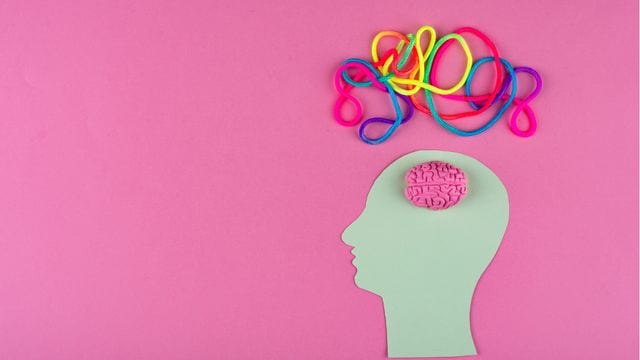
The term "neurodivergent" is derived from the concept of "neurodiversity," a term coined by Australian sociologist Judy Singer in 1998 to acknowledge that each person's brain develops uniquely. According to an online journal from the Cleveland Clinic, just as fingerprints are unique to each individual, "no two brains—even those of identical twins—are exactly the same." Consequently, there is no single definition of what constitutes "normal" brain function.
It adds, “Neurodivergent isn’t a medical term. Instead, it’s a way to describe people using words other than “normal” and “abnormal.” That’s important because there’s no single definition of “normal” for how the human brain works.”
What does it mean to be neurodivergent?
The term "neurodivergent" describes individuals whose brains develop or function differently than what is considered typical.
This difference in brain function may result in unique strengths and challenges compared to those whose brains develop more conventionally. While some neurodivergent individuals may have an identifiable medical condition, others may not have a specific diagnosis or condition associated with their neurodivergence.
What causes neurodivergence?
According to Very Well Mind, (from an evolutionary standpoint) humans have developed a diverse range of brain functions to enhance survival. Just as biodiversity is crucial to ecosystems, neurodiversity is a natural and vital aspect of the human species. Neurodevelopmental disorders like Autism Spectrum Disorder (ASD), Attention Deficit Hyperactivity Disorder (ADHD), and learning disabilities are believed to have genetic components.
“Other forms of neurodivergence can emerge over time due to environmental factors such as brain injuries, toxin exposure, or severe psychological trauma. For example, a traumatic brain injury can result in intellectual deficits,” the site further explains.
Neurodivergent disorders: types and indicators
Neurodivergent disorders include a variety of neurological and developmental conditions that are typically marked by differences in thinking, learning, attention, mood, and social interaction. Below is a list of some common neurodivergent disorders:
Autism Spectrum Disorder (ASD)
Indicators may include a wide range of conditions characterized by challenges with social skills, repetitive behaviors like flapping arms, delayed speech or nonverbal communication. It is also easy for children with autism to become overstimulated with sounds, lights, or other sensory inputs.
Manifestations of ASD may include:
- Poor eye contact
- Inability to understand when others are joking
- Inability to participate in play because they want to play only the way they like
- Not interested in other people
- Inability to speak as often as other children, or hardly speak at all
- Only wear certain clothes because other fabrics feel uncomfortable
- Gets easily overstimulated by sounds or lights, sensory aversions
- Needs lots of hugs or a weighted blanket to soothe them or uncomfortable with hugs
Attention-Deficit Hyperactivity Disorder (ADHD)
ADHD symptoms may either be inattention or hyperactivity, including impulsivity that affect daily functioning in at least two areas of life (such as school and home).
Manifestations of ADHD may include:
- Trouble paying attention to details or making careless mistakes
- Inability to remain focused on tasks and activities
- Difficulty listening well, daydreaming or seeming distracted
- Inability to follow instructions and/or finishing tasks
- Difficulty with organizing tasks and activities
- Avoiding or disliking tasks that require continuous mental effort
- Losing things frequently
- Getting easily distracted by outside stimuli
- Forgetful in daily activities.
Dyslexia
A learning disorder that affects reading and related language-based processing skills. With dyslexia, the brain has trouble processing what you read, especially breaking words into sounds or relating letters to sounds when reading.
Manifestations of dyslexia may include:
- Slowed reading because you have trouble processing and understanding words.
- Difficulties with writing and spelling.
- Problems with how you store words and their meanings in your memory.
- Trouble forming sentences to communicate more complex ideas.
- Difficulty spelling simple words.
- Trouble learning the names of letters.
- Problems telling apart letters with similar shapes, such as “d” and “b” or “p” and “q.”
- Trouble rhyming.
- Reluctance to read aloud in class.
- Trouble sounding out new words.
- Trouble associating sounds with letters or parts of words.
- Trouble learning how sounds go together.
- Mixing up the position of sounds in a word.
Dyscalculia
A learning disorder that affects an individual's ability to understand numbers and learn math.
For very young children, the most common symptoms include trouble with:
- Counting upward.
- Connecting a number to that many of an object (for example, connecting the number 4 to that many marbles in front of them).
- Recognizing numbers and math symbols.
- Organizing numbers, such as largest to smallest or first to last.
- Recognizing and using number lines.
- Learning using money (such as coins or bills).
And for school-aged children challenges would be:
- Counting on fingers with small numbers
- Identifying small quantities of items just by looking
- Doing simple calculations from memory
- Memorizing multiplication tables
- Recognizing the same math problem when the order of the numbers or symbols changes (ex. struggling to understand that 1+5=6 is the same as 6=5+1)
- Understanding word problems or more advanced symbols (such as > meaning “greater than” or
- Organizing numbers by scale (ex. 10s, 100s, 1,000s)
Dysgraphia
A learning disorder that impacts writing skills, leading to challenges with spelling, handwriting, and organizing thoughts on paper.
Manifestations of Dysgraphia may include:
- Difficulties writing in a straight line.
- Difficulties with holding and controlling a writing tool.
- Writing letters in reverse.
- Having trouble recalling how letters are formed.
- Having trouble knowing when to use lower or upper case letters.
- Struggling to form written sentences with correct grammar and punctuation.
- Omitting words from sentences.
- Incorrectly ordering words in sentences.
- Using verbs and pronouns incorrectly.
Tourette Syndrome
A neurological disorder characterized by uncontrollable, repetitive movements and vocal sounds known as tics.
What motor tics look like:
- Arm jerking
- Bending at the waist
- Eye blinking
- Head jerking or twisting
- Hopping
- Jaw movements
- Twisted or distorted facial expressions
Vocal tics may include:
- Barking
- Grunting
- Shouting
- Sniffing
- Throat clearing
Obsessive-Compulsive Disorder (OCD)
Characterized by obsessive thoughts and compulsive behaviors that can interfere with daily life. Compulsions may appear time-consuming and get in the way of important activities that you value.
OCD may show as:
- Arranging things in a very specific way
- Bathing, cleaning or washing your hands over and over
- Collecting or hoarding items that have no personal or financial value
- Repeatedly checking things, such as locks, switches and doors
- Constantly checking that you haven’t caused someone harm
- Constantly seeking reassurance
- Rituals related to numbers, such as counting, doing a task a specific amount of times, or excessively preferring or avoiding certain numbers
- Saying certain words or prayers while doing unrelated tasks
Down Syndrome
Down syndrome is caused by an extra chromosome. Normally, each human cell contains 23 pairs of chromosomes, making a total of 46. Down syndrome occurs due to alterations in the division of cells on chromosome 21, resulting in an additional chromosome 21 in some or all of a person’s cells.
Physical signs of Down Syndrome become apparent as they grow and may be characterized as follows:
- A flat nose bridge
- Slanted eyes that point upward
- A short neck
- Small ears, hands and feet
- Weak muscle tone at birth
- Small pinky finger that points inward towards the thumb
- One crease in the palm of their hand (palmar crease)
- Shorter-than-average height
That gut feeling
The above-mentioned symptoms for each neurodivergent disorder may or may not determine the real state of health and well-being of your child. Only a medical professional will be able to use tools and scientific evaluation to establish your child’s condition.
As a parent, it usually starts with a gut feel, a kick to your instinct, something that sits at the back of the head as an afterthought which does not easily go away.
Early detection and intervention is key to managing the symptoms that accompany your child’s neurodiversity. As young and as helpless as they are, they turn to us for help and it might not be in the best of behaviors like exhibiting tantrums, crying, jumping, shouting or banging their head on the wall.
As parents, let’s take them by the hand and find the answers together.
Do you want to know more about patterns of behavior of a child with Autism Spectrum Disorder? Read here.
Source: Cleveland Clinic
More from sp

Lorem ipsum dolor sit amet, consectetur adipisicing elit, sed do eiusmod
Lorem ipsum dolor sit amet, consectetur adipisicing elit, sed do eiusmod