
Spoiler alert: This article contains some spoilers. If you haven't seen it yet and want to experience it spoiler-free, proceed with caution.
When you've watched too many Korean dramas (K-dramas), the familiar plots can feel tiring and repetitive: heir of conglomerates, friends-to-lovers tropes, enemies-to-lovers tropes, and other well-worn cliches.
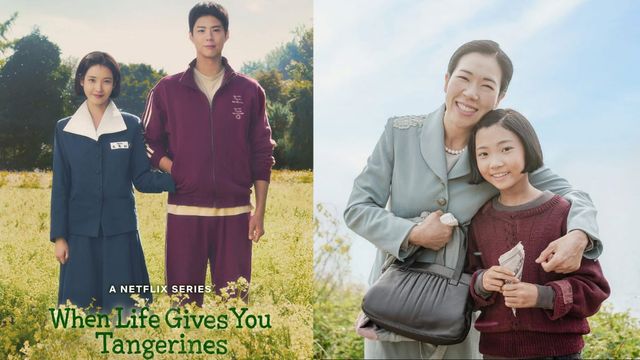
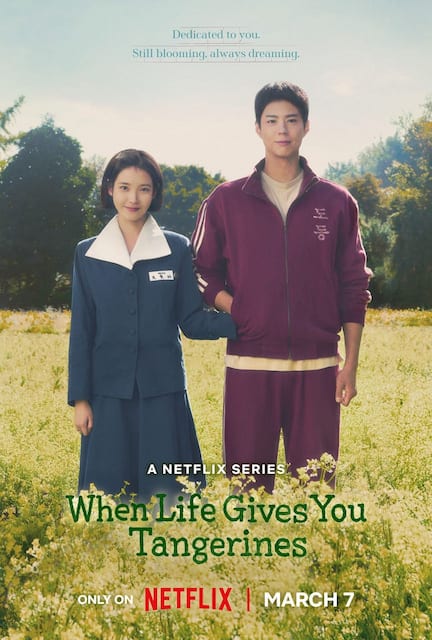
But every once in a while, a K-Drama comes along that breaks the mold, mirrors life's realities, and tugs at the viewers' hearts. When Life Gives You Tangerines (2025) is a slice-of-life K-Drama starring IU (Ae-Sun) and Park Bo-Gum (Gwan-Sik). The story spans several decades, from the 1960s to the 1990s, following Ae-Sun and Gwang-Sik's family through the ups and downs of life.
This drama can resonate with almost everyone—whether you're a new parent just starting to build your family or an adult child caring for aging parents, something in it will tug at your heartstrings.
There are no glamorous trappings—no designer clothes, no aesthetic cafés, no chaebol oppa—just an honest and pure depiction of what life is: excruciatingly painful at times, but always worth it because of the ones we love.
If you've heard of this series but still haven't found the time to watch it, here are some of the lessons we picked up from watching When Life Gives You Tangerines:
6 Lessons We Learned From When Life Gives You Tangerines
1. Women had it hard.
Just in time for Women's Month, When Life Gives You Tangerines offers a raw and detailed portrayal of the treatment of women in the 1950s and 1960s. Ae-Sun's mother often said, "It's better to be a cow than be born a woman in Jeju." Women were seen as second-rate citizens and valued for bearing sons. Ae-Sun, a little girl who loved to study poetry, was told, "What good is there for a woman to study?" As soon as girls came of age, they were expected to get married and serve their in-laws.
Ae-Sun, however, fought hard for her daughter, Geum-Myeong (also portrayed by IU). She vowed that her daughter would never have to endure the same hardships she did. She wanted Geum-Myeong to have a life better than hers. Ae-Sun couldn't attend college, so she dreamed that her daughter would. In one powerful scene, she brought home a second-hand bicycle at a time when little girls weren't allowed to ride bikes because they were "for boys." She told Gwan-Sik, "If Geum-Myeong can't ride that bicycle, she will be a maid just like me."
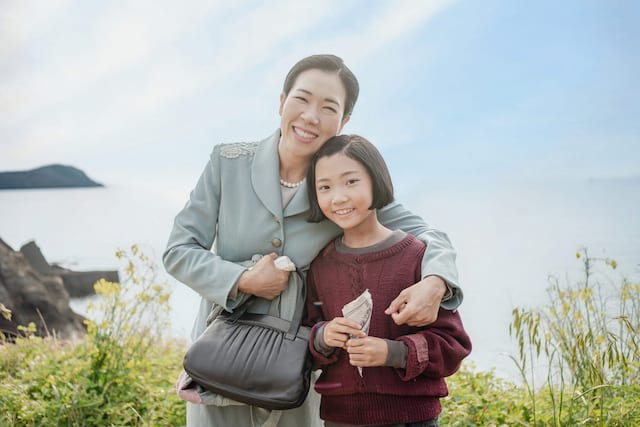
Ae-Sun and her Eomma
Despite living in a time when women couldn't be leaders and would be laughed at if they said they wanted to become president, Ae-Sun was determined to shatter barriers.
"Parents dwell on what they couldn't give. And children dwell on what they couldn't get." —When Life Gives You Tangerines (2025)
Watching these scenes is a powerful reminder that those who came before us sacrificed and won the freedoms and rights women enjoy today.
2. Your spouse is a life-defining decision.
A meme has been making rounds on social media saying that Gwan-Sik is the 'greenest green flag' of all men, and for good reason.
Gwan-Sik redefines what it is like to be a husband in a misogynistic society. He served and protected Ae-Sun from the beginning. He did not flinch to show everyone how he loved Ae-Sun, even when the world's view of love at that time was different. At the same time, Gwan-Sik knows when to let her do her thing without feeling insecure. When asked about Ae-Sun's dream of becoming a leader, he proudly said, "Then I'll be the first lady."

Ae-Sun and Gwan-Sik."You smile differently when you're with someone you love."
Gwan-Sik made sure that their marriage was a partnership and a safe space. With all the things they went through—and they were not easy—Gwan-Sik and Ae-Sun never turned against each other. They were not rich, and money was hard to earn, but they loved each other. They laughed, celebrated, mourned, and cried together.
3. Life is not picture-perfect.
Let's be honest: life isn't fair. When Life Gives You Tangerines doesn't shy away from that. There are cruel plot lines—it's painful to see a pregnant mother staring at an empty rice jar or parents struggling to put food on the table. It's a different tug in the heart when you're a parent. And another pinch in the heart when you realize your parents also did that for you. A heartbreaking line in the drama will resonate: "Parents dwell on what they couldn't give. And children dwell on what they couldn't get."
There's a popular saying, "When life gives you lemons, make a lemonade." It means when you are thrown hardships on your way, face them head-on, find solutions, and turn them around. Ae-Sun endured endless struggles, and one time, her mother told her, "One day, life might get so tough that you feel like you can't go on. Don't just lie still. Struggle with all your might. Tell yourself you won't die and must survive, no matter what. You'll be able to breathe again."
4. We are all doing life for the first time.
When Ae-Sun told Gwan-Sik, "I feel overwhelmed. You see, it's also my first time doing all these—becoming a mother, becoming an adult. I wonder how other adults get used to this," we, as parents, felt that.
It's a timely reminder that we are all doing life for the first time. Cut yourself some slack, and cut your parents some slack, too. Parenting and adult responsibilities are sometimes overwhelming, and most of our parents feel that way.
Life isn't a competition. No one stands at the finish line asking, "Who has the highest salary here?"
We are all first-time adults—sometimes wishing there would be days we are free of responsibilities, sometimes faking that we're capable, and sometimes drowning in the sea of dreams for our families. Cherish the firsts in your lives, just as how Ae-Sun and Gwan-Sik did—the first home you can call your own, your first wardrobe, and the first time the rice jar is not empty.
For first-time parents: Remember, we can do it too.
5. Always choose kindness.
Ae-Sun has a kind and pure heart. Despite her hardships, she always chose kindness and passed this value on to her children. It can be hard to choose kindness when the world is cruel, but When Life Gives You Tangerines reminds us that kindness always finds its way back to us.
6. It takes a village.
This K-Drama brings the popular saying, "It takes a village to raise a child," to a whole new level. Ae-Sun was orphaned early. While she had relatives, her mother's friends truly cared for her. Ae-Sun and Gwan-Sik's family went through difficult situations, and their village came and helped them in all those times. They only needed to ask for help, look around, and see how the right people were always ready to help.
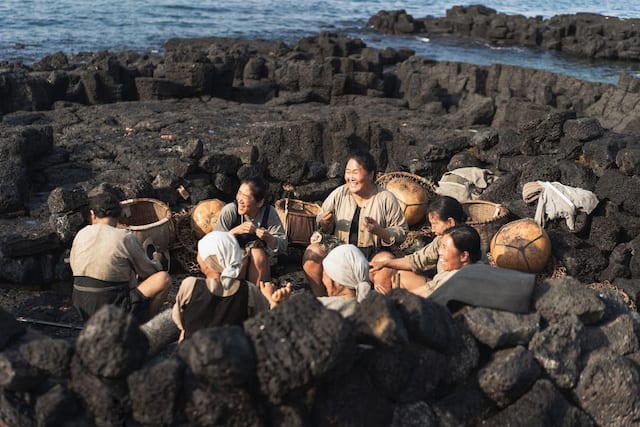
The Haenyeos of Jeju
This serves as a reminder to pause and appreciate the unique ways our village supports us—grandparents, sisters, and brothers, friends who became families, workmates who understand, neighbors who know what you're going through, and strangers from all over the world.
Our village may not look like Ae-Sun's, but your village is your village. Ae-Sun realized, "A canola flower never blooms alone. They bloom in a bunch. If I had been alone, I would have broken down countless times. But just as it takes a village to raise a child, it takes a village to save a single life."
Hug your children a little extra tight today. Call and visit your parents. Watch When Life Gives You Tangerines.
Watch the trailer here:
Eight episodes of When Life Gives You Tangerines are available on Netflix, and eight more will be released in the coming weeks.
More from sp

Lorem ipsum dolor sit amet, consectetur adipisicing elit, sed do eiusmod
Lorem ipsum dolor sit amet, consectetur adipisicing elit, sed do eiusmod
