
The millennial generation has earned a certain reputation from earlier generations, such as having a sense of entitlement, procrastination, and perpetual anxiety as adults, among many other unfavorable stereotypes—but boy, did they survive many unprecedented world catastrophes, and they are slowly dissolving patriarchy.
The majority of husbands and fathers, especially from the millennial generation, have unlocked a new level of partnership and parenthood, and this might just change the world.
When Husbands are in an Equitable Marriage
Back in the day, the general family setting would be: husbands will work, wives may or may not work, but the burden and mental load of raising kids and running the household are put on women. Societal roles are so deeply ingrained that when an unconventional setup is put under the spotlight, women tend to receive the brunt of judgment, which sounds like— “Si babae kasi, 'under the saya' si mister.”
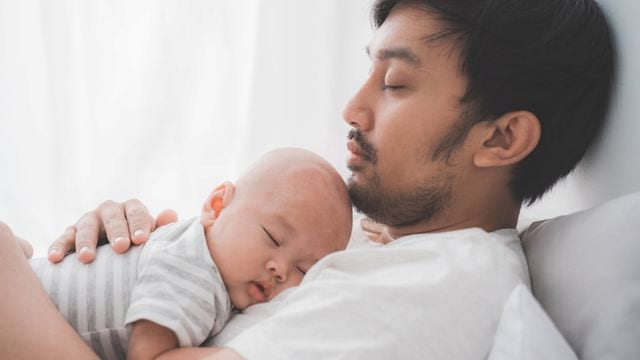
"Fathers of today are changing the narrative. They know how to change a diaper, braid their child's hair, and pull an all-nighter. They do not skip school activities because of work—they make a way. They make it work with their partners."
However, it is refreshing to see that today's husbands are participating in an equitable marriage. In an equitable marriage, there is a shared role in running the household and raising the family. Gender roles are no longer heavily distinct. Men can cook, run the laundry, pick up and drop off the kids at school, and be the handyman just as well as women. There is also deep respect for each other’s boundaries, allowing one another to breathe and thrive in their own space. There is an active presence and support for one another, and this fosters a deep sense of friendship and love inside the marriage.
Benefits of an Equal Partnership
1. Having respect for each other.
As mentioned above, we foster friendship inside marriage. There is less risk of developing resentment towards your partner. We no longer claim unfair treatment, as both of you have an active role with a level of respect and acceptance for each other's strengths and weaknesses.
2. Fostering better communication.
As partners, we form a good sense of communication. In an equitable partnership, we plan things, make goals, and do this by having effective and open communication. Arguments are inevitable, but if we come out the other end, we then understand each other more. It is said that marriage is not always 50/50, as according to Brené Brown, a world-renowned professor and researcher. She explained in her chat with Tim Ferriss on his podcast, The Tim Ferriss Show, that there are times where we cannot meet our percentage, but we need to be open and honest with our partner about where we are and how we can be supported.
3. Growing together.
We try and test approaches that are effective and which are not and we learn from them. How rewarding it is that in this kind of partnership of combined effort, we reach goals, see growth and expansion, and overcome big challenges.
4. Becoming your own person.
We grow as individuals as well. When we respect each other's boundaries and allow each to thrive on their own, we become effective in our roles. The idea of letting each other grow within the confines of commitment is also an expression of love and care for each other.
Present Fathers and Their Impact on Their Children
As quoted in an article about millennial dads by Everymom, a study by The Pew Research Center has shown that millennial fathers are dedicating three times more time to childcare than fathers did in 1965. Furthermore, a 2016 study by the same organization revealed that 57 percent of millennial dads view parenting as a core part of their identity, nearly matching mothers, who are at 58 percent. "When fathers inherently believe that parenthood is part of who they are, they will dedicate more time and effort to raising their children," Mia Revak wrote.
Fathers of today are changing the narrative. They know how to change a diaper, they know how to pull an all-nighter, they know how to braid their child's hair, they engage in play even after work, and they show their kids that they have their own chores, especially the boys. They do not skip school activities because of work—they make a way. They make it work with their partners.
More importantly nowadays, fathers who see their kids cry, give them comfort and reassurance, and co-regulate with them. Fathers of today would no longer say to toughen up, or “boys don’t cry.” Instead they say, "It’s okay to feel your emotions."
How Millennial Dads Are Changing the World
1. Dads help their children be attuned to their emotions.
Some would say that doing this would make kids sensitive. However, there is nothing wrong with sensitivity and emotions. It is even healthy to express them with respect. This helps kids in the future communicate their feelings effectively and build their boundaries as adults.
2. They help their children build their identity.
There is a saying that, “When a mother tells her daughter she is beautiful, she would believe it. But if her father tells her she’s beautiful, it becomes her identity.” If as fathers we feed positivity and kindness to our children, it becomes who they are in the future. A father’s impact is as powerful as their mothers', for they are the stronghold of the unit.
3. They teach them their self-worth and how to treat and be treated by others.
Fathers model an equitable partnership of how women should be treated and vice versa. By showing that they are present and engaging in the household, they set the standard for the future.
You see, this parenthood gig is not a walk in the park. So we thank the dads who consistently show up, embracing this active role as a parent. And although it does not make it any easier, at least there is someone with whom you can navigate the roller coaster ride of raising a family.
I do know that there are dads who were a part of an earlier generation and did the exact same thing; we see you, and I believe this is how your millennial son is parenting at the moment. We owe it to our children to love them equally and to be actively present in their lives, nurturing a generation that will fondly remember their childhood experiences with us as parents.
More from sp

Lorem ipsum dolor sit amet, consectetur adipisicing elit, sed do eiusmod
Lorem ipsum dolor sit amet, consectetur adipisicing elit, sed do eiusmod
