
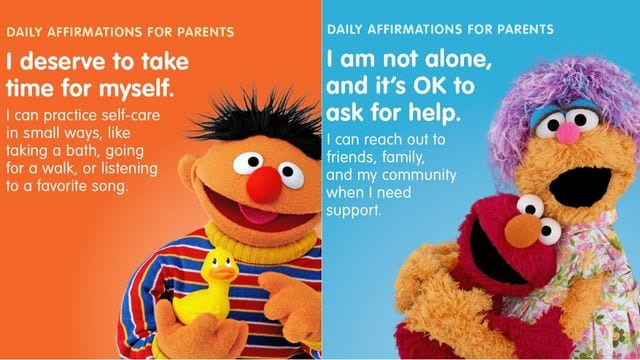
For many millennial and Gen X parents whose childhood media was limited to radio and television, Sesame Street was one of the few programs all young parents from the `70s to `90s approved of. Ernie and Bert, Grover, Big Bird, and Elmo helped lay the foundations of phonics, counting, and social skills.
Two days ago, Sesame Street released affirmation art cards— but not for today’s children. The social content spoke to millennial and Gen X parents, the American educational TV show's first target audience.
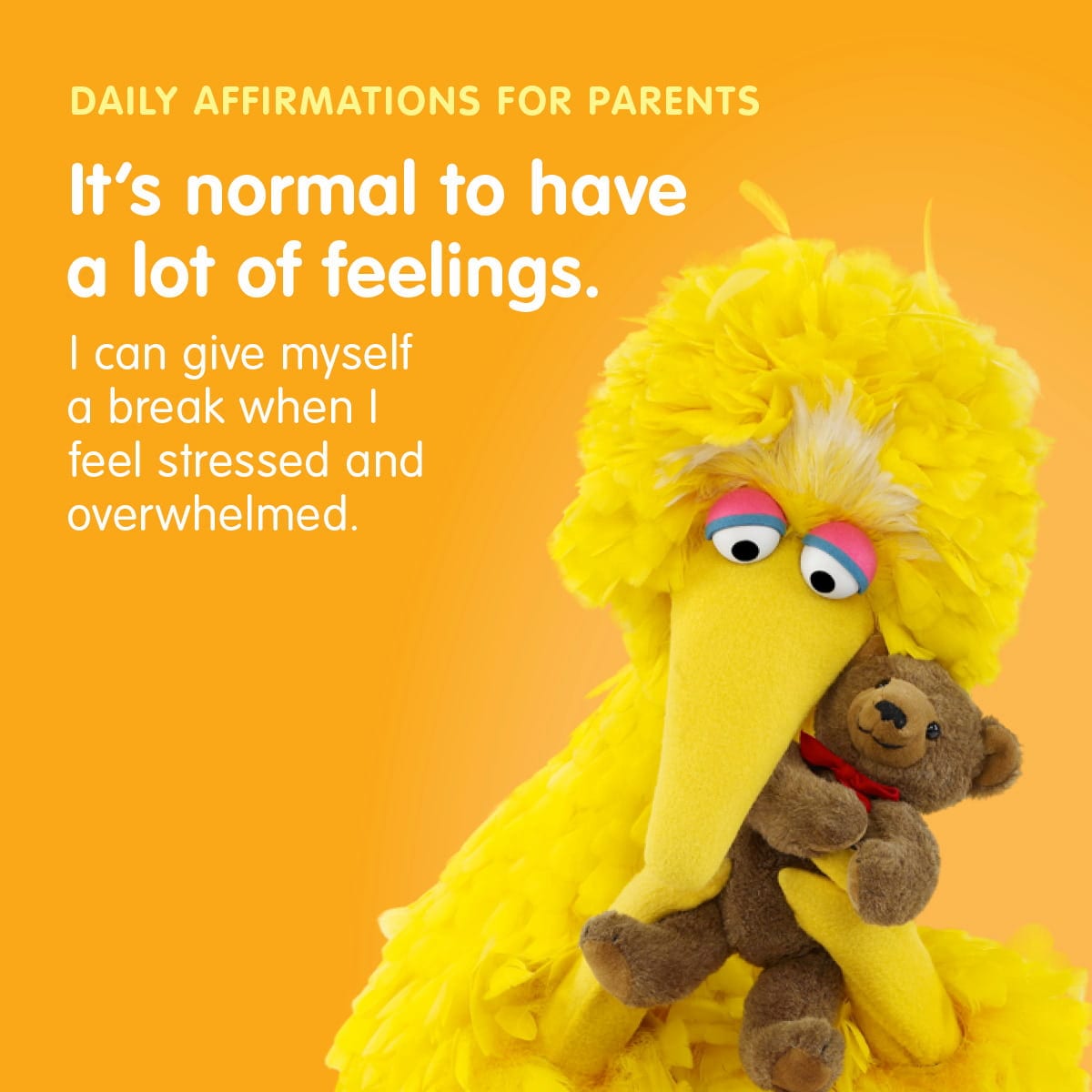
“It’s normal to have a lot of feelings. I can give myself a break when I feel stressed and overwhelmed,” reads one card that features Big Bird hugging a teddy bear.
Another art card features a newer muppet, Abby Cadabby and her mother, with the affirmation, “I am good enough. No parent is perfect and I’m proud of myself for trying my best.”
Parent’s reactions to Sesame Street affirmations
“This post made me tear up a bit. Thank you Sesame Street for being part of my entire life from kid to parent,” wrote a netizen.
Another commented, “I needed this tonight. Thank you Sesame Street. From helping me with my ABCs to helping be ok with adult parent me.”
Some social media users commented that they plan to print the affirmations for their children to read, while other child-free adults said they also appreciated the message.
“I’m not a parent… just an adult (and a kid at heart) navigating life. I needed these affirmations for myself. They are perfect.”
Sesame Street is an American educational children’s TV program that premiered on November 10, 1969. Joan Ganz Cooney, Lloyd Morrissett, and Jim Henson created the show. It mixes puppetry, sketch-comedy, live action, and animation.
Like the challenge the internet and social media pose today, television was deemed a threat to children. Sesame Street was created to "master the addictive qualities of television and do something good with them," wrote Michael Davis in Street Gang: The Complete History of Sesame Street. Sesame Street now has 222 Emmy Awards and 11 Grammy Awards as of 2022, the most number of awards for any children’s television show.
RELATED: 7 Ways Millennials Are Changing Parenting Norms
Millennial and Gen X parents hearing from their childhood influences
Perhaps Sesame Street’s post strikes a chord with millennial and Gen X parents who are bombarded with social snacks on parenting. Today’s parenting trend provides parents with scripts to repeat to children to help both kids and parents during tough moments of parenting. Affirmations on social media have also become a popular source of positive thoughts for both generations who face a different economic reality than their parent’s generation while attempting to raise their families differently from their upbringing.
A similar move was made in 2021 by the American live-action children’s educational television program, Blue’s Clues, when its original host Steve returned in 2022 to explain his sudden departure from the show in 2002.
Beyond Steve’s explanation,, it was his parting message that tugged on his original audience’s hearts. “And then look at you, and look at all you have done, and all you have accomplished in all that time. And it’s just, it’s just so amazing, right? I mean, we started out with clues, and now, it’s what, student loans, and jobs, and families? And some of it has been kind of hard, you know? I know you know,” Steve said. Steve’s message came at an opportune moment, in the thick of the Covid pandemic, when mental health and economic concerns were at an all-time high.
Sesame Street’s affirmations are comforting, encouraging, and cathartic all at once, particularly for millennials who are often described as experiencing stunted growth. Hearing from their childhood influences while accepting that these are messages they wished their parents had access to back when they were raising the millennial and Gen X generation might be why the post meant more than just any other social media content.
See the full set of affirmations here:
Read this article about parents who are raising their kids differently from their own upbringing.
More from sp

Lorem ipsum dolor sit amet, consectetur adipisicing elit, sed do eiusmod
Lorem ipsum dolor sit amet, consectetur adipisicing elit, sed do eiusmod
