
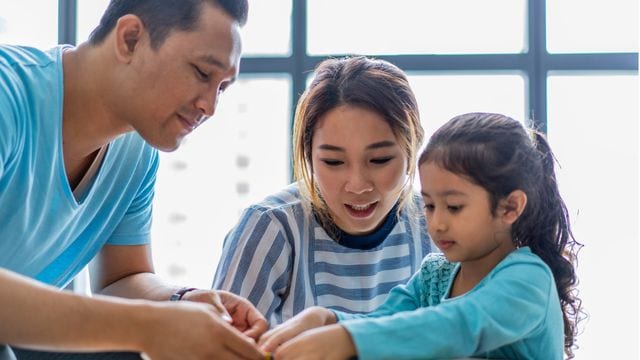
There’s no tried and tested, proven effective handbook for parenting unfortunately, but what this generation of parents do have is almost the next best thing–Internet and social media. Millennial parents have information at their fingertips, including expert recommendations in childcare and raising kids, as well as a community of other parents willing to share their journey with their own kids. Yes, both still have their downsides, but their contributions to parenting cannot be downplayed.
On that note, millennial parents are also vocal about how their own style of parenting differs from the parenting they experienced. Here are a few ways millennial parents are changing parenting norms:
Letting kids be independent instead of spoiling them or being a helicopter parent
Smart Parenting’s Editor-At-Large Rica Peralejo-Bonifacio, shares tips on how parents can teach their kids independence and responsibility through simple house chores. In a Poprica episode, she highly suggests parents let their kids do household chores to teach them independence and important domestic skills such as cooking or cleaning.
Read more on how to teach and let your child do household chores:
- Don't Wait Until Your Child Is 'Ready' Before Teaching Her Chores
- Luto, Linis, at Turo: The Kramer Kids Are Great At Household Chores
- Parenting Done Right: These Celebs Give Their Young Kids Chores To Do
Appreciating kids for who they are instead of comparing them with each other, especially siblings
Experts say that comparing kids, especially siblings with each other, and saying things like, “Look at Ate, he’s behaved!” will more often backfire than not, despite its well-meaning intentions. We might think that the comparison will make the other child aspire to achieve the same result and as Rebecca Eanes, author of Positive Parenting: An Essential Guide says, “Sometimes we think comparison is a motivator. We believe if we point out how good their brother or sister is at something, they’ll want to aim higher and achieve the same status or result.”
Instead, comparing kids can fuel rivalry, jealousy, and feelings of resentment towards the seemingly “better” sibling.
Millennial parents are more mindful of avoiding comparisons. Instead, they make it a point to appreciate their kids for who they are. As one parent from Smart Parenting Village says, “May kanya-kanyang talento at regalo ang bawat anak natin. Huwag nating hanapin ang wala sa kanila. Baka kasi sa kakahanap natin, hindi na natin napapansin iyung ibang mga bagay na binibigay nila.”
Normalizing cuddles, hugs, kisses, and ‘I love you’s’ instead of not dealing with emotions
Ask Millennial kids or any Boomer-raised kids if they remember getting hugs and kisses from their parents, and several will tell you that they don’t or they can count the number of times in their fingers. Thanks to several studies, millennial parents understand the importance of showering their kids with affection, such as skin-to-skin contact right after birth with kangaroo mother care that’s been shown to give premature babies a better chance of thriving in life. Studies have also shown that hugs increase the release of the feel-good hormone, oxytocin, which makes babies feel more comfortable and safe.
Normalizing talking and getting kids to open up instead of dismissing them
One of the goals in effectively parenting this generation’s tweens and teens is building a relationship based on trust and establishing a good line of communication with them, instead of generally dismissing their concerns similar to what most of us experienced with our parents. This includes talking to them about puberty, sex, and relationships.
Millennial parents aim to be more open with their kids even when it comes to topics that might have been considered taboo before, such as sex. As Dr. Rica Cruz says on sex, “If you want the best for your child, would you rather your child know about these things and continue learning about them from their peers rather than from you? Do you want them to be misguided by what they see online, as opposed to swallowing your pride and overcoming that awkwardness to provide the guidance they need?”
Apologizing to their kids instead of not admitting their mistakes
Millennial parents know that they are not infallible adults and like most adults, can also mess up and make mistakes. And unlike parents of yesteryears, they own up to these mistakes and apologize, because they know the importance of modeling the right behaviors and values to their child. Marian Rivera puts it best, “Hindi ibig sabihin na kapag nag-sorry kayo ay nakalamang iyung anak niyo, hindi. Dapat tayong mga magulang, kung alam nating tayo and mali, mismong tayo iyung mag-admit. Para iyung bata kapag may kasalanan siya, hindi siya mahihiya or hindi siya mag-aalangan na mag-sorry sa iyo.”
Allowing their kids to make messes and mistakes instead of getting angry when they do
Mistakes are opportunities to learn and be better and millennial parents know this and have taken it to their parenting hearts. Just like Georgina Wilson, who believes that kids are always learning, even in negative experiences, she says, “I’m not worried about them [kids] making mistakes. I actually think the more [mistakes] the better, now, while no one is watching also. I think it’s what you do after [that’s important].”
Recognizing that their kids are individuals instead of seeing them as their [parents’] property or “mini-mes”
One big change in millennial parenting is viewing kids not merely extensions of their parents, but recognizing them as their own individuals and as such, have their own futures that might be different or completely independent from their parents.’ This means that millennial parents are more conscious of preparing for their retirements, so that they won’t have to rely on their kids, who by that time might also be establishing themselves or their own families. Perhaps this change in mindset is also brought about by the shift in the utang na loob mindset–do our kids really owe us anything? As Smart Parenting Editor-in-Chief Ronna Bonifacio puts it, “Kung wala ang magulang, wala ang anak. Ngunit hindi hiningi ng anak ko na isilang ko siya. Kaya hindi ko pwede isumbat ang mga ginawa ko bilang magulang.”
Remember, there's no one-size-fits all manual for parenting because each child and parent is unique. But the fact that we are continuously willing to learn and improve is a testament to good parenting.
What other parents are reading

Lorem ipsum dolor sit amet, consectetur adipisicing elit, sed do eiusmod
Lorem ipsum dolor sit amet, consectetur adipisicing elit, sed do eiusmod
