
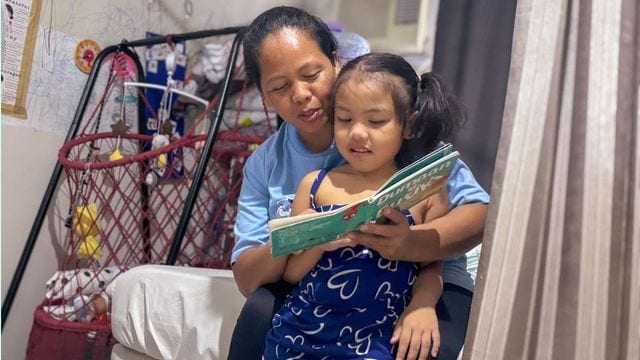
President Ferdinand R. Marcos Jr. has signed into law Republic Act No. 12199, or the "Early Childhood Care and Development (ECCD) System Act," which aims to give Filipino children aged 0 to 5 a strong, healthy start in life.
Signed on May 8, the new law strengthens the government's commitment to promoting the holistic well-being and development of every Filipino child. It prioritizes early education, proper nutrition, and nurturing care to support children in their formative years.
ALSO READ: Top 3 Early Childhood Education Myths Debunked By An Educator With 30 Years Of Experience
Strengthening the ECCD System
RA 12199 amends the Early Years Act of 2013 (RA 10410) and institutionalizes the ECCD System through a more comprehensive and sustainable approach. It mandates multi-sectoral collaboration among national and local government agencies and stakeholders.
One of the law's key provisions is the delineation of responsibilities:
-
The ECCD Council will now oversee children below the age of five;
-
Meanwhile, the Department of Education (DepEd) will supervise the development of children aged five to eight, in accordance with the Enhanced Basic Education Act of 2013.
A Response to EDCOM 2's Findings
The enactment of the ECCD System Act was among the top priority measures recommended by the Second Congressional Commission on Education (EDCOM 2).
Studies by the Commission revealed that only 36% of barangays nationwide have at least one Child Development Center (CDC), despite the mandate of Republic Act No. 6972 passed in 1990. In response, the law assigns primary responsibility for implementing the ECCD System to Local Government Units (LGUs).
Provinces, cities, and municipalities are required to:
-
Establish ECCD Offices;
-
Create plantilla positions for at least one Child Development Teacher (CDT) and one Child Development Worker (CDW) per CDC;
-
Hire qualified personnel and allocate resources and infrastructure for child development programs.
The law also addresses long-standing issues with CDTs and CDWs by setting qualification standards and creating scholarship and training programs through CHED and TESDA. It also increases their salaries, recognizing that many earn just P5,000 a month and lack permanent positions.
"This new legislation is a major step forward in fixing the foundations of our education system. A child's early years are critical. By prioritizing proper nutrition, quality early childhood care, and meaningful opportunities for play, we are giving every Filipino child the best start in life and shaping strong, capable future leaders of our nation," said EDCOM 2 Co-Chair Rep. Roman Romulo.
Karol Mark Yee, Executive Director of EDCOM 2, emphasized the broader impact: "By investing in the foundations of our children early on, we reduce dropout rates, improve student achievement, boost literacy rates, and increase income in later years. ECCD is the best investment we can make for our children."
Funding and Oversight
ECCD programs will be funded through public and private sources, with priority given to underprivileged families. LGUs will receive support through the Local Government Support Fund, including earmarked allocations for CDC establishment and personnel hiring.
The law also moves the ECCD Council to the Department of the Interior and Local Government (DILG), replacing its previous home with DepEd. The DILG Secretary will now serve as Co-Chair of the Council, alongside the DepEd Secretary. A Joint Congressional Oversight Committee (JCOC) will monitor the law's implementation.
In addition, the Seal of Good Local Governance (SGLG) assessment will now include ECCD indicators under the social protection, health, and education criteria, further encouraging LGU compliance.
Advocating for Early Interventions
RA 12199 integrates inclusive education principles as outlined in RA 11650, ensuring children with disabilities receive appropriate services, accommodations, and accessible environments.
The law is envisioned to:
-
Reduce child mortality;
-
Support comprehensive child development;
-
Prepare children for formal schooling; and
-
Establish early intervention systems for children with special needs.
"We welcome the creation of Child Development Centers and ECCD offices across all provinces, cities, and municipalities. This opens the door to moving from separate, disconnected efforts toward an integrated, systems-focused ECCD model. We are offering our technical support to ensure that the provisions are effectively translated into action through the drafting of the Implementing Rules and Regulations," said Joy Sampang, Save the Children Philippines' ECCD Technical Advisor.
The ECCD Council will develop the Implementing Rules and Regulations (IRR) for the Act within 90 days of the law's effectivity.
Click here to learn more about the Montessori Approach to Early Childhood Education.
More from sp

Lorem ipsum dolor sit amet, consectetur adipisicing elit, sed do eiusmod
Lorem ipsum dolor sit amet, consectetur adipisicing elit, sed do eiusmod
