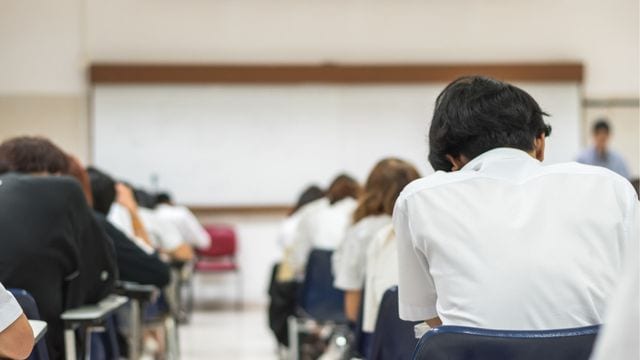
President Ferdinand Marcos Jr. has recently signed into law the “Anti-No Permit, No Exam Act,” announced by Senator Ramon “Bong” Revilla Jr., marking a significant shift in the country’s educational landscape. The new law, officially known as Republic Act No. 11984, aims to ensure that students can take their exams despite any unfulfilled financial obligations to the school.
Anti-No Permit, No Exam Law
Sen. Revilla stated that the law mandates social welfare development officers, across various levels, may issue certificates to disadvantaged students. These certificates are intended to support those students or families who might be affected by calamities, emergencies, and other justifiable reasons, ensuring that they remain on track with their academic requirements.
Sen. Sherwin Gatchalian commended the law, highlighting its role in protecting students from academic delays often caused by financial difficulties. In a statement, Sen. Gatchalian expressed his gratitude to President Marcos for signing the law, stating, “I thank President Ferdinand Marcos Jr. for signing the ‘No Permit, No Exam Prohibition Act’ (Republic Act No. 11984). The signing of this law ensures that financial difficulties will not hinder our disadvantaged students from meeting their academic requirements on schedule.”
Moreover, Republic Act No. 11984 covers students from Kindergarten to Grade 12, requiring schools to accommodate their needs for periodic and final examinations. This wide-reaching impact underscores the government’s commitment to fostering a more inclusive and supportive educational environment.
No Permit, No Exam
Before the enactment of Republic Act No. 11984, the “no permit, no exam” policy was a common practice in most schools. This policy effectively barred students with outstanding financial obligations from taking their exams, disproportionately affecting those from lower-income families. This policy was criticized for perpetuating educational inequality and placing undue pressure on students and their families.
Therefore, the signing of the Anti-No Permit, No Exam Act signifies a significant departure from this practice and is considered a move towards a more equitable educational landscape where financial constraints do not impede a child’s right to education.
The cost of education in the country
An article published by EdTech startup Edukasyon.ph indicates that annual tuition fees range from approximately P29,000 to P280,000 for preschool, P70,000 to P200,000 for elementary, P100,000 to P250,000 for high school, and P110,000 for college. This means that the total cost of education for one child from preschool to college can reach around P1,860,000. It is also important for parents to note that tuition fees are expected to increase by as much as 10% per year.
Aside from tuition fees, additional expenses throughout the school year, such as PTA, books, school supplies, uniforms, other instructional materials, and various fees, could range from around P1,950 to P13,612.75. Allowance, transportation, and food for lunch or snacks are still not included in these costs.
Read here to learn more about parents’ perspectives on public and private schools in the country.
What other parents are reading

Lorem ipsum dolor sit amet, consectetur adipisicing elit, sed do eiusmod
Lorem ipsum dolor sit amet, consectetur adipisicing elit, sed do eiusmod