
“Therese, aral ka muna. 'Pag di mo na kaya saka ka pumunta sa akin.” These were my Mom’s words when I was around seven years old, I think. She was a High School Chemistry teacher and wanted me to learn how to study on my own first.
This was in the early 80’s when the only ones who usually needed a tutor were those who really coudln't do well in the classroom, those who needed supplemental help. Forty years after, we find moms (and dads too), needing to tutor almost every single child they have. What happened? There is only one answer–Covid-19.
What other parents are reading
The virus and its ubiquitous and very dangerous presence completely turned our lives around. We are on the third year of the pandemic and we are now reeling from the effects of whatever happened to children and their means and ways of learning since the doors of their schools closed in 2020. It was only last November 2022 when DepEd mandated the resumption of full face-to-face classes–practically one of the countries with longest school closure.
A school environment and the system and structure it goes with can be likened to a well-oiled machine. Everything in a school has a function–from the color of the blackboard all the way to the thickness of pencils to the qualifications of school personnel up to the acceptable code of conduct of everyone including adults–all these contribute to the proper facilitation of learning and enhancement of the well-being of children.
'Even as children continued to receive instruction through learning modalities available to them, a great amount of learning was lost.'
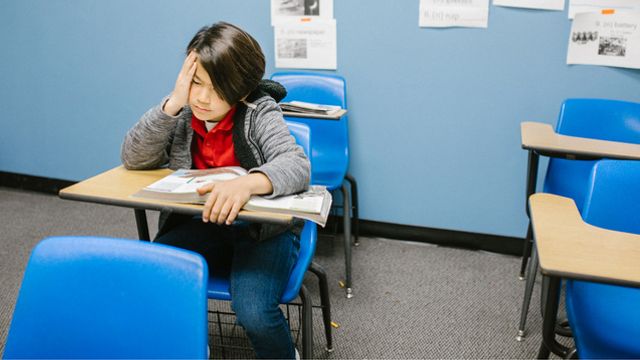
When the pandemic hit, the very structure of schools was greatly altered and so greatly disrupted the child’s schooling experience. Even as children continued to receive instruction through learning modalities available to them, a great amount of learning was lost even for those in high income families and not only for kids of our country but for every child all over the world. Covid-19 yet again proved itself to be one great equalizer.
In a nutshell, this is what learning loss is all about. In simple terms, it refers to everything, from skills to concepts to competencies even down to proper etiquette and behavior, children were not able to learn and master because of disruptions in his or her education. This is not a new term. For instance, class suspensions due to natural calamities mean a huge time of learning lost. Teachers value minutes, what more weeks, months and years?
There is a heightened concern lately about learning loss and its countless effects expressed by many great minds not only from the academe but from many different parts of society. As astounding and dumbfounding the problem can be there is only one sure way to get around it–inch our way towards actionable solutions the soonest we are all able. On the home front, what can parents like you do?
How parents can help kids with learning loss due to the pandemic
1. Never blame kids for things they are not able to learn well.
Blaming kids for not being able to learn well during this time will never be a good way to solve the problem. Intrinsic motivation is one crucial element that can make a huge difference in a child’s self-efficacy. So be very patient with their journey as well as encouraging for things they are able to do. Make them discover the important benefits of learning.
2. Optimize opportunities for learning at home.
Seeing how your kids learn up close must have given you many insights as to what opportunities are at your fingertips. Depending on the age of your kids, bring in more educational materials into your home which they can learn from–from books, to board games, to software applications. Continue to strengthen the bond you and your child built over school work in the pandemic.
Learning loss is not just about missed academic learning but crucial milestones in socioemotional learning that may have been missed.
3. Build up and reinforce foundational skills whenever you can.
Catching up on basic literacy and numeracy skills are so critical in catching up on learning loss. If your kids are still young, read aloud to them as much as you can. If your kids are older, carry conversations with them that allow them to think critically. Tutor them well too.
4. Be an excellent partner of your child’s school.
Schools are on the forefront of this battle to recover learning and so being very open and cooperative with your child’s school in their initiatives to help students is best.
5. Do not forget the impact of your socioemotional support.
Learning loss is not just about missed academic learning but crucial milestones in socioemotional learning that may have been missed. You can very well help develop grit, resilience and a growth mindset as your child catches up with lost time.
6. Harp on learning gained during the pandemic.
You might have noticed learning gains during the pandemic. If your child has learned how to establish his study routines on his or her own, for instance, then a good praise from you would do him a world of good.
7. Recalibrate your beliefs about learning, seek help when needed and make adjustments.
You may have to revisit your own belief system about how kids should learn. Remember that your kids need 21st century skills and so it can very well help if you know these too. When you realize that both you and your child need help, be humble enough to seek it. There are well-meaning academic professionals who can be of help.
8. Share what learning means to you and how it has helped you as an adult.
Let us not forget that the kids have also gone through a lot during the pandemic and transitioning back to face-to-face can also be overwhelming for some. If more psychologically mature adults can have their mental health affected, what more very young kids who do not have enough handles to go by yet to power through difficult situations.
Forcing them to catch up during these times might not get you to make them establish a firmer accountability for their own learning. Maybe a better way to do it instead is to inspire them by sharing your insights and experiences about school and learning and how your education has shaped you into the successful adult you are now.
There’s more to be said about learning loss and why it should be taken seriously and acted upon as soon as possible. You can very well use the impact you make as a parent in your child’s learning and well-being in turning learning loss around. We remember one line from the famous Whitney Houston song, “Teach them well and let them lead the way.” So yes, this is for them and their future.
Ms. Therese Pelias is an educator. She is currently the Project Head of the Solve Learning Loss Project, a partnership project of Thames International and the University of San Carlos.
Therese would like to thank Ms. Fara Vanessa Natividad, a multi-grade tutor since 2008, Ms. Jacklyn Santiago, Assistant Professor of Educational Psychology at the University of the Philippines and Ms. Candy Padilla, a Reading Specialist and parent who also currently teaches Reading in the classroom for contributing the tips in the article.

Lorem ipsum dolor sit amet, consectetur adipisicing elit, sed do eiusmod
Lorem ipsum dolor sit amet, consectetur adipisicing elit, sed do eiusmod
