
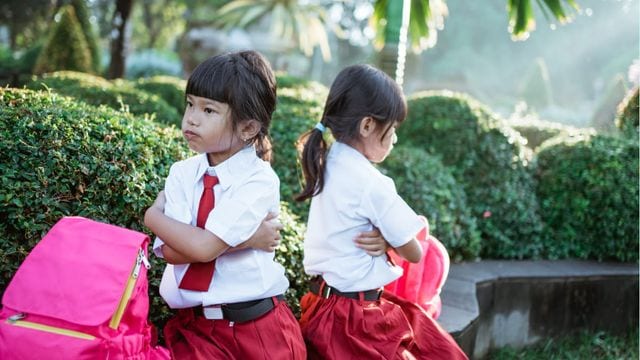
“Mommy, nanakit po si [kiddo].”
Has your child’s teacher ever called you out because your child hurt a classmate?
Before you worry or get angry yourself, Dr. Gail Reyes-Galang–a psychologist, child and family expert, and a member of Smart Parenting’s board of experts–shares essential insights on how parents should handle such situations.
When Your Child Likes to Hit Others
In a video posted on her Instagram, Dr. Gail remind parents to take a step back before getting angry: “Before ka magalit, siguro alamin muna natin kung saan nanggagaling ang hindi magandang behavior na ito.”
Dr. Gail then cited a few reasons a child might hit others, saying, “Feeling ba ng anak mo na kailangan niyang mapakita na mas malakas siya kaysa sa mga kasama niya? Or galit ba ang anak mo kasi lagi siyang pinipilit mag-share ng toys niya? Or baka naman may na-oobserve siya na mga tao sa paligid niya na mahilig din manakit?”
Aside from these, experts point out other possible reasons for aggressive behavior:
- Aggressive acts, such as hitting or hurting others, can be considered a regular part of development in young children as they explore their environment, emotions, and social interactions.
- It can stem from frustration, especially if they can’t verbally express themselves or struggle with impulse control.
- Children might fight and hit others when they are upset–such as when they don’t like what another child did or want something another child has.
- Children might also display excessive aggressiveness when they are exposed to it at home or when they see it in their playmates, siblings, or on screens.
What Should Parents Do?
Dr. Gail emphasizes that while it’s important to understand the root cause, hurting others should never be tolerated: “Hindi ito dapat hayaan dahil kapag napabayaan, mas magiging problema pa ito hanggang paglaki niya.”
She provides key strategies for parents to help their children develop proper behavior:
“Intervene at the right time.”
If you see your child hurting someone, calmly step in to stop them and separate them from the situation. Dr. Gail advises parents to say, “Our hands are used for helping, not hitting.”
You can also explain, “It’s not okay to hurt others. We need to talk about why you did that.” This immediate response helps children understand the possible consequences of their actions and fosters self-awareness. Parents can then focus on explaining how their actions affect other people and encouraging them to find better ways to explore their feelings, rather than resorting to physical harm.
“Catch your child when they are doing good to reinforce the desirable behavior.”
Instead of just calling out negative actions, catch your child when they are behaving well. Dr. Gail suggests: “Ipakita mo na natutuwa ka kapag nag-share sila or nakikipaglaro ng maayos sa iba.”
Research shows that reinforcing positive behavior helps build self-esteem, further encourages desired behaviors, strengthens relationships, and promotes a positive learning environment. Children feel valued and appreciated and are more likely to repeat good behavior when they are acknowledged for it.
“Teach your child to apologize.”
Dr. Gail also recommends that parents help their children understand the impact of their actions and encourage them to apologize sincerely. She notes, “Teach your child to apologize after explaining to them that what they did caused others to feel bad.”
Apologizing teaches accountability, empathy, and conflict-resolution skills–essential for maintaining healthy relationships.
However, Dr. Gail reminds parents to still be considerate and supportive of their children: “If ayaw nila mag-sorry, give them time hanggang maging ready na sila. Maganda siguro kung samahan natin sila para they still feel loved and supported kahit nagkamali sila.” This reassures children that while their actions have consequences, they are still loved and supported as they learn from their mistakes.
Be a role model.
Aside from Dr. Gail’s tips, parents can also ensure they are modeling appropriate behavior for their children. Children learn by observing adults, so when we remain calm and respectful in all our interactions, especially during conflicts, we model appropriate behavior for them.
Set clear and consistent rules.
Clear and consistent rules and boundaries can also help children understand expectations and possible consequences of their actions.
By addressing the root causes of aggression, intervening appropriately, and reinforcing positive behavior, parents can help their children develop emotional regulation and healthier social interactions. With patience and guidance, children can learn better ways to express themselves, fostering empathy and kindness in the long run.
Gail Reyes Galang is a registered psychologist with a PhD in Child and Family Studies and a member of the Smart Parenting Board of Experts. Follow Dr. Gail on Instagram and TikTok.
Read here to learn how to discipline a toddler when he hits his baby sibling.
What other parents are reading

Lorem ipsum dolor sit amet, consectetur adipisicing elit, sed do eiusmod
Lorem ipsum dolor sit amet, consectetur adipisicing elit, sed do eiusmod
