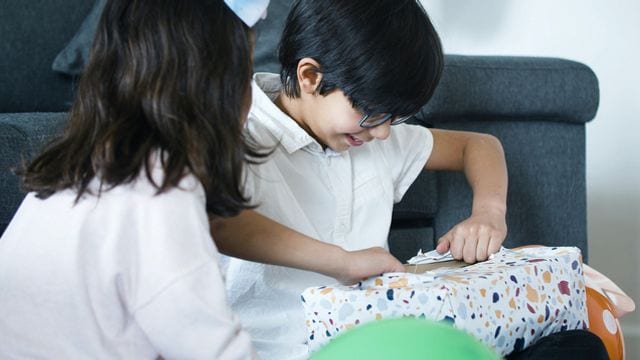
Most parents know this uncomfortable scene all too well: Your child receives a gift, opens it, and you worry whether or not your child will respond politely despite what he or she thinks of the gift.
The horror story is when your child flat-out rejects the gift or shows obvious disappointment. “Ay, damit, hindi toy.”
Or when your child is unimpressed by a gift the giver was so excited to give. “Pang baby naman ito,” your child says before closing the package, never to be opened again if it were up to him.
What other parents are reading
Could the adjectives “spoiled”, “rude”, or “ungrateful” be running in your mind when this happens?
Plus: “I am not raising an ungrateful child”?
According to this parenting resource, rather than lecturing your child about his response right after opening the gift, this is what you should do instead:
What to do when your child doesn’t like his gift:
“When a child seems ungrateful after receiving a gift, they can seem spoiled or rude,” says Big Life Journal, an American parenting and homeschooling resource founded by Alexandra and Scott Eidens.
It reminda parents through an Instagram reel that your child is not bad, “they’re just struggling to handle big uncomfortable feelings.” Here’s what you can do to help:
1. Model the behavior you want to see in your child.
Right after your child’s response, you can say to the giver: “Thank you so much for the gift!” Do not correct your child right away. Show him instead what he should have done and what a polite response sounds like.
RELATED: Stop Yelling At Your Child With These 3 Steps (You Model Good Behavior, Too)
2. Bring your child aside.
Avoid talking about the moment in front of others so as not to shame him. Some gift-givers might be people your child might just have met even if the parent already has a longstanding relationship with her. Consider that talking about what they did while others listen might only bring them shame and not get across the point you actually wanted to make.
3. Choose the right time to talk about what happened.
If your child is calm and ready to talk about the moment, Big Life Journal suggests saying something like:
“It’s okay to feel disappointed. Next time you don’t like you can still say thank you and set it with your other gifts.”
4. Teach kids to appreciate the thought behind the gift.
It’s easy for kids to focus on the gift itself and may miss out on the popular saying, “It’s the thought that counts.” But parents can still teach children to be grateful for their gifts.
Maybe the person doesn’t remember how old the child is and still remembers him as a toddler. Remind your child to focus on thoughtfulness, the time it took to choose and buy the gift, and not the gift itself.
Avoid talking about how expensive a gift is whenever they receive gifts so that their mind is not trained to think instantly about a gift’s value.
5. Practice possible scenarios ahead of time.
“Talk through these possible scenarios ahead of time and help your child prepare so they can respond better,” says Big Life Journal.
Remember that your child is still learning and every moment is an opportunity for your child to learn.
Though these moments can initially feel embarrassing for parents, thinking about how our children are not able to handle uncomfortable emotions can help us to prioritize helping our children over worrying about how our family and parenting appear to others.
What other parents are reading

Lorem ipsum dolor sit amet, consectetur adipisicing elit, sed do eiusmod
Lorem ipsum dolor sit amet, consectetur adipisicing elit, sed do eiusmod