
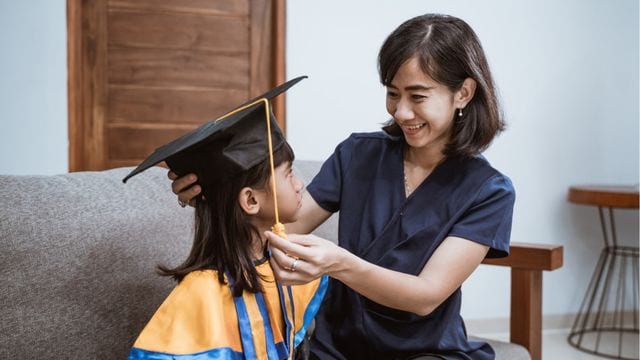
In case you missed it, a new “type” of graduation garland recently drew mixed reactions from parents on social media this graduation and recognition season.
It seemed to have started when a teacher posted a plea on Facebook asking parents to refrain from giving their kids money garlands. Facebook user Gerva LPT emphasized sensitivity and the potential impact money garlands could have on other students and families. His post reads:
“Mabibilang lamang ang mga batang Graduates na mula sa pamilyang may kakayahang pinansyal. Karamihan sa kanila ay nagmula sa pamilyang kinakapos sa pang-araw-araw nila.
“Pakiusap sa mga magulang na magbibigay ng money garlands ngayong graduation season na kung maaari, gawin ang pagsasabit pagkatapos ng graduation ceremony at hindi habang nagaganap ang seremonya at lalong huwag sana sa mismong pag-akyat ng stage.
“Ang purpose ng pagbibigay ng money garland ay bigyan ng appreciation ang batang nagsipagtapos, hindi upang ipagmalaki sa ibang tao na higit tayong sagana at mas maraming pera.”
Gerva’s post highlights the financial disparities among students, stressing that graduation should be a collective celebration and not an opportunity to showcase one’s wealth.
Dr. Richard and Erika Mata also echoed this sentiment as they advocated for a more discreet approach in giving money or rewards to graduating students. In their own Facebook post, they proposed using traditional ampaos or red envelopes instead of money garlands:
“Tama po yung isang Teacher na sinabing, ‘after ng ceremony niyo isabit.’
“Sa akin naman, ilagay niyo nalang sa Ampao.
“Bakit kailangan ipagyabang? Ilagay mo sa envelope, sikreto mong ibigay. Kung gusto mong idisplay, bigyan mo nalang din lahat ng nakakakita.
“Iba’t iba ang pinagdadaanan ng mga tao, [hindi] mo kailangang iremind ang lahat sa mga challenges na pinagdadaanan nila.
“Ang Graduation ay isang event na lahat ay panalo, lahat nag-cecelebrate. Be sensitive sa ibang tao. [Huwag] na natin ito ipa-uso.”
Graduates and recognition ceremony participants are typically gifted with flower bouquets or flower garlands to celebrate their hard work and successes leading up to the momentous event. Recently, “money garlands” or garlands with money bills taped in the ribbon are also being used for the occasion.
Insights from other parents
Parents from the 100,000 strong parent community Smart Parenting Village also shared their insights on gifting money garlands for graduates. Here are some insights:
A vote for discretion and sensitivity
Many parents align with Gerva and Richard and Erika Mata, advocating for a more subtle and considerate approach. One parent commented, “No need to show off or ipagyabang if kaya naman ibigay in private. Or if proud, may social media naman para i-post yung bigay. At least dun, pwede mag-unfollow ng ayaw makakita ng ganun. Huwag na siguro sa harap ng ibang students na wala sila choice kung hindi makita talaga. We don’t know everyone’s story.”
Another parent stressed the importance of empathy, saying: “While rewarding our children’s achievements is good to encourage them, we should also give importance in being sensitive to others who might be in a different situation than ours. I think that’s a more valuable lesson to teach our children.”
Tradition and celebration
Conversely, some parents see nothing wrong with money garlands, arguing that it is merely a form of gift-giving and celebration, similar to money cakes or money balloons. One parent shared, “Kanya-kanyang preferences lang ng pagreregalo. Wala akong nakikitang mali. It’s the same as binilhan mo ng cellphone, bag, damit. In the form of money lang na nilagyan ng twist. Same lang din sa tinreat mo sila sa labas. Iba-ibang form of gift giving lang.”
Another emphasized that there’s no need to follow the trend, saying, “For me, hindi naman dahil nauso eh required mo nang gayahin o gawin. If hindi kaya, no need to show off. But for those na kaya, it is another idea to reward the child for his efforts. Wala namang pinagkaiba sa pagbibigay ng pera sa weddings. Just spread love and happiness. Be grateful and happy for others. And to be sensitive, mas okay na isabit nalang after graduation.”
Balancing joy and modesty
Other parents advocate for a middle ground, where it’s okay to give money garlands but to do it in a manner that does not overshadow the event or others’ experiences. One parent suggested, “A reward that should be given in private. Wala naman talagang masama magbigay nito because of course, we are proud as a parent or guardian and gusto lang natin magbigay ng simple gift as a way to shw that we recognize the graduate’s hard work. But do it sana in private nalang like sa bahay after the ceremony. Wala namang mali sa pagbibigay, hindi naman kasalanan ng ilan na may kakayahan at yung iba pinagiipunan din talaga.”
Follow the school’s guidelines
Other parents shared that their children’s schools have their own guidelines when it comes to garlands or gifts during Graduation rites. “Sa school ng kid ko, nung graduation required kami magdala ng gift na iaabot sa part na magbibigay sila sa amin ng letter,” one parent shared. “For me, there is nothing wrong naman if money garland ilalagay sa kanila, tanggalin nalang if aayat ng stage para hindi naman masyadong show off lalo if sobrang laki ng bills.”
The same parent emphasized that it is also a matter of perspective, “Pero its how we see things, kasi if inggitera, masama dating sa iyo. If hindi naman, hindi naman siya magmamatter. Even sa mga bata hindi nila issue yan dahil excited sila sa kahit anong matanggap nila.”
“May policy na ang ibang schools na hindi pwede between programs,” another parent shared. “After na lang ng program if bet talaga magbigay. Wala naman masama if you have the money, it’s your child anyway. Pero if hindi kaya, huwag ipilit. Hindi siya mandatory so I hope hindi ma-obliga ang parents. Siguro yun ang reason kaya pinagbabawal sa ibang school.”
Focus on the things that matter
Several parents highlighted the importance of teaching children contentment and happiness for others’ successes. One wrote, “Let’s normalize letting other people live the way they want. Let’s normalize teaching our kids and ourselves to be happy for others instead of bitterly saying ‘sanaol.’ Let’s learn to be happy for what others have and realize that what they have in life is not a kawalan for us. Kung meron sila, hindi ibig sabihin na mawawalan tayo. Let’s teach our kids to be grateful instead of controlling others and how they want to live their lives. We will be better off as a society that way.
“Para kasing kasalanan pa nila if meron sila just because others don’t have it. Remember that if you think they are bragging, that’s usually a reflection of your heart more than theirs.”
This perspective emphasizes a broader lesson about contentment and finding joy in others’ happiness, which could help manage our feelings of envy or inadequacy.
Ultimately, gifting money garlands at graduation ceremonies is not just a parent’s reward for their child’s hard work, it can also reflect deeper issues of economic disparity, sensitivity, and even the ways families celebrate achievements. And although most insights are valid, it seems that the discussion underscores the importance of empathy, respect for others’ circumstances, and finding a balance that allows for joy without causing intended harm.
Read here for ways to raise kind and caring children.
What other parents are reading

Lorem ipsum dolor sit amet, consectetur adipisicing elit, sed do eiusmod
Lorem ipsum dolor sit amet, consectetur adipisicing elit, sed do eiusmod
