
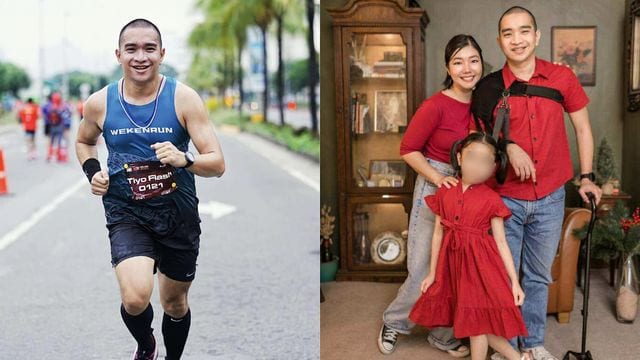
Every Father's Day, posts and tributes flood our social media feeds, with wives and daughters proudly honoring their husbands and dads for being strong, relentless, and good providers to their families. They're celebrated for their sacrifices, their guidance, and even their endless supply of dad jokes. But strength doesn't always mean pushing through. Sometimes, strength looks like slowing down, listening to your body, and learning to rest.
This is exactly what Ian Miciano, a 35-year-old dad residing in Cavite, learned after suffering a stroke in August 2023. An occupational therapist by profession, he wanted to be more active and physically fit, so he turned to running and marathon training the year before.
"Life is short," Ian shared in an interview with Smart Parenting with help from his wife, Danielle. "The day I had my stroke, I had just finished running. I could have had a stroke while running in the middle of nowhere."

A stroke occurs when a blood clot or broken vessel prevents blood from getting to your brain. It's a medical emergency that can lead to death or long-term disability if not treated right away. The World Health Organization recommends adopting a healthier lifestyle by taking these actions to prevent strokes.
- Eat healthier
- Be physically active
- Maintain a healthy weight
- Avoid tobacco & alcohol
How a dad's life changed after the stroke
Ian and Danielle have an eight-year-old daughter. Together, they run a therapy center in Imus, Cavite, offering occupational and speech-language therapy for children. "Before the stroke, I was very active—running every day, boxing once a week, and cross-training twice a week," Ian shared. As a family, they enjoyed travelling and exploring the Philippines at least once a year.
Ian was the extrovert, while his wife was the introvert. He handled all the errands, while Danielle took over the household. After the stroke, their roles shifted significantly. "Now, however, due to my limited mobility, she is the one who has to do all the driving and other outside errands while also keeping on top of the household management," Ian shared. He also had to pause from his work for almost a year.
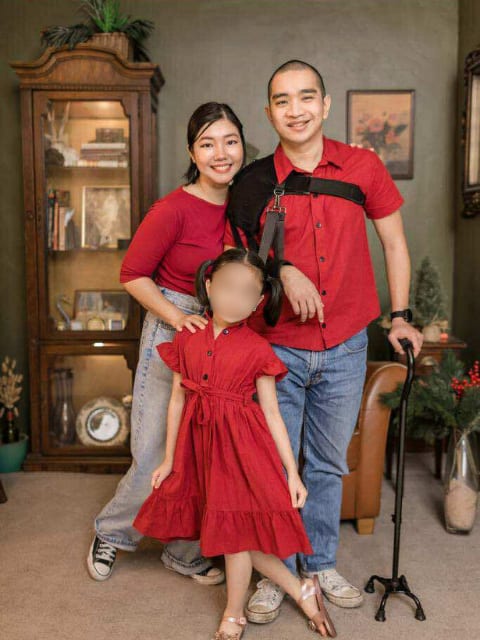
Ian found new ways to contribute. He helps care for their pets, keeps track of bills and deadlines, and spends more time with their daughter, who is independent enough to manage basic tasks on her own.
His illness may have changed the way he functions day-to-day, but it didn't make him any less of a father, husband, or provider.
3 lessons that stroke taught him
Ian doesn't regret trying to live an active lifestyle. In fact, doctors said he could've suffered from an aneurysm, which could have had worse effects, had he not been physically fit. Still, the experience left him with life-changing lessons that he hopes other parents will take to heart.
1. Sleep is essential.
Ian shared how stroke taught him that rest and recovery are important. "I used to wake up at 3 AM, regardless of what time I slept at night, just to complete my daily runs," he recalls. "Now, I try my best to get at least eight hours of sleep each night. I even use nasal strips and mouth tape to help with sleep quality and my wife's as well," Ian joked.
"I am thankful for what I can now do, but there are still days when I get frustrated with myself. I am also only human, after all." —Ian Miciano
2. Cherish family and friends.
Not only did his condition take a toll on his mental and physical well-being, but it also strained their family's finances. Nevertheless, Ian is grateful for all the help that their family and friends extended to them, not just financially, but emotionally as well.
"My wife and I are thankful for the people cheering us on and including us in their prayers. We also appreciate reading comments and receiving messages of support and encouragement from family, friends, acquaintances, and strangers. It helps us, me especially, to keep going," he said.
3. Grit and discipline matter.
Ian didn't expect how life-changing his condition would be, "Imagine having to relearn, ever so slowly, movements that I used to be able to do so effortlessly pre-stroke. It was torture on a daily basis, not because it was painful, but because it takes so painstakingly long." He still can't move his right arm and deeply misses running and driving.
He believes that sports taught him the values of grit and discipline, which were key to handling the mental and psychological struggles that stroke patients have to go through every day.
"Of course, I am thankful for what I can now do, but there are still days when I get frustrated with myself. I am also only human, after all," he admits.
A message to fellow parents
On Facebook, Ian tries to stay connected with his friends and family by sharing updates about his condition. With continued therapy and his family's support, he's regained some of his independence. He even managed to accompany his daughter on a school field trip recently.
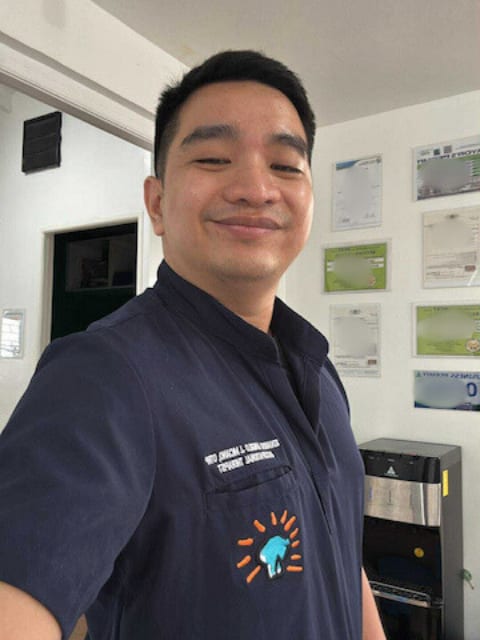
"I'm grateful for this second lease on life, and it has made me value my relationships even more. So, yes, diet and exercise are important, but rest and recovery are importanter," he added with a laugh.
He tells his fellow parents that while life demands more than we are capable of, a well-rested parent could achieve so much more: "Though life may be busy, we all need to make time for those things because we still have family waiting for us at home," he concluded.
Read this father's essay about being a dad again in his 40s, here.
More from sp

Lorem ipsum dolor sit amet, consectetur adipisicing elit, sed do eiusmod
Lorem ipsum dolor sit amet, consectetur adipisicing elit, sed do eiusmod
