
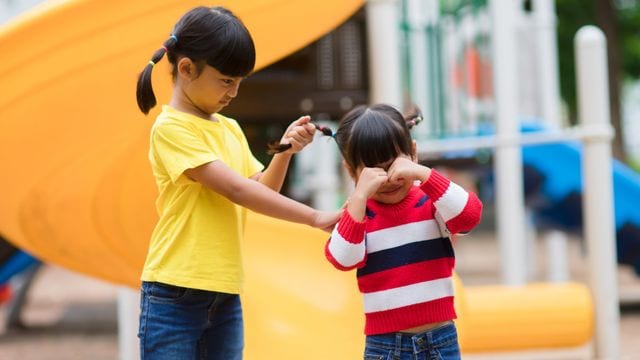
Sibling rivalry can be traced as far back as anybody could possibly remember.
The biblical story of Cain and Abel is one, where both brothers were asked to offer up individual sacrifices to God and that God seemingly accepted Abel's sacrifice whilst rejecting Cain's. Now out of jealousy, Cain vengefully murdered Abel. A similar story from the Qur’an or Koran depicts the fate of the two sons of Adam and Eve, believed to be Habil and Qabil, where Qabil killed his brother when his crops were said to be rejected by Allah as offering.
There are other popular stories from the bible documenting sibling squabble like that of Joseph, the dreamer, who was sold into slavery by his jealous brothers, as well as the story of Jacob and Esau’s. Historically, we have crossed the tale of the Boleyn sisters, Mary and Anne, who battled it out over Henry VIII where the king first took Mary as his mistress yet made Anne his queen.
Even the Philippine television dramas are laden with serialized stories of siblings locking horns and the iconic Mara Clara proves to be an excellent example.
Igniting the fire: What is Sibling Rivalry and what causes it?
The Cambridge Dictionary defines sibling rivalry in very simple terms: "competition and arguments among brothers and sisters."
But to deeply understand what causes it, some theories hope to explain what fuels the feud. According to the attachment theory, grounded on the early writings of John Bowlby, the infant is naturally very much attached to its primary caregiver. During the first years of life, attachment security varies according to the responsiveness of the primary caregiver. A present attachment figure provides a sense of comfort and security.
On the other hand, separation from the caregiver causes anxiety and distress. The nature of the relationship with the attachment figure is believed to impact sibling rivalry. Secure caregiver-child relationships lead to trusting relationships with others whereas insecure relationships may lead to conflictual and distant relationships, including with siblings.
Related: Raising Siblings Without Rivalry, Is It Possible?
Another is the exchange theory of family behavior, mentioned in “Sibling Rivalry: An Empirical Study”. In a nutshell, “theoretical formulations attempt to explain social behavior in terms of rewards exchanged and costs incurred in interaction. The individual attempts to maximize rewards and minimize costs, thus obtaining a favorable outcome. Outcomes are evaluated against a comparison level.”
This concept is vital in understanding sibling rivalry.
The reward power of the parents is thought to be limited: time, energy, attention, and material resources. A child who feels he is less well regarded may feel that he is not loved or the other sibling is preferred. The study argues that, “although it may be true that love cannot be counted, the routine, run-of-the-mill everyday interactions, which are minor indicators of feelings, can be counted.”
If a conversation appears to be heated, intervene and get to the bottom of the conflict without taking sides. If they can resolve it on their own, that is better.
In essence, the general exchange theory shows that “the family is an ideal
arena for close and detailed comparison of what another is getting.”
An interesting distinction between loving and liking was also mentioned in the study. “The love for each child in the family is the same, although the liking and preference of the mother may vary according to special circumstances or special qualities of the child.”
Related: Older Sibling Resentment: Causes, Effects, And How To Deal
What are the early signs of sibling rivalry?
According to America’s second-largest pediatric hospital, Nationwide Children’s, below are the early signs of sibling rivalry:
Children under 9 years of age may show these signs:
- Fighting (verbal or physical attacks)
- Frustration
- Demanding attention
- Telling on sibling (tattling)
- Regressive acts, like bed-wetting or thumb sucking
- Reaction to a new baby such as showing anger toward the baby, like hitting, kicking, punching or biting, asking for the baby to go back to where it came from, or demanding more attention when the parent is with the baby
Older children may show these signs:
- Frequent arguing
- Competing for friends, grades or in sports
- Taking out frustrations on objects, pets, or other people
Read Also: 7 Crucial Moments When You Need to Intervene in Your Kids' Fights
Dousing the flames: How to deal with sibling rivalry
Nationwide Children’s Hospital suggests the following to manage sibling rivalry:
If the conflict is very heated, separate the children until they are calm. Then, coach them to resolve the problem.
Be a role model. Teach your child positive problem-solving skills.
Have rules in your home, like keeping your hands to yourself and no name-calling.
Praise your children when they are working hard and following directions. This helps build their self-confidence.
Listen to your children and their needs.
Spend time with your children. Let them know that they are loved.
Avoid situations that may lead to jealousy.
Do not play favorites. Be fair and consistent.
Do not compare one child to another.
If the arguing or acting out gets to be too much, give yourself a time out and get away from the situation. (HH-IV-71 ©1998, Revised 2021, Nationwide Children's Hospital)
Read Also: Bullying Sa Magkakapatid: Paano Maiiwasan At Ano Ang Dapat Gawin?

Putting the embers out: additional tips in managing sibling rivalry
Below are five more tips to square the squabble among siblings:
1. Find the root cause.
If patching up is merely a band-aid solution and the real reason that sets them off keeps getting pushed under the rug, chances are, the arguments will continue to resurface. If you can talk to each child privately and hear his heart out, you will realize where these pent-up emotions are coming from.
Similarly, if a conversation appears to be heated, intervene and get to the bottom of the conflict without taking sides. If they can resolve it on their own, that is better.
2. Good old 'Praise in public, criticize in private'.
Criticizing your child in public may fuel the desire of that child to get even or take revenge. On the other hand, the other child may use it as ammunition the next time another war is launched between them. Therefore, it is vital to discuss the shortcomings privately. But if the kids are getting along and behaving well amongst each other, then let your praises be heard.
3. Promote a “Team” culture
Team members protect each other, and complement each other. This kind of approach should be the foundation of your family: siblings, like a team, protect and complement each other.
Related: 8 Tips Parents Can Create Strong Bonds Among Siblings
4. Emphasize respect
Each of us have our quirks and personality—our individual preferences and behavior can be endearing to most, but annoying to some. It is normal to argue and have different points of view, but if we teach and show our children how to communicate with respect, we should be able to contain the hostility and bickering.
5. Be consistent with your parenting style
To avoid comparison in the eyes of your children or cultivate perceived favoritism, try to be consistent with your parenting style. Spend uninterrupted time with each of your children to let them know that each of them matters. We already know that when it comes to parenting, things are perpetually easier said than done, but as long as we keep trying, then it shouldn’t be that bad.
More from sp

Lorem ipsum dolor sit amet, consectetur adipisicing elit, sed do eiusmod
Lorem ipsum dolor sit amet, consectetur adipisicing elit, sed do eiusmod
