Tech Experts on Raising Kids in the Age of AI: Values First
Parents and tech experts tackle AI misuse, from homework cheating to deepfakes.

Published on Oct 16, 2026
In today's rapidly evolving digital world, parents are raising children who are digital citizens from birth. They’re learning to navigate digital parenting, from managing screen time and choosing the right apps to teaching responsible social media use.
More recently, parents have had another technology to navigate: Artificial Intelligence. While AI offers plenty of benefits, reports of its misuse have raised concerns. These range from students relying too heavily on AI for schoolwork to more serious incidents involving deepfake porn videos.
To help parents navigate raising kids in the age of AI, Smart Parenting spoke with Marvin and Gwen Yason, technology experts from Accenture. The couple are also parents to four (4) sons, where their expertise is translated into parenting. How do these tech-savvy parents set rules around screen time, AI, and social media use in their own household?

Social Media Ban for Minors: What the Senate Bill Could Mean
Read hereParenting in the Age of AI: Arvin and Gwen Yason of Accenture
Smart Parenting [SP]: Can you please tell us a bit about yourselves?
Arvin Yason [AY]: I’m Arvin Yason, Managing Director at Accenture Technology. I lead an industry group for telco, media, and high technology companies. I’m also one of the so-called Accenture Senior Forward Deployed Engineers.
Gwen Yason [GY]: I’m Gwen Yason, Director of Delivery for Southeast Asia, looking after Singapore, Thailand, Malaysia, Indonesia, and the Philippines. We have four sons, ages 22, 20, 18, and 16.

SP: We're in the age of AI, to the point that we use it every day, including our kids. What are your basic rules of AI use as parents?
AY: When AI started becoming more consumer-friendly a few years ago, we started having conversations with our kids about it.
Our kids learned about AI a few years ago, partly because we would talk to them about it and partly because they learned from friends and classmates. When we started having those conversations, we said, "You know what? It's inevitable. AI will really permeate everything we do. No role or job will be untouched by AI."
GY: In terms of rules sa bahay, our kids are teenagers na, so 22, 20, 18, and 16. Medyo older na sila. But even when they were young, our rule was that they should be guided by their hearts. “What's the right thing to do?”
We believe that the values we instill in them guide their decisions, more than simply saying, “Don't do this, don't do that”.
We don't really have a rule book per se. It's more about teaching them values and letting them think about whether what they’re doing makes them better people or could hurt somebody else.
At the end of the day, things change, but these values need to remain constant.
SP: How about screen time and social media use? At what age were they allowed to use screens and have social media accounts?
AY: We introduced screens early. To some degree, it was a challenge. We talked about limiting screen time because I don't think they ever grew up without access to an iPad or a phone.
For social media, we allowed them to have accounts in their mid-teens. But honestly, with the convenience of apps like Messenger, it's hard to take that away. They were younger when they got phones to communicate with us, but for social media, we allowed it in their mid-teens. It's tough kasi some of their friends had it earlier. There's also that comparison. But again, I think their hearts are in the right place.
GY: If they say to us, “It’s not fair,” then it's not fair. Life's not fair. That's tough parenting.
Before the pandemic, we were intentional about allowing only a certain amount of screen time. Pero nung pandemic, access to virtual connections was very important, so we became a bit more relaxed.
Now that they're much older, it's up to them to manage their screen time.
AY: To add to that, we installed a filter on our home Wi-Fi network so that access would cut off at a certain time. That way, they could focus on schoolwork and avoid staying up late.

Screen Time and Your Baby's Brain: Why Your Phone Habits Matter
Read hereSP: Can you share more about your kids’ AI use and how it works in your family?
AY: We started talking about the basics of AI, and our sons’ high school helped. I think they were one of the first schools to have an AI policy.
They clarified that using AI for schoolwork wasn't really a problem, as long as they cited that they used AI in creating their work and the final output was still their own.
We followed a similar track. I told them that it's okay to use AI for initial research. It's okay to have AI review your outline. But as much as possible, if you're writing a term paper, come up with the outline on your own first. That way, you have a starting point that you can truly call your own.
Then have AI suggest changes. Use it more as a reviewer or a recommender. That’s what we started with, and it continues to be one of our basic principles.
Otherwise, there are also ways to use AI to automate certain tasks. For example, one of our sons has a chronic medical condition, so from time to time, we've used AI to help us understand his medical results. We’ve found it to be very accurate.
GY: One of our sons shared his frustration kasi his classmates or groupmates would submit outputs na sabi niya, obviously AI-generated.
“Mom, he doesn't even read it,” kwento niya. I called him out on it. But when he shared that, parang I got a warm feeling in my heart na, "Okay, my kid knows what's right and what's wrong.”
AY: I think children these days know what the tools are. Kami siguro, we focus more on responsible use and strengthening our kids’ core beliefs. I think they're all equally cautious about it anyway.
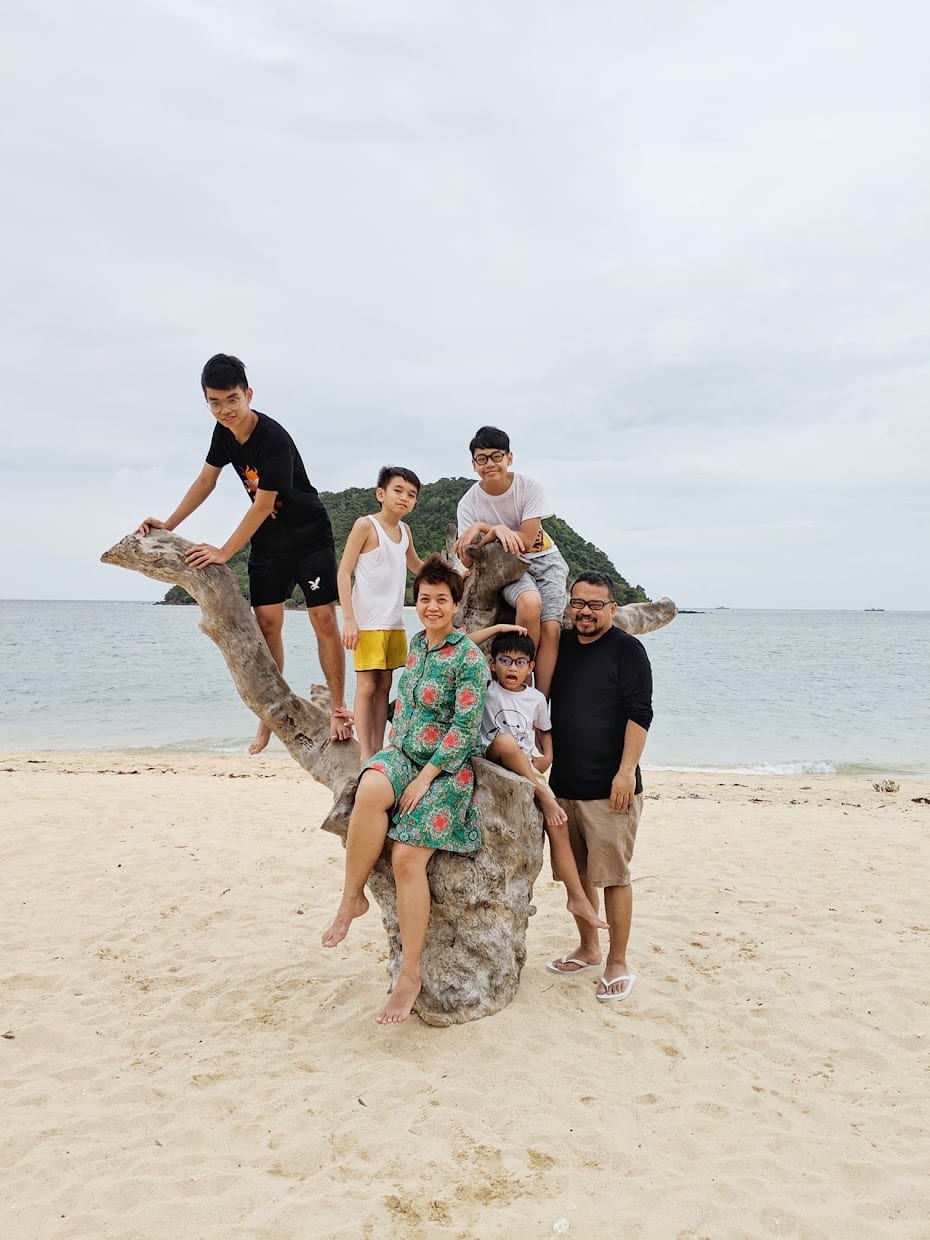
SP: Is it easier to navigate AI as parents because you both work in this field? How do you translate your AI knowledge into parenting?
AY: I think of it this way. It's obviously easier kasi we both understand what's available to consumers, and we also understand what's coming over the horizon. It’s easier for us to anticipate disruptions.
Knowing what’s happening and what's on the horizon, we factor these things into the conversations we have with our kids, including discussions about their college majors.
When appropriate, we bring up na, "Yeah, if you're going to take up this course, there will be disruptions because of technology, including AI.” Not to scare them, but just to make them aware of what’s happening.
Does it help us in parenting? I think there's a minimum. Any parent who works in any industry is almost inexcusable not to learn about technologies, especially AI. I think from a responsibility standpoint, parents need to understand what's happening and what's going to happen.
I’d like to share another experience with one of our sons. He was assigned a complex business model canvas project, with only a few days to complete it. While he initially complained, we realized that the teacher likely expected students to use AI to speed up research and drafting. I noticed it’s also a way of training kids to use AI as an essential skill, not only in their studies, but also in their future work.
GY: One of our sons is planning to go to abroad for a junior term. So, how do you choose your courses? We used AI to do the research.
Kanya-kanya kaming prompts, and then we compared. He had his own criteria, which I thought was interesting. Our prompts were different, and our priorities were different. We used that to help him decide where he had to go.
Then we had to get a Spanish visa. AI helped us organize the documents and write the cover letter.
In terms of running the household, one example of how I use AI is for meal planning and grocery lists. I built a Notebook LM. Nandun na yung mga recipes, ingredients, and budget needed.
We also use AI in creating a meal plan for our son, who has a medical condition.
AY: We also used AI to research his living arrangements in Spain. How much would his allowance be? How much would his apartment cost? Things like that. We outsource a lot of the research to AI.
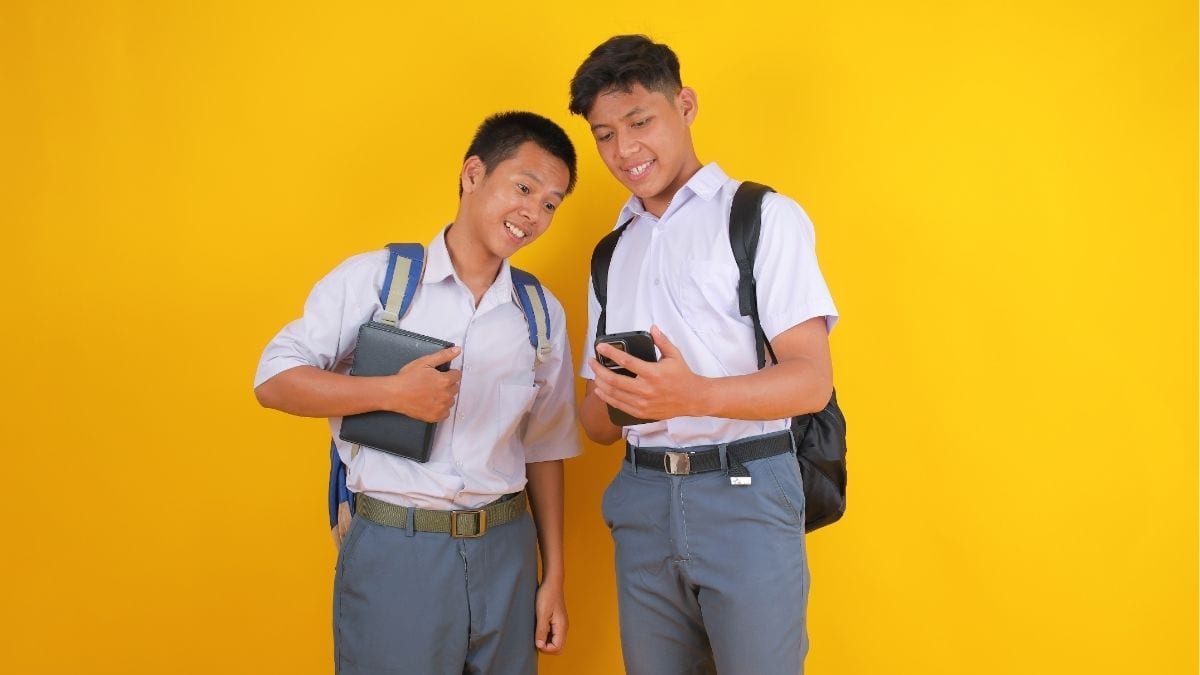
Child Rights Group Says No to Social Media Ban for Kids Under 16
Read hereSP: Have your children ever taught you something about AI or technology?
AY: I think it's not so much about the technology itself but about its adoption. What are their friends doing with it? Whether properly or improperly. As a technologist, I'm more curious about what consumers are now adopting.
GY: I think it’s the fun things that we learn from them. For example, sa Messenger pwede mong gawing sticker or emoji ang face mo. Mga fun things.
We also learn from their perspectives on AI. One of our sons had a problem, and the other son thought of a solution. I think it’s interesting to observe how they have different workflows when using AI.
SP: How can parents teach their kids about the proper and ethical use of AI? For example, using AI in schoolwork?
AY: The high school they attended was very progressive. I think three or four years ago, they had already published an AI policy. They said AI use is fine, but students had to disclose that they used it. The final output should also be the student’s own creation, not AI’s.
SP: How do you strike that balance between discouraging kids from simply copying and pasting AI-generated content and encouraging them to create their own work?
AY: Like Gwen said, parang they found that balance on their own. Like the story of our son, who doesn’t like it when his groupmates are over-reliant on AI. AI can help refine your outline. AI can help create graphs and charts. Pero ultimately, the thought process that went into it, it was you.
GY: I think from our conversations about this, medyo may yabang ang kids. They say things like, “Mas maganda pa ang output ko kaysa sa AI.”
And it’s true because of the way they use it. They use AI as a starting point for research. Maybe they get some inspiration, but at the end of the day, they prefer their own output.
In school, their subjects are Math-heavy. They use AI for reviewers, research, and refinement. They also use it for more routine tasks, like anecdotes, charting, graphing, and looking through large volumes of reports to create shorter summaries or simpler graphs.
AY: Maybe we're lucky that way. But I think part of it is because we established the ground rules very early on.
You can use AI, hindi bawal. In fact, we have a number of family plans. I say, "Hey, we have Gemini now on the family plan. You can start using it this way." And then we remind them of the ground rules that we talked about earlier.
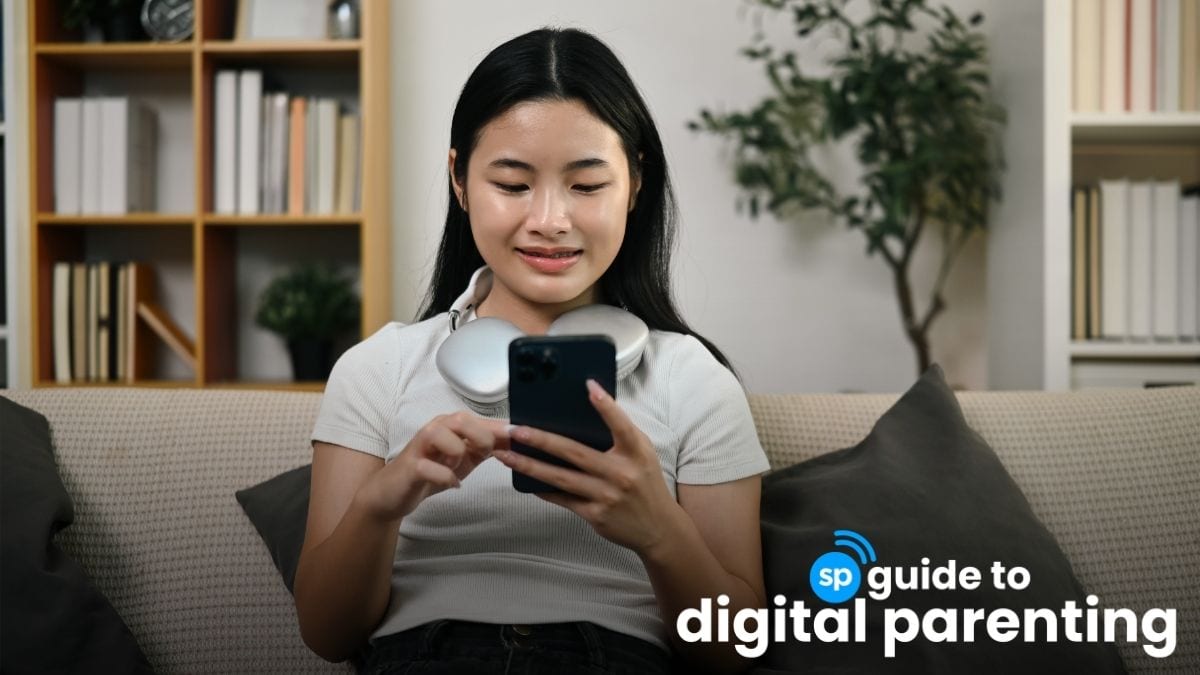
Meta Sets New Limits for Teens on Facebook and Instagram
Read hereSP: AI systems often collect data. What should parents know about protecting their children's privacy when using AI tools?
AY: One principle I share with our kids, and even at work, is that we’re extending the boundaries. Whenever a new technology comes along, it’s about extending those boundaries.
When social media came out, we discussed what you should and shouldn’t post online. If you're not comfortable posting your birthday and personal information outside your front door, then you shouldn't share that information with AI either, unless you really have to.
There are additional considerations now because AI is so convenient. I carefully check the terms and conditions of Gemini and ChatGPT to understand whether they might reuse our data for other purposes or share our prompts with third parties before we submit any personal information.
Actually, one tip I have for people is to ask AI about themselves: "What do you know about me?" Sometimes you might give an instruction like, "Commit this to memory because this particular instruction will be useful to me in the future." I periodically ask, "What do you remember about me?" That way, I can see what it knows about me and whether it’s getting to a point where I feel it's inappropriate. Then I can say, "Forget this detail about me. You shouldn't track that."

SP: In terms of ethical use, there have been incidents involving students using AI to generate deepfake pornography of their schoolmates. How can we safeguard our kids from this? Are there guardrails in AI technology to prevent this?
AY: The capabilities to create deepfakes are there, and not all deepfakes are meant to be harmful. For me, ultimately, I hate to say it, but it boils down to parenting. It’s about monitoring what your kids are doing and coaching them on the proper use of technology, whether it's AI or something else.
When Friendster came out years ago, there were similar problems involving cyberbullying and other issues.
These are recurring problems that aren’t unusual. Whenever a new technology comes out, some people will always find a way to misuse it.
GY: I think it’s not about technology alone. It's about behavior. If may bully, may bully talaga kahit may technology man o wala.
For us, we guide our kids when it comes to friendships. We teach them to surround themselves with people who shaare the same values.
AY: Gwen asks them, "Oh, who are you hanging out with? What did you do?" To some degree, it's traditional parenting. But it's basic. It's about finding out what they're doing, who they're spending time with, and what their interactions are like.
Back to the situation you brought up, there should be action from the government. Schools should have policies in place. But unfortunately, those things take time to catch up. Kaya, for me, it boils down to parenting. We should at least talk to our kids and stay involved in their lives.
GY: At the end of the day, as a parent, you have to know what’s in your kids’ hearts. We don't track them using a device. We ask them where they are. But it’s not just about asking where they are. It’s also about asking “What are you doing there?” and “Who are you hanging out with?”
When it comes to technology, we don’t baby them. If they want to figure something out, we let them do it. If you want to give your kids more independence, teach them that there are other resources they can turn to for help. Hindi lang sa iyo sila magtatanong.
"Oh, go check on Google or Gemini, and then if you can't find the answer, come talk to me," we tell them. We try to teach them na if you can figure it out on your own, lalo na kasi older na, then try to figure it out. If you need help, tell us.
They figured out GCash on their own, getting a driver’s license, scheduling a medical check-up, applying for a visa, and booking a flight. Those are things we let them use technology to figure out on their own.
I guess technology can be bad, but it can also be good for parents. We teach them how technology can be helpful.

SP: If you could leave parents with one piece of advice about raising children in the age of AI, what would it be? This goes for parents of teenagers as well as younger kids.
AY: Parents, in general, need to keep up, regardless of whether they have older or younger children. Technology and its capabilities are changing quickly.
Whether you're worried about what course your child will take in college or the potential impact of AI's growth and development on younger children, you have to keep pace.
There’s also a lot of information on the internet that can help educate parents. Support groups, for example, were among our first sources of support when we were young parents.
Parents should keep up with technology. Don’t deny it. Avoiding technology and delaying its introduction for as long as possible can be just as harmful as allowing children to use it without any boundaries. There's always a sweet spot somewhere in the middle. And it’s always evolving. It’s hard to tell a parent of a six-year-old, “Ito dapat gawin mo,” because things are constantly changing.
GY: For parents who have younger children, don’t use technology as a substitute for parenting. Avoid screen time at a very young age. Give them non-digital activities.
That’s our tug-of-war. He’s more open to giving kids access to technology, while I’m more of, “Can we not?”
And finally, listen to your heart. As a mother, you can tell, or you can feel, when something's off. You can sense when your child is going through something, even if they're not telling you.
Pay attention to the signs. Sometimes, your gut feeling turns out to be right.
A Mom’s viral Roblox story has parents talking about digital safety for kids. Read here.
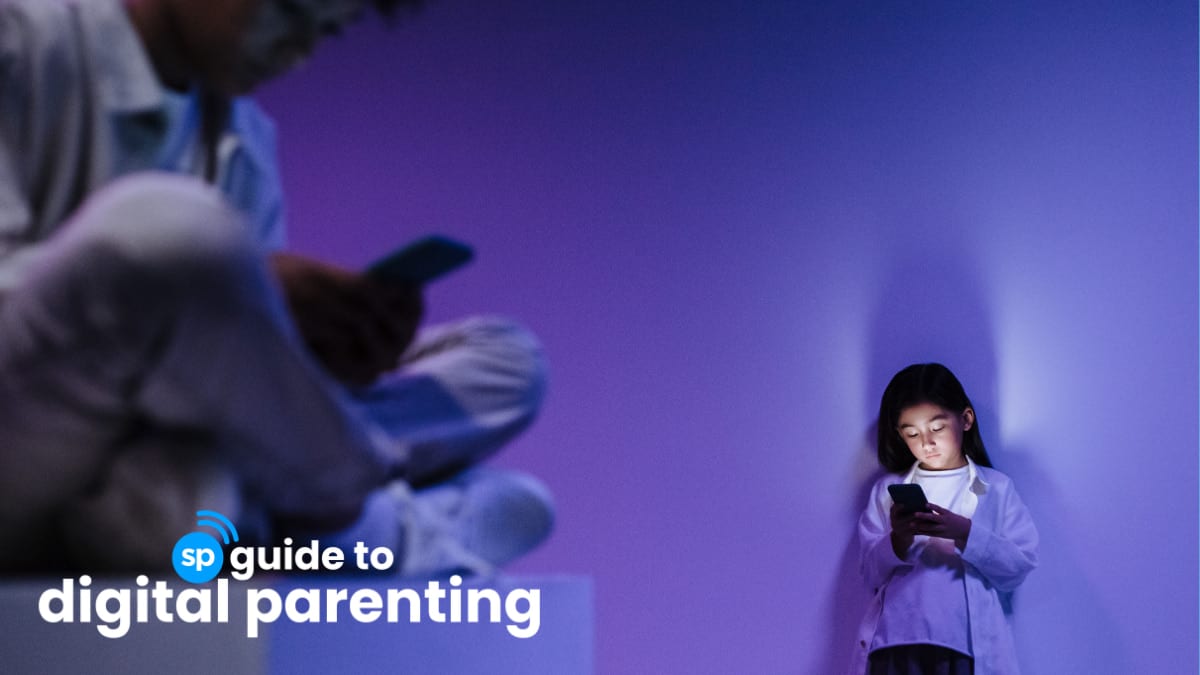
Online Grooming: Warning Signs Every Parent Should Know
Read hereHomeschooling mom to a talkative little girl. Pyschometrician by profession. Loves K-Drama, coffee and pasta. In-house chef.
Read more stories about