
Just as athletes train for a marathon, moms-to-be also need to prepare for the arduous journey of giving birth. A true test of stamina, willpower, and strength, labor is arguably the hardest marathon of all. In conjunction with your regular pregnancy fitness routine, these 5 exercises will help train your body effectively for labor. While these exercises are generally safe for most pregnant women, make sure to clear them with your doctor - remember, safety first!
1. Kegel Exercises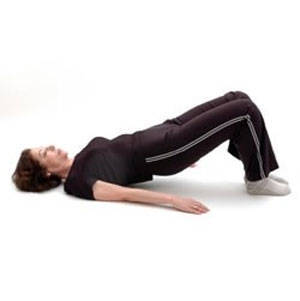
What it’s good for:
This will help tone the pelvic floor muscles with the second stage of labor (pushing and delivery of baby) as well as for strengthening muscles after labor.
How to do it:
Push your belly button towards your spine. This helps stabilize your lower back. It may seem like you’re simply sucking your stomach in, but you should be able to breathe comfortably while doing this. Keeping this posture, contract your Kegel muscles (the muscles at the base of the pelvis), as if to pull the vaginal walls up towards your belly button. Hold the contraction for a count of 10, then release. Relax for 5 seconds and start again. Start with five repetitions, and work your way up to 30 repetitions per day. Break the exercises up into sets of 10, and do one set in the morning, another in the evening, and the third while you’re doing something routine, like driving or checking your e-mail. Do this everyday.
If you’re doing the contractions correctly, you’d be able to stop mid-stream during urination without contracting your abs, your glutes, or thigh muscles. Practice doing it once or twice while urinating to make sure you’re contracting the correct muscles, but don’t make it a habit. Doing your Kegels during urination is unadvisable, as it may keep you from fully voiding and increase the likelihood of a UTI.
Photo from http://www.healthkicker.com/706488269/the-truth-about-kegel-exercises-and-sex/
[previous|page|next]
2. Tailor-Sit
What it’s good for:
Like Kegel, this is good for the second stage of labor. Your low back and inside of your thighs and legs will be stretched, which can help ease back pain during delivery. Also, the weight of the uterus will be taken off of your back and pelvic floor, helping you relax.
How to do it:
This is really more of a sitting position rather than an exercise. All you have to do is sit “Indian style” or cross-legged. Sit in this manner for at least 10-15 minutes, several times a day. Rather than making time to do them like your other exercises, try to make it a habit to sit this way frequently during your pregnancy.
You may also add a stretch to this exercise: from the Tailor-Sit position, uncross your legs and instead put the soles of your feet together. Without forcing or bouncing your legs, slowly try to bring your knees toward the floor. Only go as far as you comfortably can. You’ll know you’re doing it right when you feel the stretch in your groin area. Finally, try to keep your back straight while doing this exercise to help strengthen your back muscles. Find time to Tailor-Sit everyday.
Photo from http://www.medindia.net/patients/patientinfo/pregnancy-exercise-pre-natal.htm
[previous|page|next]
3. Pelvic Tilt

What it’s good for:
This exercise helps with the first stage of labor as it will strengthen your abdominal muscles, decreasing pain during labor.
How to do it:
There are several positions possible, but commonly, women find it most comfortable on all fours. Get comfortably on your hands and knees, your hands about hip-width apart (wider if it’s more comfortable). Make sure your head is in line with your back (don’t bring your chin towards your chest). Don’t allow your belly to sag. Breathe in, slowly pulling your stomach in towards your spine, and arch your back upwards. At the top of the arch you should notice that your tailbone is slowly curving in (but don’t actively force this- it should naturally move this way). Hold this arched position for a few seconds, and slowly go back to starting position as you exhale, again being careful not to let your stomach sag. Start with three to five repetitions, and work your way up to ten reps. Do this everyday.
If the starting position alone is uncomfortable due to the weight of the belly, you’re better off doing the standing version of this exercise: Stand against a wall, making sure your hips, shoulders, and head are touching the wall. Place your hand on the small of your lower back so that there’s space between your lower back and the wall. Take a deep breath, and upon exhaling, pull your lower back into the wall and feel your tailbone push downwards against it. Take another deep breath, and upon exhaling, go the opposite direction, creating an arch in your low back and feeling your tailbone go upward against the wall.
Photo from http://clairemockridge.wordpress.com/category/back-ache/
[previous|page|next]
4. Abdominal Crunches
What it’s good for:
This exercise is good for the second stage of delivery. Strengthening the low back muscles will help you adapt to postural changes more easily, and can help with the pushing.
How to do it:
Do NOT do traditional crunches beyond the 4th month of pregnancy. Lying on your back for long periods of time after the first trimester can cause your blood pressure to drop dramatically, and compromise blood flow to the baby. Also, this exercise is also not advised for women with diastasis recti, or separation of the abdominal muscles. A safe way to do crunches during your pregnancy is over a stability ball or an inclined bench.
In an inclined position, put your arms across your chest, and keep your head in line with your body. Bring your chest up as you exhale, and focus on feeling your abs contract while you move. Inhale on your way back to starting position. Repeat five times, and work your way up to 2-3 sets of 10 reps. When getting off a stability ball, push off with your legs while tightening your midsection to provide the greatest stability. Don’t perform this exercise unattended if you’re not used to exercising on a ball. This is safe to do everyday (up to the 6th month of pregnancy if it’s on a ball or incline bench), but aim for at least three times a week.
Photo from http://www.fithealthymoms.com/2011/10/29/how-to-exercise-safely-during-pregnancy/
[previous|page|next]
5. Squatting/ Wall Slide

What it’s good for:
This exercise is good for the first stage of labor. It allows for the pelvic outlet to open up slightly bigger, allowing more room for baby to descend. This is particularly helpful for women who opt for natural childbirth, which typically requires a lot of squatting-type movements and positions
How to do it:
Stand with your back against a wall, and place your feet shoulder-width apart and about six inches from the wall. Keeping your arms at your side, relaxed, slowly slide down the wall into a squatting position, until your thighs are parallel to the floor. Hold this position for 10 seconds (or as long as you can, in the beginning), and then slowly slide back up to the starting position. Relax for about five seconds, and repeat five times. You’ll feel the burn in your thighs, especially on the outside and the front. Work your way up to ten repetitions, and see if you can hold for up to 20 seconds as you get better. Do this everyday.
Photo from http://healthfeeding.blogspot.com/p/fitnees.html
IMPORTANT WARNING: Do not begin a new exercise regimen without consulting your doctor first. Smart Parenting / Smartparenting.com.ph will not be liable for any damage to health resulting from these exercises.

Lorem ipsum dolor sit amet, consectetur adipisicing elit, sed do eiusmod
Lorem ipsum dolor sit amet, consectetur adipisicing elit, sed do eiusmod
