
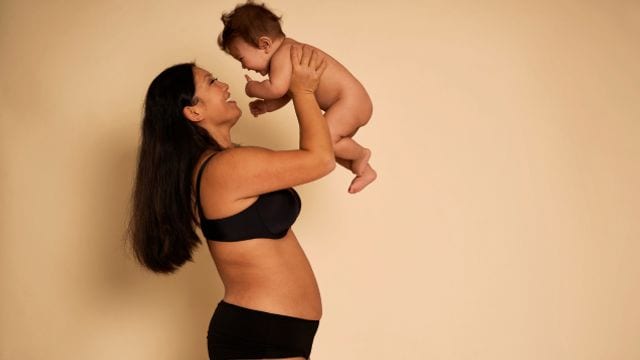
According to Healthline, the postpartum period is the first six weeks after giving birth, which some researchers believe lasts up to six months. This period is an intense time that requires all sorts of care for you and your baby.
The mother’s body will experience a number of changes, from healing after childbirth, to hormonal mood swings. All of this in addition to the added stress of tackling breastfeeding, sleep deprivation, and the overall monumental adjustment to motherhood (if this is the first child).
It is needless to say that the care and support mothers need this time is crucial.
On March 11, 2019, the Expanded Maternity Leave Act (RA 11210) in the Philippines was passed into law. From the previous 60 days for normal delivery and 90 days for caesarean, it was expanded into 105 days with full time pay. There is also an option to extend it to 30 more days but without pay.
The Expanded Maternity Leave Act also allows mothers to allocate or transfer up to seven days of her paid maternity leave to the child’s father, extending the existing paternity leave from 7 days to 14 days.
That’s why in other countries, there are certain traditions, even laws, that ensure enough care and support for mothers who just gave birth.
Smart Parenting looked at these unique ways different countries give postpartum care to new moms.
Postpartum care around the world
Here’s how it looks like to give birth in other countries:
1. Netherlands
New moms have the luxury to have a ‘kraamverzorgende’, or a home maternity nurse, available for an average of 49 hours. The maternity nurse gives assistance to the new mother with just about everything, from breastfeeding to laundry. They stay with the family for up to ten days. And the best thing about it--the cost is covered by health insurance.
2. Switzerland
For almost two months or 59 days after giving birth, new moms can have regular home visits from a midwife. And again, the best thing about it--the cost is covered by insurance.
3. China
More of a tradition than a law, new moms are encouraged to rest after giving birth. It is called ‘Suo Yue Zi’, literally meaning, ‘sitting the month’. A CNN article shared details about this ‘sitting the month’ which repported, “New moms stay at home for one month to allow her body to rest.
There is also a ‘Pui Yuet’ or a confinement nanny, who helps do the household chores, cooks the dishes, and assists in all the mother’s needs, even with milk production. The confinement nanny also cares for the new mom by giving her massages, body wraps and lessons on how to take care of a newborn baby.”
RELATED: Who's Cooking After You Give Birth? These Two Delivery Services Serve Gelai Meals
4. Latin America
Another tradition called “La Cuarentena”, is almost the same as the Chinese postpartum tradition. Its literal meaning is ‘quarantine’, the first 40 days after having a baby, is a time for new moms to rest, recover, and focus on breastfeeding while the women in their communities provide housekeeping and other support.
5. Japan
Also more of a tradition and ‘ritual’ is the ‘satogaeri bunben’. Many women in Japan stay at their parents’ home after birth, under the care of their mother. Expectant mothers arrive at their parents’ home when they’re in their third trimester.
6. Malaysia
In another Asian country, it is tradition for a midwife who gives massage to new mothers to increase circulation and promote overall healing.
7. Finland
One of the first countries to give both mothers and fathers parental leave, Finland revised their law in August 2022. Both mothers and fathers can receive up to 160 days of paid parental leave or childcare allowance.
RELATED: Sana All! This Country Gives Both Parents 160 Days Of Maternity Leave Each!
8. Norway
If there is any indication that Norway has the one of the best postpartum cares around the world, the country’s lifetime risk of maternal death is one in 14,900 births according to this article by Insider. Aside from this, mothers can take 35 weeks of maternity leave with full-time pay, or 45 weeks at 80% pay.
If parents want to extend their leave, they can choose to have additional weeks off still at full time pay (46 weeks at full-time pay), and even up to 56 weeks with 80% of their salary.
9. Iceland
Another country with very low risk of maternal death (one in 11,500) is Iceland. On top of this, the country's maternity leave policy offers 13 weeks of leave at a pay rate of 59% of a woman’s full-time salary.
Read this article to know all about the fourth trimester.
What other parents are reading

Lorem ipsum dolor sit amet, consectetur adipisicing elit, sed do eiusmod
Lorem ipsum dolor sit amet, consectetur adipisicing elit, sed do eiusmod
