
Editor’s Note: This article is intended for information purposes only. It does not substitute a doctor. It is vital to always consult a medically trained professional for advice that suits your needs best.
Asthma is a "heterogenous, chronic airway inflammatory condition which affects the size and shape of the airways causing breathing difficulties." Asthma symptoms include cough, wheezing, and breathlessness.
Among the various triggers of asthma attacks is exercise, and it's called asthma induced by exercise or excercise-induced bronchospasm. But if you have this condition, according to experts from the American Lung Association (ALC), you don't have to stop exercising. In fact, many Olympians and professional athletes have asthma.
Different forms of exercise, such as yoga for asthma, offer many health benefits. Dr. Paul Rilhelm M. Evangelista, a specialist in pulmonology medicine and interventional pulmonology, mentions in a webinar strength, endurance, feel-good effect, and relief from stress.
Dr. Evangelista gives three ways to manage exercise-induced asthma:
1. Control your asthma by working closely with your doctor in designing and following an action plan. It starts with religiously taking your medications, such as relievers and controllers.
2. Use your inhaler before exercising.
3. Make it a point to warm up before exercising and cool down after.
Read here about the other types of asthma.
Yoga for asthma
When people with asthma practice yoga, their quality of life and symptoms can be improved.
This is according to Carina Silerio, a long-time yoga practitioner and a dedicated yoga teacher who specializes in yoga for chronic diseases. She's also a trauma-informed and accessible yoga facilitator, as well as a mindfulness life coach
Silerio points out, though, that asthma cannot be treated with yoga, as stated in a 2010 study published in the United States National Library of Medicine. She explains in an email interview with Smart Parenting how yoga can be beneficial and helpful:
"By practicing yoga poses (asanas) and breath work or yoga breathing (pranayama) consistently and safely, asthma symptoms can be alleviated. Asthma sufferers can benefit from this in their daily lives. The symptoms of asthma often cause stress and anxiety in sufferers.
"It is possible for asthma sufferers to experience hyperventilation during an asthma attack. It can be helpful to practice yoga breathing techniques that stimulate the vagus nerve after anasthma attack for them to calm down.
"There are many components of the parasympathetic nervous system, but the vagus nerve is one of the most significant nerves. As well as controlling immune responses and digestion, it regulates heart rate and digestive processes."
Silerio, also the founder of Flow + Recovery that offers specialized yoga classes, explains further: "With yoga breathing (pranayama) techniques, you send a signal to the vagus nerve that you're safe and ready to relax.
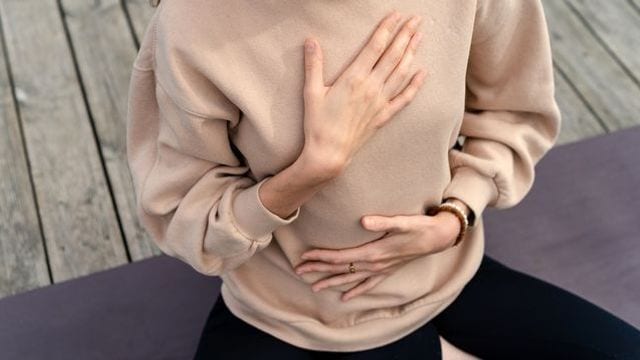
"Asthma sufferers who experience symptoms such as shortness of breath can benefit from this. By activating the parasympathetic nervous system, doing a 5-10 minute slow belly breathing can contribute to a sense of calmness and a feeling of being grounded."
Sample yoga poses
"Asthma is considered a chronic lung condition," says Silerio. "Yoga poses (asanas) can strengthen your chest muscles and promote deep breathing and controlled breathing. In addition, practicing yoga cancreate a connection between the breath and the movement in your body."
If you have asthma, these yoga poses can help your condition. But Silerio makes it clear that these yoga poses are not a replacement for medical treatment. You should consult your doctor before trying out these poses out:
Pose 1: Cat-Cow
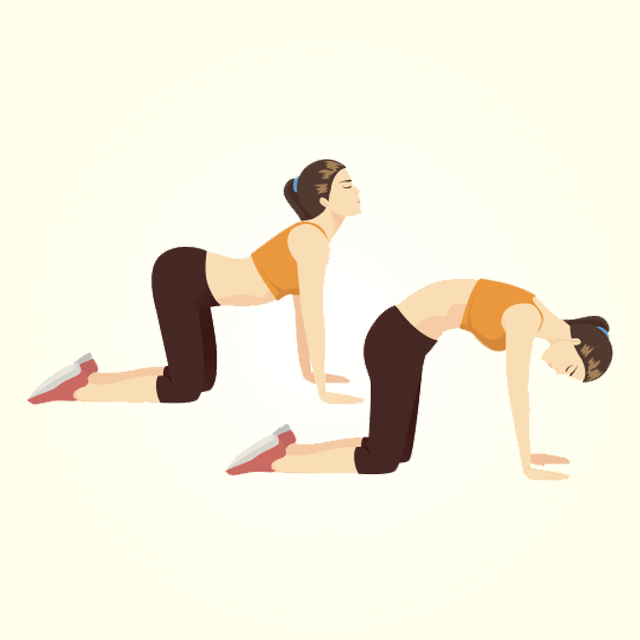
Instructions:
1. On your hands and knees, place your hands under your shoulders and your knees under your hips.
2. Inhale, open up your chest, look up or gaze forward, arch the back, tailbone up to cow.
3. Exhale, round the spine, chin to your chest. Gaze at your belly or thighs to cat.
Pose 2: Cobra

Instructions:
1. Start by lying on your stomach.
2. Place your palms in line with the shoulders, arms close to the rib cage.
3. Lift the chest up until it is away from the ground. Make sure your shoulders are back and your neck is long.
4. Breathe here for couple of breaths.
5. Exhale, lower back down on the ground.
Pose 3: Low Lunge

Instructions:
1. Start in table top, hands and knees on the ground.
2. Step the right leg forward next to your right hand.
3. Gently lower the back left knee to the mat.
4. Keep the right knee over the ankle and extend the arms overhead.
5. Take an inhale, open the chest and stretch backwards.
6. Repeat on the other side.
By doing these poses regularly and consistently, or better yet try a full yoga practice (after consulting with your doctor), you can see results. As one practitioner says, her lungs have become stronger that she hasn't been sick with anything related to the lungs, including asthma.
Read here on how yoga can help kids with special needs.
What other parents are reading

Lorem ipsum dolor sit amet, consectetur adipisicing elit, sed do eiusmod
Lorem ipsum dolor sit amet, consectetur adipisicing elit, sed do eiusmod
