
Ang kwentong ito ay hango sa isang tunay na #SPConfessions na ipinadala sa amin sa Smart Parenting Village. Ang ilang mga detalye ay bahagya naming binago upang bigyang proteksyon ang nagpadala nito.
"I think my husband is a narcissist. Gusto ko lang mag-vent ng nararamdaman ko. Wala kasi akong makausap. Ayoko naman masira ang asawa ko sa iba. Matagal na akong nagtitiis sa ugali ng asawa ko. Pag may mga nangyayari kasi na hindi ayon sa mga gusto niya, ako lagi ang sinisisi.
"Ang litanya niya lagi is "manhid ka kasi", "akala mo ang linis linis mo", "ikaw ang dahilan bakit ako nagkakaganito." Alam komg hindi ako perfect, pero hindi ko naman siguro deserve na laging sigawan at pahiyain sa harap ng ibang tao. Kasi maski sa labas pag nagalit siya, sinisigawan niya ako."
Mom asks for help on how to deal with 'narcissistic husband'
She then enumerated the triggers for her husband to get angry and humiliate her in public. "Minsan, naiiwan ko ang tumbler ko pag lumalabas kami. Di daw ako nag-iisip, kailangan ba daw laging ipapaalala sa akin ang mga simpleng bagay, hanggang buong lakad namin galit na siya at sisigawan niya na kaming mag-iina."
Another one is when her husband asks her to do something but she cannot do it right away. "Mula sa paggising sa umaga, paghatid sa kanila, pagsundo. In between noon, nagdedeliver ako ng tubig, pag may order ng pagkain, nagluluto ako. Ako din nag-aasikaso sa bahay. Kapag hindi agad nagawa utos nya magwawala siya."
"Wala siyang pinipiling lugar. Basta nagagalit siya, wala siyang pakialam kahit mapahiya kami. Maipakita niya lang galit niya." —Anonymous Mom
When this happens, the mom said she would just keep silent. "Kasi nakakahiya sa kapit bahay. Pero pag napuno na ako, sisigawan ko na din siya. Tapos pag ganun, sasabihin niya na ang bait-bait ko sa ibang tao pero pag sa kanya hindi. Pero ano gagawin ko? Napupuno din ako. At pag hindi ako minsan lumaban, paulit-ulit lang yun verbal abuse niya sa akin."
"Pag sumagot ako sasabihin pa niya na ako may kasalanan tapos binabalik ko daw sisi sa kanya. Pero most of the time pagtatanggol ko lang sarili ko. Pero ang feeling niya, siya ang sinisisi ko. Pero hindi," she clarified.
Recently, the mom shared how her husband almost got them into an accident because of his anger. "Pupunta kami sa grocery, yung bunso ko may gusto puntahan na mall. Sabi ko sa kanya, doon na lang sa gusto ng bunso ko. Kasi malapit lang naman and may grocery din doon. Biglang nagalit at nagsisigaw. Ang gulo-gulo ko daw. Ano daw siya, driver ko? Tapos nagmura na, ang aga-aga daw nang-iinis kaming mag-ina. Tapos nag-drive ng mabilis tapos magpepreno ng malakas, parang gusto kaming iuntog sa sasakyan."
She explained, it's not the first time her husband acted like that. When another driver cuts him on the road, he would pursue and fight with them. "Sabi niya, manhid daw ako. Di ko daw alam ginagawa ko. Wala daw akong kwentang asawa. Pag tanungin ko ano ba ang kasalanan ko, sasabihin niya, "Alamin mo." Pati anak namin natakot na sa kanya. Sabi nga ng anak namin, his daddy is evil daw."
Nevertheless, the mom feels helpless, and asks for help on what next steps she can take because leaving her husband seems to be out of the picture.
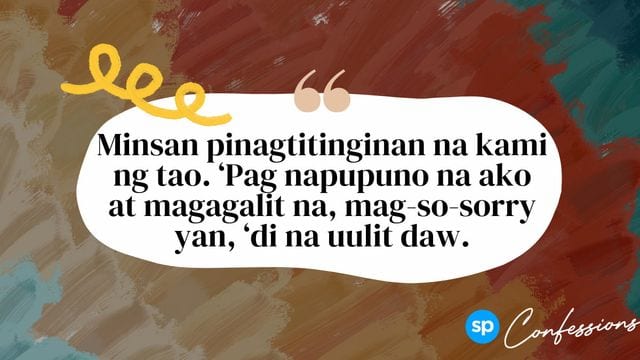
"Madami pang instances na similar sa mga kuwento ko. Wala siyang pinipiling lugar. Basta nagagalit siya, wala siyang pakialam kahit mapahiya kami. Maipakita niya lang galit nya. Minsan pinagtitinginan na kami ng tao. Pag napupuno na ako at magagalit na din, mag-so-sorry yan, di na uulit daw. Pero para siyang cycle. I can't take the verbal abuse anymore. Pero iniisip ko yung mga anak namin. Nag-aaral pa sila. And if we move out, sobrang malayo yung bahay namin sa school nila. Hindi ko na alam ang gagawin ko. Pero parang di na siya magbabago."
Read the full post on Smart Parenting Village here.
What is Narcissistic Personality Disorder?
Her post received more than 500 sad, care, and angry reactions at the Smart Parenting Village, and majority of the 300 parent members who left their comments advised her to break the cycle, leave her husband for her and their children's sake, and file for a VAWC case.
We sought the expert advice of Dr. Gail Galang, a registered psychologist with a PhD in Child and Family Studies, and a member of the Smart Parenting Board of Experts regarding the anonymous mom's concern. She said that lack of empathy is one of the symptoms of a person with Narcissistic Personality Disorder (NPD).
"Instead of assisting with what his partner may need, a narcissist gets upset and accuses the other for being the uncaring one." —Dr. Gail Galang
She explained, "Despite taking care of her kids and working in between chores, her husband couldn’t care less about his partner’s feelings. Instead of assisting with what his partner may need, a narcissist gets upset and accuses the other of being the uncaring one."
Dr. Galang, who is also a co-chair of the Miriam College Psychology Department, added, "When one is told, “wala kang kwenta,” this is his way to invalidate her, causing the partner to feel worthless and put to shame in front of others."
The frequent road rage of the husband, his obnoxious and accusatory remarks are all demonstrations of arrogance, which is another symptom of a person with NPD, Dr. Galang said.
Although lack of empathy and arrogance are two clear symptoms of NPD, according to the Diagnostic and Statistical Manual of Mental Disorders, Fifth Edition (DSM-5), a person with NPD needs to demonstrate at least five of nine qualities in a wide range of situations.
Other symptoms of narcissistic personality disorder or NPD include:
- a grandiose sense of self-importance
- fantasies about fame and wanting to associate self with important personalities
- a sense of superiority
- a need for excessive admiration
- a sense of entitlement
- exploitative behavior
- frequent envy
Seek professional help for proper diagnosis
Dr. Galang suggests that her husband should seek professional help for proper diagnosis, as sometimes symptoms overlap. Borderline Personality Disorder (BPD) is another mental health condition that also includes a pattern of unstable and toxic relationships.
"When she said that her husband apologizes when she is already fed up, this may be an indicator of one of BPD’s symptoms, that is, a strong fear of abandonment or being left alone. However, the cycle of verbal abuse, mood swings, and anger outbursts just drive them further away," Dr. Galang explained.
Though intense anger, irritability, and reactions to feeling abandoned characterize this unstable relationship, DSM-5 requires at least five symptoms for a diagnosis of BPD.
The other symptoms of borderline personality disorder or BPD include:
- chronic feelings of emptiness
- persistently unstable self-image
- impulsive behavior in at least two areas that are potentially self-damaging (e.g. spending, sex, substance abuse, reckless driving, binge eating)
- unstable interpersonal relationships characterized by extremes between idealization and devaluation (aka “splitting”)
- recurrent suicidal behavior, gestures, threats, or self-harm
- stress-related paranoid ideation or severe dissociative symptoms
"Living with someone with a personality disorder can be distressing and confusing for their partners. A person with NPD or BPD will not think that anything is wrong with them (i.e ego-syntonic) and so refuse to seek professional help. I would advise their partners to find protective measures to keep their peace. This can be in the form of mindfulness activities, social support, spiritual connectedness and other forms of self-care rituals and routines," Dr. Galang said.
Nevertheless, if the situation compromises the safety needs of family members, consider legal options and seek professional help.
Marriage coaches weigh in: 'Break time can be taken'
Smart Parenting Mom and Squad members and marriage coaches, Dreus and Love Cosio, also shared their insights to help the anonymous mom.
For Mommy Love, she suggests the mom and partners of persons with personality disorders to reflect and ask these questions first:
- Is my spouse doing these actions on a regular basis?
- When did it start and did I contribute to this behaviour (did I say something or did something hurtful that might affect his/her actions)?
- Why am I “allowing” him/her to do this to me?
"With these, you also get to discover more about yourself, the things you tolerate, things you need to establish healthy boundaries with and how you can help your marriage," she said.
"If abuse keeps on happening amidst series of carefrontation, coaching and help, break time can be taken, especially if the purpose is to protect the kids and yourself." —Dreus Cosio, marriage coach
After reflecting on these, Mommy Love says, it is important to talk to your spouse. She suggests to follow these steps, which can be found in their book, Love Connect.
- Create an encouraging environment
- Achieve Empathy
- Respect each other’s opinion
- Eyes on the prize (to make things work for your marriage)
"Let your spouse feel that it is safe for them to open up about their wounds, fears, and insecurities. Most often, people build the wall resulting to hurtful actions when deep inside, we all are kids wanting to be loved," she added.
Meanwhile, Daddy Dreus cautioned that when abuse is tolerated, it can be passed on to the children who might do the same in the future.
"If abuse keeps on happening amidst series of carefrontation, coaching and help, break time can be taken, especially if the purpose is to protect the kids and yourself. It needs to be communicated still, and check how can you help each other during this break time. Define break time as way of not receiving abuse again while healing and helping," he suggests.
For the kids, Daddy Dreus maintains parents should keep on loving them, lead them on how to express emotions, yet learn to forgive loved ones. "How to apply gentle love and tough love that helps them and the family. Allow them to grow well. Breaking the cycle of abuse by creating cycles of love, even if for now, they receive it from you."
He then left a message for dads, "Let us strive to lead the family with love and care. Pride and ego needs to be addressed so that we can remind ourselves about our calling to sacrifice for our family. Not just by providing money but by providing care and affirmation to our wife and kids. Be a man to seek help if needed. It takes force to break, but it takes real strength to build."
Follow Dr. Gail Galang on Instagram at @gailfrancesgalang.
Listen to the Love Connect Podcast with the Co-Show on Spotify here.
More from sp

Lorem ipsum dolor sit amet, consectetur adipisicing elit, sed do eiusmod
Lorem ipsum dolor sit amet, consectetur adipisicing elit, sed do eiusmod
