
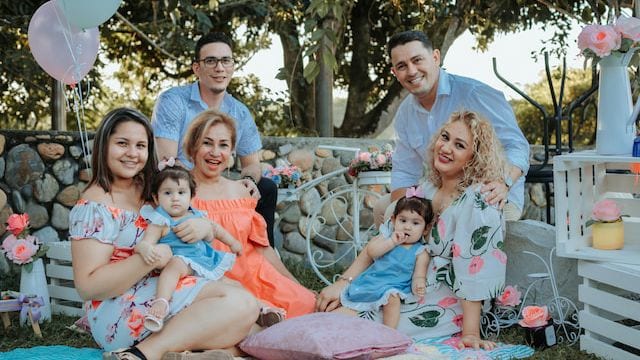
In this era of diversity and inclusivity, modern families begin to thrive in empathy and acceptance–with society gradually evolving from the conventional school of thought. The Philippines is the only country in the world that does not allow divorce but blended families appear to no longer be taboo but part of the “norm”.
University of the Philippines Population Institute Professor Grace Cruz, in her paper presented at the Asian Institute of Management, describes how the Filipino family is “in transition.” There are now more diversified ways of looking into families like single parenthood, cohabitation, blended families, homosexual domestic partnerships, orphaned siblings, and married couples without children.
What is a blended family?
The typical Filipino family setup is composed of father, mother, and children. Most school textbooks starting from Kindergarten introduce the family setup this way. A blended family, in essence, is a family unit where one or both parents have children/child from a previous relationship, but they have combined to form a new family. While it is easy to describe what a blended family is, the family dynamics may bring complexities and challenges.
What are the challenges of a blended family?
Like in any other type of family, traditional or not, challenges are inevitable. We are talking about relationships, personality, beliefs, value system, and individual history. Getting used to a new family setup takes time and effort. A lot of getting-to-know and building-the-trust stages are expected especially in the early years of creating a new family.
In the book, Building Love Together in Blended Families by Dr. Gary Chapman and Ron Deal, problems start when definitions of love between children and adults collide, because “once real life hits and everyone is living under the same roof, gaps in the definition of love become apparent.” Furthermore, clashing definitions of love can “spark hurt, anger, and protest in a family.”
Typically in the beginning, stepchildren have a basic level of respect for the stepparent (and the book describes it like that of a student to a teacher). This becomes an issue when the stepparent demands more than that. The book also talks about the concept of “insiders” and “outsiders” which puts the “outsiders” in a fragile place.
Another factor that complicates the family dynamics is repairing the loss–death, separation, or breakup–and restoring it by “blending” the family together. This is mostly what the parents want (especially for those parents who feel guilty for “exposing their children to a fractured family”), says the book, but do the children share the same vision to a certain degree?
What are the effects of blended families on young children?
There are two sides to the coin in a blended family setting: positive and negative effects. Children's responses and feelings will depend on your child's age, length of separation between your child and the other biological parent, the impact of such changes on your child’s life, and other factors or areas affecting the quality of their life–for example, school, your child's level of knowledge and comfortability towards your new partner, and how your child’s other parent feels about the changes.
Positive Effects
Excitement
Children may feel excited to have new brothers or sisters. If the child has developed affection with the new partner, the child may look forward to having two adult caregivers again.
Connections
According to the Raising Children website, extended families can be an opportunity to connect with more people. Extra adults and grandparents can provide additional love and support. Connecting to a wider range of people makes children more flexible and tolerant.
Resilience
Younger children (under age 10) are usually more accepting of a new adult in the family and this trait helps them to adapt well in the face of adversity.
Read Also: 9 Celebrity Blended Families We Love; Plus, Lessons On Acceptance And Forgiveness
Negative Effects
Feelings of uncertainty and worry
Children may feel unsure how to fit in or blend well in a new family structure. Interaction outcomes prove unpredictable causing feelings of instability and worry.
Feelings of sadness, hurt, or jealousy
Parents are most likely focused on building a new life together at the beginning of the relationship so kids may feel neglected and jealous of the new partner. Children may also feel angry towards the new partner because he/she reminds them that he/she broke the “original” family and that they’ll never have their “old” family again.
Feelings of defiance
Establishing a new family along with a new family culture may mean new sets of rules or boundaries. The transition challenge may make the children feel upset, insecure, and defensive.
How does one navigate the blended family dynamics?
A doctoral study of Kerene Brown for Walden University says that “stepfamilies who included the children in the courtship process report “closeness, friendship and expected ups and downs.”
Children need to be prepared for the transition. They require time to get acquainted with a new person/s they need to welcome in their life, could it be a new parent or sibling. But if one is already past the “courtship” stage, here are some tips on making it work:
Blended family: 5 tips to make it work
1. Do not badmouth the ex-partner in front of the children.
This can put your child in a position where he/she needs to defend his/her biological parent.
2. Take time to accept the loss.
There is a loss in separation, break up, or death. Let the children take their time to grieve and heal. Set shared expectations and foster respectful language.
3. Allow trusting relationships to grow gradually.
Keep communication lines open. Talk to your children and create a safe space for them to express their emotions. Do not punish or scold young children for feelings they don't even understand.
4. Create a “team” culture
Respect individuality but instill the value of being a part of the “team.” Show your children what genuine concern and support looks like.
5. Consider counseling.
Young children are more accepting of change and transitions, but it does not mean they are quick to process such life-altering events. If your child becomes withdrawn, unusually silent, grades are dropping, or loses interest in things they are passionate about, consider counseling or seeking professional help.
Related Read: 8 Tips For Making A Blended Family Work
Conclusion: Blending families takes effort
Blending families is a journey. It is a process. It requires patience, lots of it, understanding, and acceptance. It is not a one-time event that magically transforms broken families into a solid, complete unit overnight. Relationships develop gradually and there will be hiccups along the way. But as parents, if we model love, forgiveness, a conscious effort, and support, then we might have the chance to give the best blended family our children could ever have.
More from sp

Lorem ipsum dolor sit amet, consectetur adipisicing elit, sed do eiusmod
Lorem ipsum dolor sit amet, consectetur adipisicing elit, sed do eiusmod
